Monthly Update (September 2026):
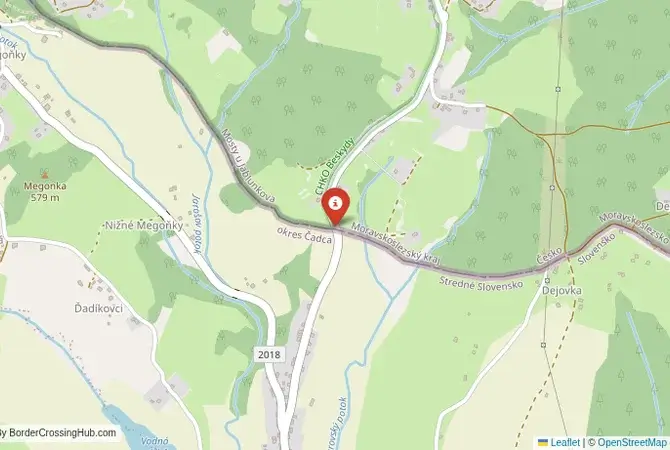
Milošová & Mosty u Jablunkova remains a small local Slovakia-Czechia connection rather than a major international route. Czech official listings continue to recognize Mosty u Jablunkova-Milošová as a cross-border road connection. No significant September border closure has been identified. Travelers using this mountain route should expect a much quieter crossing than the main Jablunkov gateway, but should check local road conditions before taking the smaller route.
About this crossing
Operational Details
This checkpoint connects Slovakia's Žilina Region with the Moravian-Silesian Region of the Czech Republic. It is a regional road, open 24/7, and used by local traffic, commuters, and tourists seeking to avoid the motorway. The former border posts are now abandoned or repurposed. Traffic flows freely, and the only signs of the border are the standard blue EU signs. The crossing is located in the Jablunkov Pass, a historically important route through the mountains, and it runs parallel to the main motorway and railway lines.
A History of the Velvet Divorce and a Tripoint
The history of this crossing is the history of Czechoslovakia. For 75 years, this was an internal administrative line. This changed on January 1, 1993, with the "Velvet Divorce." The Milošová-Mosty u Jablunkova crossing was instantly transformed into a full-fledged international border. For over a decade, it was a place of passports, customs checks, and queues. This all changed again in 2007 when both countries joined the Schengen Area, and the physical border controls were dismantled overnight. The proximity of the Polish border adds another layer of historical complexity, as this region, known as Cieszyn Silesia, has been contested by Poland and Czechoslovakia in the past.
Nearby Border Crossings
The Seamless Border Procedure
Today, there is no border procedure for the vast majority of travelers. You simply drive through the mountain pass. There are no passport checks and no customs inspections. This is the reality of the Schengen Area. However, it is important to remember that the police and customs authorities of all three countries can and do perform random checks on vehicles anywhere in this border region. You are still required to carry a valid passport or national ID card with you at all times.
The Surrounding Region: Slovakia Side
On the Slovak side, the crossing is in the Kysuce region, a beautiful, hilly area known for its traditional wooden architecture and its unique "Kysuce-Orava" forestry railway. The nearby city of Čadca is the main administrative and economic center of the region. The area is a gateway to the stunning mountains of the Malá Fatra and Veľká Fatra National Parks, which are popular for hiking and skiing.
The Surrounding Region: Czech Side
On the Czech side, the crossing is in the Moravian-Silesian Beskids, a mountain range known for its traditional Wallachian culture. The village of Mosty u Jablunkova is a popular ski resort and recreational area, with a bobsleigh track and other attractions. The area is known for its unique dialect and folklore. The nearby industrial city of Ostrava is the third-largest city in the Czech Republic, with a fascinating industrial heritage, including the a UNESCO-listed former ironworks complex at Dolní Vítkovice.
Practical Travel Information
Practical planning for this route is very simple. The most important thing is to have the required motorway vignettes if your journey involves motorways in either country. Slovakia and the Czech Republic use an electronic vignette system (`elektronická diaľničná známka`), which must be purchased online in advance. The official currencies are the Euro (EUR) in Slovakia and the Czech Koruna (CZK) in the Czech Republic. Services are available in the towns on both sides of the border. The mountain roads can be challenging in winter, so it is important to have appropriate tires.
Final Considerations
The Milošová–Mosty u Jablunkova border crossing is a powerful symbol of an integrated Central Europe at the local level. The abandoned checkpoint buildings are a reminder of a divided past, while the free-flowing traffic is a celebration of the present. It offers a more peaceful and scenic alternative to the main motorway, allowing travelers to better appreciate the beautiful landscape of the Beskid Mountains. It is a border that you might not even notice you have crossed, a testament to the success of the Schengen project in this historic and beautiful mountain region.
View all border crossings between Slovakia and Czech RepublicPractical information
Fuel
Slovakia: <1 km - Czechia: <1 km
Currency
Limited nearby EUR, CZK
Safety information
Rural, low risk
Connectivity
4G/5G coverage
Have you crossed here?
Help other travelers by sharing your experience, wait times, and any updates.