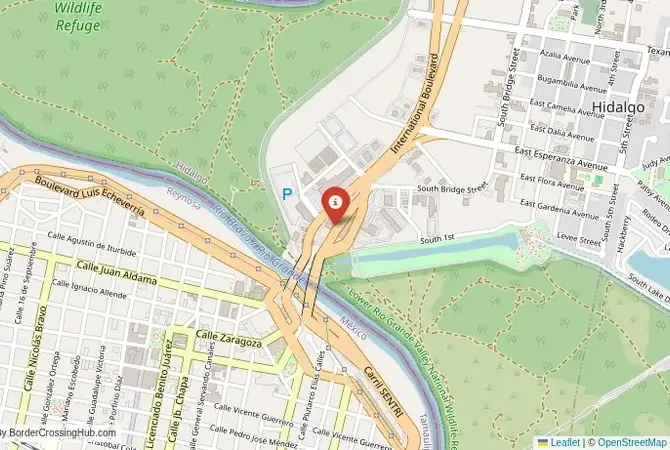
Staying near the crossing? Places to stay around Hidalgo, Texas & Reynosa, Tamaulipas on Booking.com Partner link: we may earn a commission, at no extra cost to you.
Monthly Update (October 2026):
Hidalgo & Reynosa is seeing noticeably different conditions depending on the lane. Recent data showed about 55 minutes for standard passenger vehicles entering the United States, compared with roughly one minute for SENTRI, while the Mexican-to-U.S. crossing can become particularly busy during weekend afternoons. For travelers with access to SENTRI, the difference can be substantial at this crossing.
Driving there, or sending a driver? Send them this guide.
For reports and websites
Cite this page
Border Crossing Hub (2026). Hidalgo, Texas & Reynosa, Tamaulipas Border Crossing. Updated October 2026. https://bordercrossinghub.com/reynosa-tamaulipas-hidalgo-texas-border-crossing/<a href="https://bordercrossinghub.com/reynosa-tamaulipas-hidalgo-texas-border-crossing/">Hidalgo, Texas & Reynosa, Tamaulipas Border Crossing (Border Crossing Hub)</a>Put this crossing's card on your website
Free. It updates on its own when our information changes.
<iframe data-bch-card src="https://bordercrossinghub.com/reynosa-tamaulipas-hidalgo-texas-border-crossing/?bch_view=card" width="100%" height="980" scrolling="no" style="border:0;max-width:480px;display:block" loading="lazy" title="Hidalgo, Texas & Reynosa, Tamaulipas border crossing information"></iframe>
<p style="font-size:12px;margin:4px 0 0">Crossing information: <a href="https://bordercrossinghub.com/reynosa-tamaulipas-hidalgo-texas-border-crossing/">Border Crossing Hub</a></p>
<script src="https://bordercrossinghub.com/?bch_embed_js=1" async></script>Paste it where you want the card. The last line (a script) only adjusts the height and can be left out.
About this crossing
Historical Background
Opened in the early 1900s, Hidalgo-Reynosa supported the Rio Grande Valley’s agriculture and Reynosa’s industrial growth. Named for revolutionary hero Miguel Hidalgo, it thrived on citrus and cotton trade. During Prohibition, smugglers crossed the Rio Grande, with a 1930 tequila bust becoming local lore. The 1990s saw traffic surge with NAFTA, boosting maquiladora trade. Today, it processes millions of crossings yearly. Occasional disputes over water or produce cause delays, but its binational economic role remains vital.
Crossing Details and Wait Times
Southbound, you’ll reach Reynosa’s INM office; U.S. citizens need a passport, while others may need a Mexican visa or Forma Migratoria Múltiple (FMM). Northbound, CBP requires a passport or Global Entry card. Open 24/7, vehicle waits are typically 30 to 60 minutes with no delay reported recently, peaking slightly during mornings (6 to 9 AM) or weekends. Pedestrian lanes take 15 to 30 minutes. Check CBP’s Border Wait Times or Mexico’s border apps for updates. SENTRI lanes speed up vehicle crossings.
Nearby Border Crossings

Scams & Warnings
Scams are rampant in busy Reynosa, with “visa guides” charging $20 to $50 for fake services. Bogus “immigration offices” may overcharge for FMM forms use only INM/CBP channels and apply online. Currency exchange scams near the border offer poor rates; carry USD/MXN cash or use Hidalgo ATMs. Pickpocketing risks soar during peak hours, so secure valuables. Avoid “expedited crossing” offers they’re scams targeting travelers in crowded conditions.
Transportation Options
From McAllen, it’s a 10-minute drive to Hidalgo via SH 336. From Reynosa, Highway 2 reaches Monterrey in 2.5 hours. Valley Metro buses stop at Hidalgo, ideal for pedestrians. Taxis and rideshares are plentiful confirm fares upfront. Gas and services are in Hidalgo or Reynosa, 5 to 10 minutes away. Pedestrians use dedicated lanes; vehicles face moderate traffic. Cyclists should use nearby bike paths to avoid congested areas.
Road Conditions and Views
SH 336 and Highway 2 are paved but congested during rush hours. Summer (June to August) hits 38°C, requiring AC; winter (November to March) is mild at 10 to 22°C. The Rio Grande and palm-lined valley offer scenic views. Check Texas’s 511 or Mexico’s (800) 990-3900 for road updates. The lush greenery and Reynosa’s urban skyline create a vibrant contrast, especially at dusk, making it a striking drive.
Local Sights
Hidalgo’s Old Hidalgo Pumphouse Museum, 10 minutes north, explores irrigation history. Reynosa’s Plaza Principal, 10 minutes south, hosts markets and festivals. Try Hidalgo’s tacos at Taqueria El Zarape or Reynosa’s carne asada at El Rincón. McAllen’s International Museum of Art & Science, 15 minutes north, is great for families, while Monterrey’s Macroplaza, 2.5 hours south, offers urban adventures.
Cultural and Economic Role
This crossing blends Texas’s ranching heritage with Reynosa’s lively Mexican culture, seen in shared events like the Hidalgo BorderFest, featuring mariachi and rodeos. It supports trade in produce and electronics, fueling both economies. Hidalgo’s citrus farms and Reynosa’s factories thrive on cross-border visitors. Community markets, food festivals, and music events foster a strong binational bond, with locals sharing a love for spicy cuisine and vibrant traditions.
Travel Tips
Open 24/7, but check CBP/INM for holiday schedules. Carry USD/MXN for tolls ($3 to $5) or duty-free shops. An FMM or visa saves time for non-U.S. travelers. Summer drivers need hydration; check Texas’s 511 or Mexico’s (800) 990-3900 for road conditions. Declare all goods agents are strict on produce and alcohol. Secure valuables in this busy crossing and pack snacks for long waits.
Extra Tips for Visitors
Cell service is reliable but spotty in Reynosa’s outskirts download maps ahead. Summer heat is intense; winter is mild but dusty. Locals are welcoming ask about 1930s smuggler tales for fun insights. Try Hidalgo’s La Fonda for enchiladas or Reynosa’s Gorditas Doña Tota for comfort food. Photographers, catch sunrise over the Rio Grande for dramatic shots. This crossing’s lively energy and cultural richness make it a unique stop.
View all border crossings between United States and MexicoHeading to Hidalgo, Texas & Reynosa, Tamaulipas? Take this with you.
One page with the hours, waits, emergency numbers and coordinates. Works without signal.
Practical information
Fuel
United States: 500 m - Mexico: 500 m
Currency
Available near Hidalgo (USD, MXN)
Safety information
Caution, border crime
Connectivity
Wi-Fi at checkpoints, 4G
Have you crossed here?
Help other travelers by sharing your experience, wait times, and any updates.