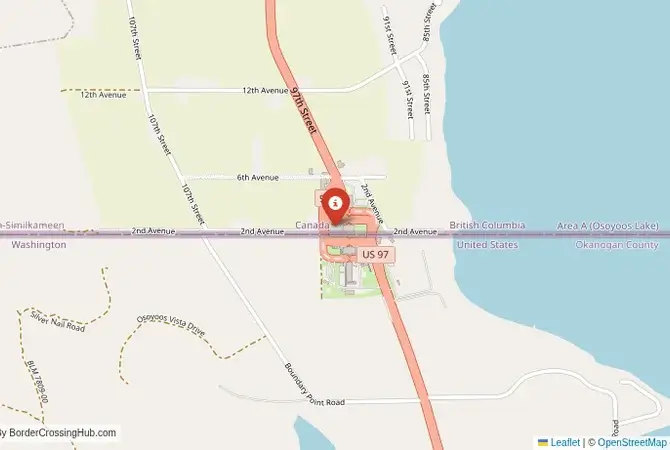
Monthly Update (October 2026):
Oroville & Osoyoos has no significant October disruption reported, and the crossing remains open around the clock. Highway 97 continues to provide the main road connection through the Okanagan, with border cameras available on both approaches for checking conditions before departure.
About this crossing
Historical and Geopolitical Context
Formalized in the 1920s to serve farmers and traders, this crossing grew with Highway 97’s 1960s expansion, boosting trade in fruit, wine, and tourism services. It handles CA$500 million in annual commerce, reflecting the region’s agricultural prominence. The Syilx (Okanagan) people’s heritage, celebrated in local festivals, adds cultural richness with cross-border ties. In 2026, customs operations remain routine with no significant delays reported; its popularity with wine tourists increases summer traffic, so check news for disruptions, such as inspections or festival-related congestion, to plan your trip effectively.
Crossing Procedures and Wait Times
Open 24/7, the border sees moderate traffic, with waits typically under 15 minutes and no delay reported recently (check CBSA or CBP for real-time). U.S. immigration in Oroville, at 3325 Highway 97, processes exit stamps; Canadian immigration in Osoyoos, at 202 97th Street, handles entry. Most nationalities receive a 90-day visa-free stamp for Canada; U.S. entry requires a passport or NEXUS card. Carry your passport, vehicle registration, and proof of insurance. NEXUS lanes operate limited hours (check current via CBP/CBSA); English is widely spoken. Wait times are posted on U.S. Customs’ website or via 509-476-2955; Canadian updates are at 1-800-461-9999. Declare agricultural goods to avoid fines, as both sides enforce strict rules.
Nearby Border Crossings


Scams & Warnings
Scams include money changers in Osoyoos offering poor exchange rates; use ATMs or banks like BMO on Main Street. Taxi drivers may inflate fares (~$20-25 USD); negotiate upfront. Unofficial “border helpers” offering paperwork assistance are unnecessary. Avoid them, as the process is efficient. Duty-free shops, like Osoyoos Duty Free (8:00 AM to 8:00 PM), are legitimate but compare prices to avoid overpaying. In recent years, reports noted fake winery tour guides targeting visitors. Book through Destination Osoyoos to avoid scams. Local vendors may sell “tax-free” wine or fruit; verify legitimacy with established businesses.
Transportation Options
Buses from Oroville to Osoyoos (10 minutes, $5 USD) are limited via Okanogan County Transit; taxis ($20 USD) or private cars are faster via Highway 97’s four-lane stretch. From Osoyoos, BC Transit buses to Kelowna (1 hour, ~CAD 25) are frequent, connecting to Vancouver. In Oroville, buses to Spokane (3 hours, ~$40 USD) are available via Northwest Trailways. Roads are paved, winding through Lake Osoyoos and vineyards. Pedestrians can cross, but towns are 2-3 km apart, making vehicles preferable. Winter ice requires caution; check Washington’s 511 or BC’s 511 for updates. The route’s desert vistas and orchards add a vibrant charm.
Nearby Attractions and Tips
Osoyoos’ Nk’Mip Desert Cultural Centre showcases Syilx history with exhibits and guided tours, while Oroville’s Lake Osoyoos State Park offers boating and fishing. Book activities through official operators. The Okanagan Wine Trail, 10 km north, features wineries like Burrowing Owl and Moon Curser; reserve tastings early. Spotted Lake, 8 km west, is a sacred Syilx site with unique mineral patterns. Carry USD or CAD, as ATMs are unreliable in smaller shops. Stay in Osoyoos for resorts like Watermark Beach or campgrounds like Desert Lake RV Park. A Canadian SIM card ensures connectivity, as U.S. signals weaken north. Try local diners for poutine, fruit pies, or Syilx-inspired dishes. Summer wine festivals, like Osoyoos’ Pig Out, draw crowds with tastings and live music.
Seasonal and Weather Considerations
Summer (June-August) brings hot, dry weather (25-35°C) and heavy tourism from wine enthusiasts, with waits minimal on weekends. Winter (December-March) delivers snow (-5 to 5°C) and icy roads, requiring winter tires; check 511 services for conditions. Spring and fall are quieter but rainy, with occasional dust storms. Peak holidays, like Canada Day or U.S. Independence Day, increase traffic, so cross early. Osoyoos’ wine and harvest festivals add vibrancy, making summer and fall lively but busy.
Planning Your Crossing
Bring a valid passport or NEXUS card, vehicle documents, and cash for small transactions. Declare agricultural goods, use official transport, and check wait times online or by phone. Avoid unofficial vendors to steer clear of scams. This crossing connects Washington’s lush orchards with BC’s desert wine country, offering a vibrant blend of agriculture, culture, and natural beauty for travelers seeking a scenic escape.
View all border crossings between United States and CanadaPractical information
Fuel
United States: 500 m - Canada: 500 m
Currency
Available near Oroville (USD, CAD)
Safety information
Generally safe, rural area
Connectivity
Wi-Fi at checkpoints, 4G
Have you crossed here?
Help other travelers by sharing your experience, wait times, and any updates.