Monthly Update (September 2026):
Colchane & Pisiga remains an important high-altitude crossing between northern Chile and Bolivia, but September travelers should be prepared for conditions to change quickly on the Altiplano. There is no major new closure reported for the crossing this month, so the main practical concern remains the long, exposed approach rather than border congestion.
Driving there, or sending a driver? Send them this guide.
For reports and websites
Cite this page
Border Crossing Hub (2026). Colchane & Pisiga Border Crossing. Updated September 2026. https://bordercrossinghub.com/pisiga-colchane-border-crossing/<a href="https://bordercrossinghub.com/pisiga-colchane-border-crossing/">Colchane & Pisiga Border Crossing (Border Crossing Hub)</a>Put this crossing's card on your website
Free. It updates on its own when our information changes.
<iframe data-bch-card src="https://bordercrossinghub.com/pisiga-colchane-border-crossing/?bch_view=card" width="100%" height="980" scrolling="no" style="border:0;max-width:480px;display:block" loading="lazy" title="Colchane & Pisiga border crossing information"></iframe>
<p style="font-size:12px;margin:4px 0 0">Crossing information: <a href="https://bordercrossinghub.com/pisiga-colchane-border-crossing/">Border Crossing Hub</a></p>
<script src="https://bordercrossinghub.com/?bch_embed_js=1" async></script>Paste it where you want the card. The last line (a script) only adjusts the height and can be left out.
About this crossing
Operational Details
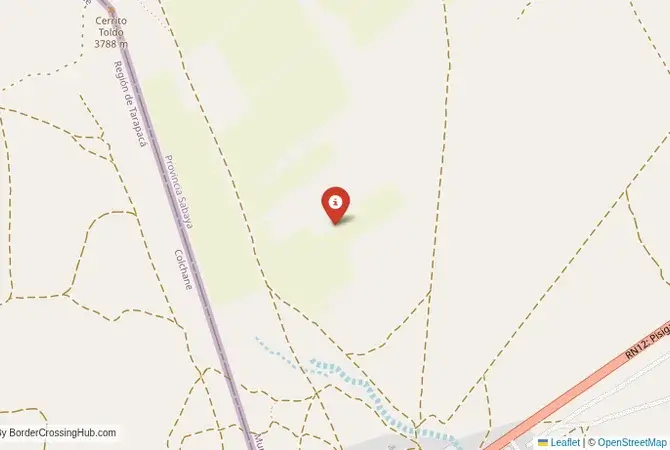
This checkpoint connects the Oruro Department of Bolivia with the Tarapacá Region of Chile. It is a major international crossing, open 24/7, but it can be subject to temporary closures in winter due to heavy snow and ice. The crossing is an integrated checkpoint, with both Bolivian and Chilean officials housed in a single, large, modern facility on the Chilean side at Colchane. This streamlines the process, as travelers only have to stop once to complete all formalities for both countries. The crossing is a key route for Bolivian goods heading to the Chilean port of Iquique and for tourists traveling between the Chilean coast and the Salar de Uyuni.
A History of a High-Altitude Frontier
The history of this region is the history of the Aymara people and the challenges of life on the Altiplano. For centuries, this was a land of llama and alpaca herders, a place where communities moved freely across the high plains. The modern border was established after the War of the Pacific in the late 19th century, when Chile annexed the coastal territories of Bolivia. The crossing at Colchane-Pisiga became a formal frontier. For decades, it was a remote and difficult outpost. The paving of the highway and the construction of the modern, integrated checkpoint in the 21st century have transformed it into a major, all-weather route, though the challenges of the environment remain.
Nearby Border Crossings
Border Crossing Procedure
The border crossing procedure is a well-organized, integrated process. At the single checkpoint facility at Colchane, you will proceed through a series of windows for both Bolivian and Chilean immigration and customs. You will need a valid passport. Visa requirements vary by nationality, and it is essential to check them in advance. Vehicle registration and international insurance are also necessary. A key part of the process is the strict agricultural inspection by Chilean authorities (SAG), who prohibit the entry of most fresh fruits, vegetables, and animal products, including coca leaves, which are legal and widely used in Bolivia but illegal in Chile; declare all such items (fines high for non-declaration). A yellow fever vaccination certificate is required for entry into Chile from risk areas.
The Surrounding Region: Bolivia Side
On the Bolivian side, the crossing is the gateway to the vast Altiplano. The nearby town of Oruro is famous for its spectacular Carnival, a UNESCO Masterpiece of the Oral and Intangible Heritage of Humanity. The main attraction for most travelers is the Salar de Uyuni, the world's largest salt flat, which is a few hours' drive from the border. The crossing is also the entry point to the beautiful Sajama National Park, home to Bolivia's highest peak, the snow-capped Sajama volcano, and unique high-altitude forests.
The Surrounding Region: Chile Side
On the Chilean side, the crossing is in the heart of the Chilean Altiplano. The road descends from the high plains towards the coast. The main attraction is the Volcán Isluga National Park, a remote and beautiful park with traditional Aymara villages, unique wildlife, and the impressive Isluga volcano. The road continues on to the port city of Iquique, famous for its duty-free zone (ZOFRI), its beautiful beaches, and its history as a center of the nitrate boom. The giant geoglyphs of the Atacama Desert are also in this region.
Practical Travel Information
Practical planning is absolutely essential for this route. The high altitude can cause altitude sickness (soroche). It is crucial to acclimatize properly. The distances are vast, and services are few and far between. You must have a full tank of fuel and carry extra food, water, and warm clothing. The official currencies are the Bolivian Boliviano (BOB) in Bolivia and the Chilean Peso (CLP) in Chile. Ensure your vehicle is in excellent condition, as the high altitude can affect engine performance. Check the road status before you travel, especially in winter.
Final Considerations
The Pisiga–Colchane border crossing is a journey into the heart of the Andes. It is a modern, efficient checkpoint in the middle of a wild and spectacular landscape. It is a route that requires careful preparation but rewards the traveler with some of the most stunning and surreal scenery on the planet. It is a passage that connects the vast salt flats of Bolivia with the dramatic coast of Chile, a journey through the beautiful and challenging world of the Altiplano.
View all border crossings between Bolivia and ChileHeading to Colchane & Pisiga? Take this with you.
One page with the hours, waits, emergency numbers and coordinates. Works without signal.
Practical information
Fuel
Bolivia: <1 km - Chile: ~160 km
Currency
Limited near Pisiga (BOB, CLP)
Safety information
Remote, high altitude
Connectivity
Limited 3G coverage
Have you crossed here?
Help other travelers by sharing your experience, wait times, and any updates.