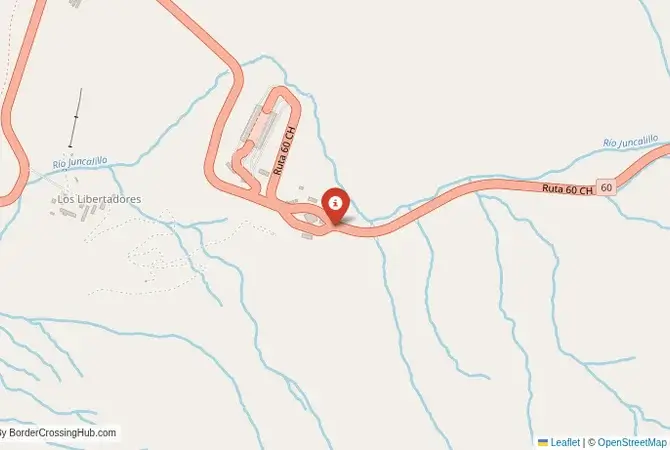
Monthly Update (October 2026):
Mendoza & Los Andes is currently being affected by another high-mountain weather closure at Paso Los Libertadores. The crossing was closed on October 6 because of a new storm in the Andes after having briefly reopened, and an estimated reopening was being discussed for October 8 subject to road conditions. Anyone planning the Mendoza–Santiago route should therefore treat the crossing as weather-dependent rather than relying on the normal schedule.
Driving there, or sending a driver? Send them this guide.
For reports and websites
Cite this page
Border Crossing Hub (2026). Los Andes & Mendoza Border Crossing. Updated October 2026. https://bordercrossinghub.com/mendoza-los-andes-border-crossing/<a href="https://bordercrossinghub.com/mendoza-los-andes-border-crossing/">Los Andes & Mendoza Border Crossing (Border Crossing Hub)</a>Put this crossing's card on your website
Free. It updates on its own when our information changes.
<iframe data-bch-card src="https://bordercrossinghub.com/mendoza-los-andes-border-crossing/?bch_view=card" width="100%" height="980" scrolling="no" style="border:0;max-width:480px;display:block" loading="lazy" title="Los Andes & Mendoza border crossing information"></iframe>
<p style="font-size:12px;margin:4px 0 0">Crossing information: <a href="https://bordercrossinghub.com/mendoza-los-andes-border-crossing/">Border Crossing Hub</a></p>
<script src="https://bordercrossinghub.com/?bch_embed_js=1" async></script>Paste it where you want the card. The last line (a script) only adjusts the height and can be left out.
About this crossing
Operational Details
This checkpoint connects the Mendoza Province of Argentina with the Valparaíso Region of Chile. It is a massive, 24/7 international facility, but it is frequently subject to closure during the winter months (June to September) due to heavy snow and avalanches. The crossing is an integrated checkpoint, with both Argentine and Chilean officials housed in a single, large facility on the Chilean side at Los Libertadores. The pass is the main route for freight and passenger traffic between the two capitals, Santiago and Buenos Aires (via Mendoza), and it is notoriously congested, with queues for trucks and buses often lasting for many hours.
A History of Crossing the Andes
The history of this crossing is the history of the challenge of crossing the Andes. This was the route taken by the Army of the Andes, led by José de San Martín, in his epic 1817 campaign to liberate Chile from Spanish rule. The original pass was over the high Bermejo Pass, at an altitude of over 3,800 meters. To commemorate the peaceful resolution of a border dispute, the iconic Christ the Redeemer of the Andes statue was erected at the summit in 1904. In the 20th century, the Transandine Railway and later the Cristo Redentor road tunnel were built at a lower altitude to provide a more reliable, year-round connection. The old pass with the statue is still accessible in the summer months as a scenic detour.
Nearby Border Crossings


Border Crossing Procedure
The border crossing procedure is a well-organized, integrated process. At the single checkpoint facility at Los Libertadores, you will proceed through a series of windows for both Argentine and Chilean immigration and customs. You will need a valid passport. Many nationalities can enter both countries visa-free for short stays, but it is essential to check the specific requirements for your nationality in advance. Vehicle registration and international insurance are also necessary. A key part of the process is the strict agricultural inspection by Chilean authorities (SAG), who prohibit the entry of most fresh fruits, vegetables, and animal products; declare all such items (fines high for non-declaration).
The Surrounding Region: Argentina Side
On the Argentine side, the crossing is the culmination of a spectacular journey through the Mendoza River valley. The road climbs steeply into the Andes, passing by the magnificent Aconcagua, the highest peak in the Americas. The area is a paradise for mountaineers and hikers. The nearby Puente del Inca is a unique natural rock bridge. The city of Mendoza is the heart of Argentina's most famous wine country, known for its Malbec wines. The region offers numerous opportunities for wine tasting, adventure sports, and enjoying the beautiful Andean scenery.
The Surrounding Region: Chile Side
On the Chilean side, the road descends from the tunnel via a famous and dramatic series of 29 hairpin turns known as "Los Caracoles" (The Snails). The scenery is breathtaking. The crossing is a gateway to the Aconcagua Valley, another of Chile's renowned wine regions. The nearby city of Los Andes is a major commercial center. The road provides a direct connection to the Chilean capital, Santiago, and the major port city of Valparaíso, a UNESCO World Heritage site.
Practical Travel Information
Practical planning is absolutely essential for this route. You must check the weather and road status before you travel, especially in winter, as closures are very common. The official currencies are the Argentine Peso (ARS) in Argentina and the Chilean Peso (CLP) in Chile. Services are available in the towns on both sides of the pass. The altitude is high, so be aware of the potential for altitude sickness. Be prepared for long waits, especially during peak season and when the pass reopens after a closure.
Final Considerations
The Paso Internacional Los Libertadores is more than just a border crossing; it is an epic journey through the heart of the Andes. It is a vital economic artery that operates at the mercy of the powerful mountain weather. It is a route that requires careful planning and patience but rewards the traveler with some of the most spectacular mountain scenery in the world. It is a passage that connects the wine lands of Mendoza with the vibrant capital of Santiago, a journey over the roof of the Americas that is truly unforgettable.
View all border crossings between Argentina and ChileHeading to Los Andes & Mendoza? Take this with you.
One page with the hours, waits, emergency numbers and coordinates. Works without signal.
Practical information
Fuel
Argentina: ~90 km - Chile: ~35 km
Currency
Nearby ARS/CLP
Safety information
Mountain pass; landslides
Connectivity
Wi-Fi; 4G
Have you crossed here?
Help other travelers by sharing your experience, wait times, and any updates.