Monthly Update (September 2026):
Zinnwald-Georgenfeld & Cínovec remains an important mountain crossing between Saxony and Czechia, with no major September closure reported. Germany's current internal border-control period at its Czech frontier ends September 15, after which a new German measure is scheduled to cover the border from September 16 through March 15, 2027. Travelers should therefore expect that document checks can continue throughout September rather than disappearing after September 15.
About this crossing
Location and Connections
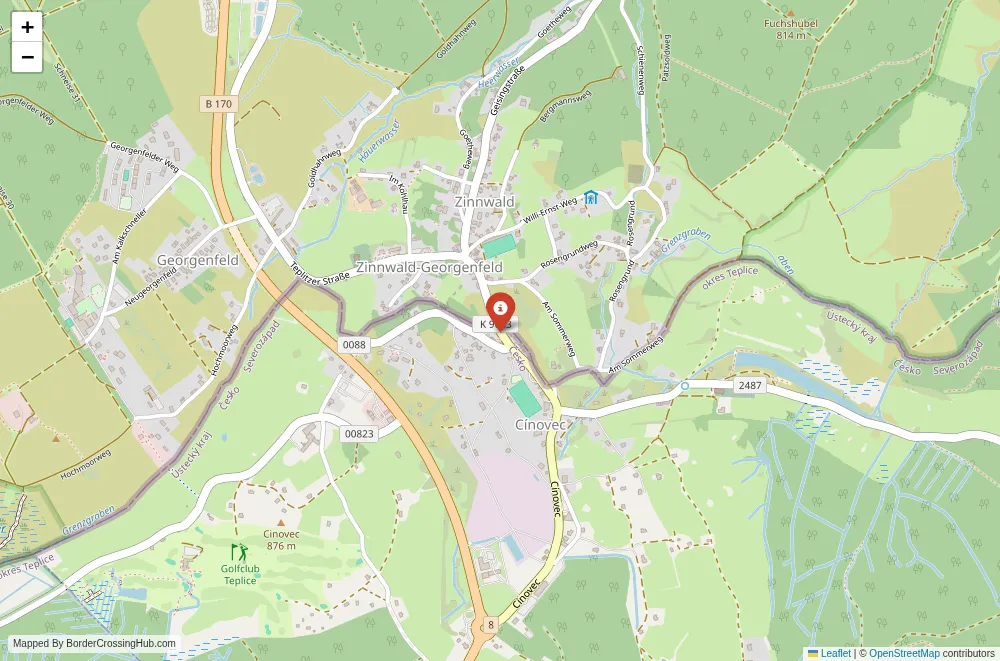
You find this crossing where Zinnwald-Georgenfeld (part of Altenberg municipality in Saxony, Germany) meets Cínovec in Czechia's Ústí nad Labem Region. It follows the Bundesstraße 170 (B170) on the German side, which becomes Silnice I/13 (part of European route E55) in Czechia. From Altenberg, it's about 10 to 15 minutes drive uphill to the border. On the Czech side, Cínovec lies roughly 5 minutes from the line, with onward access to Teplice (around 30 minutes) or Prague via D8 motorway. The route carries cars, buses, and trucks; a cross-border bus line (such as the 398) connects Altenberg-Zinnwald-Cínovec-Dubí-Teplice. Rail options remain limited nearby, though historical lines once served the area.
Alternative Names
It appears as Zinnwald-Georgenfeld–Cínovec border crossing, Cínovec-Zinnwald, or Zinnwald-Cínovec (with Georgenfeld sometimes included for the German side).
Nearby Border Crossings


Historical Background
The area boasts centuries of tin and silver mining, with Zinnwald (German) and Cínovec (Czech) sharing the same ore-rich granite stock. The border formalized in the 19th century amid Habsburg-Saxon divisions. Post-WWII, the Iron Curtain fortified it, but reopening followed German reunification and Schengen in 2007. The crossing gained renewed attention from the Zinnwald/Cínovec lithium deposit, one of Europe's largest hard-rock lithium resources, split across the border and sparking separate mining proposals by companies on each side. Old customs buildings and mining relics dot the landscape, tying into cross-border educational trails on mining history.
Geopolitical Context
Schengen since late 2007 normally eliminates routine controls. Germany continues temporary checks on all Czech land borders due to migration and security. As of February 10, 2026, these extend at least through March 15, 2026, with Bundespolizei random spot inspections possible. This crossing, on a secondary but used road, sees occasional enforcement rather than constant presence. No permanent booths operate. Check German Federal Police or Czech Interior Ministry for updates, as extensions relate to broader policy.
Practical Crossing Procedures
You drive straight through under normal Schengen flow, with a border sign marking the transition. Temporary measures may prompt police stopping you shortly after entering Germany for ID checks, travel purpose questions, or vehicle review. EU citizens show passport or national ID. Non-EU nationals need valid passports, visas/residence permits if applicable, and supporting documents like bookings or funds proof. Carry vehicle insurance and Czech vignette for I/13 onward. Pedestrians and cyclists cross too, though traffic favors vehicles.
Typical Wait Times
Without checks, passage takes seconds. Random inspections add variability: many vehicles clear quickly, but selected stops or buildup can stretch to 20 to 45 minutes, especially with truck volume. Peak times like weekends or holidays mildly increase odds of delays from volume and police activity.
Operating Hours
The road stays open 24/7 year-round. Schengen removed fixed hours. Winter snow or rare maintenance might slow access briefly, but the crossing point remains passable.
Transportation Options and Road Conditions
Drive your own car or use cross-border buses from Altenberg to Teplice via this route. The B170/I/13 climbs steadily through forested hills with good asphalt but curves and elevation gains (around 800-900 meters). Pavement holds up well, though watch for trucks, cyclists, or deer on rural sections. Views feature thick woods, old mining sites, and distant ridges.
Scams & Warnings
Scams stay uncommon here compared to larger points. No frequent touts or fake services reported. Border-area shops in Cínovec sell cheaper fuel, groceries, tobacco, alcohol, or goods to Germans; occasional notes mention aggressive pricing or informal exchange issues. Keep valuables secure in cars during any police stops. Drive carefully on the winding, high-altitude approach roads.
Nearby Attractions
Cínovec offers basic services and access to mining heritage sites. Zinnwald-Georgenfeld features the Besucherbergwerk Zinnwald museum with underground tours of historic tin mines. Cross-border mining educational trails (around 40 km loops) highlight shared geology and history. Nearby Altenberg includes ski areas and the Geisingberg viewpoint. The region suits those interested in mining pasts, hiking, or winter sports amid the Ore Mountains.
Seasonal Variations and Weather Impacts
Winter snow December to March demands winter tires; roads ice in shaded high sections. Summer sees more hikers and tourists with clearer conditions. Autumn foliage adds color to the forests with moderate traffic. Fog or rain reduces visibility on curves, but closures for weather occur infrequently on this maintained route.
Travel Tips and Preparation
Carry passport or ID always due to possible checks. Purchase Czech vignette online if continuing on motorways. Refuel or shop in Czechia for savings. Offline maps help in hilly areas with variable signal. Pack layers for mountain weather shifts. Check police sites or border apps for control status before departure.
Cultural and Economic Significance
The crossing supports regional trade, tourism, and cross-border bus services linking Saxony to northern Bohemia. Shared mining legacy drives educational trails and joint heritage efforts. Emerging lithium projects on both sides highlight economic potential in critical raw materials, though they spark local debates on environmental impacts.
Before You Cross
Confirm temporary control details from official sources just prior to travel. With awareness of spot checks and prep for mountain roads, you handle this elevated, history-rich crossing and continue into the Ore Mountains' mining landscapes. Safe travels.
View all border crossings between Germany and Czech RepublicPractical information
Fuel
Germany: <1 km - Czech Republic: <1 km
Currency
EUR; CZK in Teplice/Dresden; ATMs
Safety information
High pass; fog/ice; closures possible
Connectivity
Wi-Fi points; 4G
Have you crossed here?
Help other travelers by sharing your experience, wait times, and any updates.