
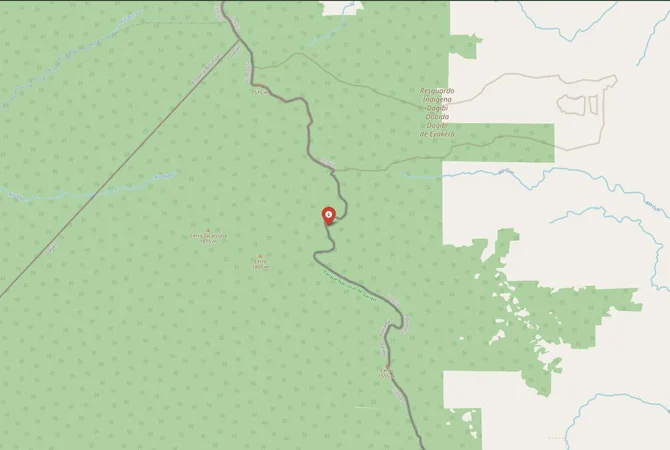
Approximate Border Location
Wait Times
No formal crossing; irregular hours
Just crossed? Tap to report:
Operating Hours
No official hours
Crossing Types
Informal foot/boat only
Border Type
Jungle
Peak Times
None
Daily Crossings
Unknown
Currency Exchange
USD/COP
Safety Information
High risk area
Languages Spoken
Spanish
Accessibility Features
None
About Yaviza & Turbo
No Cell Service at the Border? No Problem.
Don’t get caught scrambling for paperwork when you lose signal. Download the complete South America Transit Guide directly to your device and access every critical detail, fast-track strategy, and border rule – 100% offline.
Where the Road Ends in Panama
At the edge of the Pan-American Highway, the Yaviza–Turbo crossing represents a rare kind of border: one without a direct road connection. Here, Panama meets Colombia not through a traditional checkpoint, but across the dense and roadless Darién Gap. On one side sits Yaviza, the final reachable town by road in Panama. On the other is Turbo, a coastal port town connected by boat routes. This crossing is often called the Yaviza–Turbo Border Crossing, though it functions very differently from most international borders.
A Crossing That Requires Serious Caution
This is not a standard land crossing, and you should treat it with extreme caution. The Darién Gap between Panama and Colombia is one of the most dangerous and inaccessible regions in the Americas. There is no official road connecting the two countries here. You should not attempt to travel overland between Yaviza and Turbo. The jungle terrain is harsh, with risks that include wildlife, flooding, criminal activity, and lack of infrastructure. Even experienced travelers and locals avoid crossing the Darién Gap without specialized support. The practical way to move between these countries is by air or sea, not by attempting a jungle crossing.
The Darién Gap and Its Global Significance
The absence of a road between Panama and Colombia is not accidental. The Darién Gap is a stretch of dense rainforest that interrupts the Pan-American Highway, which otherwise runs from Alaska to southern Argentina. Efforts to connect the highway have been proposed for decades but remain unrealized due to environmental concerns, indigenous land rights, and security issues. The region is home to diverse ecosystems and indigenous communities such as the Emberá and Wounaan. This gap has also become a migration route in recent years, with thousands attempting to cross under extremely difficult conditions. As a traveler, you should avoid confusing migration routes with viable travel options.
How the Crossing Actually Works
There is no single checkpoint where you exit Panama and enter Colombia directly. Instead, you must break the journey into separate segments. From Yaviza, you cannot continue by road. To reach Colombia, you typically travel back toward Panama City and then: * Take a flight to a Colombian city such as Medellín or Cartagena * Or travel to the Caribbean coast and arrange a boat trip toward Turbo or nearby ports On the Colombian side, Turbo serves as a gateway for maritime transport rather than a land entry point from Panama.
Immigration Procedures on Both Sides
To exit Panama, you must go through official immigration at designated checkpoints, usually in Panama City or other major transit points. Yaviza itself does not function as a full international exit point for foreign travelers. When entering Colombia, you will complete immigration procedures at your arrival point, whether that is an airport or a port such as Turbo. Visa requirements depend on your nationality, but many travelers can enter both Panama and Colombia visa-free for short stays. Always confirm current entry rules before traveling.
Transport Realities Between Yaviza and Turbo
The key detail to understand is that there is no direct transport link between Yaviza and Turbo. From Yaviza, your only option is to return west toward larger cities. The road from Panama City to Yaviza takes about 6 to 8 hours, passing through remote jungle regions. If you choose a sea route, boats typically depart from Caribbean coastal areas such as Colón or nearby regions, not from Yaviza itself. These trips can take multiple days and often involve stops in the San Blas Islands. On arrival in Turbo, you will find connections to inland Colombian cities, especially Medellín.
Seasonal Conditions and Environmental Challenges
Weather plays a major role in this region. The Darién Province experiences heavy rainfall for much of the year, which affects road conditions even on the Pan-American Highway leading to Yaviza. During the rainy season, landslides and flooding can delay travel. Boat routes along the Caribbean coast may also be affected by rough seas. Humidity and heat are constant factors, so you should prepare accordingly if traveling anywhere near this region.
Safety Concerns and Real Traveler Experiences
Travelers who have attempted to cross the Darién Gap on foot often report extreme hardship. Accounts include days of trekking through mud, river crossings, encounters with armed groups, and serious health risks. There have also been reports of theft, abandonment by guides, and injuries without access to medical care. These are not isolated incidents. Even if you are an experienced adventurer, this route is not suitable without professional support and permits, which are rarely granted for casual travel.
Cultural and Regional Context
The border region reflects a sharp contrast between Central and South America. Panama’s infrastructure extends only as far as Yaviza, while Colombia’s network begins again at coastal towns like Turbo. Indigenous communities in the Darién maintain traditional ways of life, largely separate from modern transport systems. This contributes to the preservation of the rainforest but also limits accessibility. Turbo itself is a working port town with a focus on trade and transport rather than tourism. From there, the journey inland opens up to Colombia’s larger cities and cultural centers.
Nearby Points of Interest
If you travel to Yaviza, you are already deep in Panama’s Darién region. This area is known for its biodiversity and national parks, though access is limited and often requires permits. On the Colombian side, once you reach Turbo, you can continue to Medellín, a major city known for its transformation and cultural scene. Coastal areas nearby offer access to lesser-known Caribbean beaches. These destinations are far more practical to explore than attempting to connect the two border towns directly.
Why This Crossing Is Unique
The Yaviza–Turbo crossing stands out because it represents a break in one of the world’s longest road systems. It is less a crossing in the traditional sense and more a geographic interruption that forces travelers to rethink their route. Unlike typical borders with checkpoints and queues, this one highlights the limits of infrastructure and the power of natural landscapes to shape travel.
Final Thoughts
If you are planning travel between Panama and Colombia, you should treat Yaviza and Turbo as endpoints rather than a connected crossing. Choose flights or established sea routes instead of attempting to bridge the gap yourself. This region remains one of the most challenging areas in the Americas, and careful planning is essential. While the idea of crossing here may sound appealing to adventurous travelers, the reality is far more complex and demanding than most expect.
No reviews yet.