
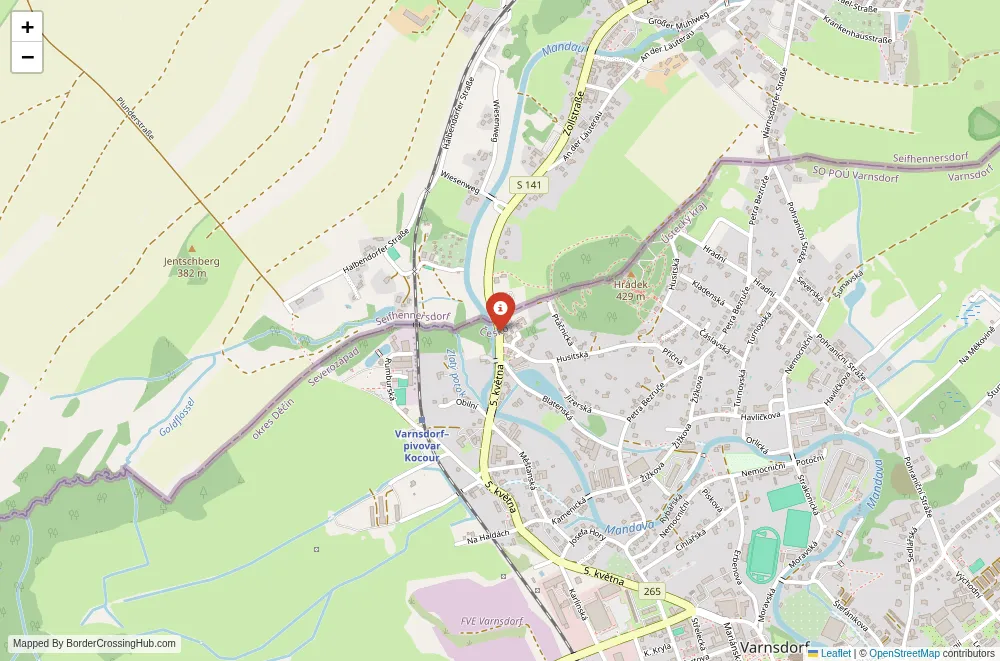
Approximate Border Location
Border Countries
Border Cities
- 🇨🇿Varnsdorf
- 🇩🇪Seifhennersdorf
Wait Times
Cars 0-10m; peaks 15-60m commute
Just crossed? Tap to report:
Operating Hours
Open 24 hrs (12:00 AM-11:59 PM)
Crossing Types
Ped,cars,bikes; local crossing
Border Type
Land crossing via local road
Peak Times
07:00-09:00 AM; 04:00-06:30 PM
Daily Crossings
6,000-22,000/day
Currency Exchange
EUR; CZK in Varnsdorf; ATMs available
Safety Information
Urban traffic; standard caution
Languages Spoken
German/Czech
Accessibility Features
Mostly step-free; marked crossings
About Wernitzgrün & Horní Luby
Monthly Update (March 2026):
As of 03/2026, the Wernitzgrün & Horní Luby Border Crossing stays quiet and mostly stable. The rural road carries light local traffic, with vehicles moving through easily on both sides. Afternoons bring a few more cars returning from nearby towns. Rain or fog in the surrounding hills can slow the drive a little.
No Cell Service at the Border? No Problem.
Don’t get caught scrambling for paperwork when you lose signal. Download the complete Europe Transit Guide directly to your device and access every critical detail, fast-track strategy, and border rule – 100% offline.
The Wernitzgrün-Horní Luby crossing quietly bridges a rural stretch of the western Ore Mountains foothills, where a local road links the small German village of Wernitzgrün with the Czech settlement of Horní Luby (part of Luby) in the Karlovy Vary Region.
Location and Connections
You reach this spot along a minor road from Wernitzgrün (a district of Erlbach in Saxony’s Vogtlandkreis) eastward into Horní Luby. From Erlbach or Adorf in Germany, Wernitzgrün lies about 10 to 15 minutes drive through hilly countryside. On the Czech side, Horní Luby sits a short distance from Luby proper (once Schönbach), with links to Cheb (around 30 to 40 minutes) or Františkovy Lázně. Cars, motorcycles, cyclists, and pedestrians use it primarily; no heavy trucks or major highways pass through. The route appeals to locals for shopping, hikers on cross-border trails, and those exploring the Vogtland-Erzgebirge edge.
Alternative Names
It appears as Wernitzgrün–Horní Luby border crossing, Horní Luby–Wernitzgrün, Luby–Wernitzgrün (from the larger Czech town), or sometimes Schönbach-Wernitzgrün from historical German references.
Historical Background
The area traces older trade and settlement paths in the Vogtland-Bohemia frontier. Post-WWII, the Iron Curtain closed it tightly from the late 1940s, with fortifications and restricted access. Reopening came gradually after 1989, with the road crossing gaining full use around 2008 (when it reopened for car traffic after earlier limitations). Former customs buildings linger on the Czech side as relics. The spot ties into regional history of glassmaking, textiles, and musical instrument crafting in nearby Luby (famous for harmonicas and accordions). Annual border festivals since the 1990s celebrate renewed ties, with the 31st event held in 2025 at the former line.
Geopolitical Context
Schengen since late 2007 normally allows free passage with no routine controls. Germany maintains temporary checks on all Czech land borders due to migration and security. As of February 10, 2026, these extend at least through March 15, 2026, with Bundespolizei random spot inspections possible. This quiet crossing sees very infrequent enforcement compared to motorways, but document checks can occur near the line. No permanent booths or barriers remain. Verify via German Federal Police or Czech Interior Ministry sites for any short-notice adjustments.
Practical Crossing Procedures
You drive or walk across the local road, guided by border markers or signs. Temporary measures might lead to a police stop shortly after entering Germany for ID verification, travel purpose questions, or quick vehicle glances. EU citizens show passport or national ID. Non-EU nationals need valid passports, visas/residence permits if applicable, and supporting items like accommodation proof. Carry vehicle insurance. Pedestrians and cyclists cross easily on the road. No vignette applies since this avoids highways.
Typical Wait Times
Normally you cross in moments with no delay. Random checks add variability: most pass quickly, but selected stops take 10 to 30 minutes if details get examined or a short queue waits. Traffic volume stays low, so backups remain rare even on weekends or during local events.
Operating Hours
The road stays open 24 hours daily, year-round. Schengen eliminated fixed hours. Winter snow or ice might slow mountain approaches temporarily, but the crossing point itself remains passable.
Transportation Options and Road Conditions
Your own car provides the easiest access; local buses connect from Erlbach or nearby Czech towns, though service stays infrequent. No rail crosses directly here (nearest lines serve Adorf or Cheb areas). The road offers decent pavement through rolling hills with curves, farmland, and forested patches. Elevation stays moderate, with views of open fields, small woods, and distant ridges. Watch for wildlife, cyclists, or farm vehicles on rural stretches.
Scams and Warnings
Scams appear minimal at this low-traffic, rural crossing. No widespread touts, fake services, or border hustles reported. Nearby Czech shops in Horní Luby or Luby sell cheaper fuel, groceries, tobacco, alcohol, or goods to Germans; occasional traveler notes mention aggressive pricing or informal exchange drawbacks. Keep valuables secure in cars during any police stops. The peaceful countryside setting feels low-risk for cautious visitors.
Nearby Attractions
Horní Luby provides basic services and proximity to Luby’s harmonica museum and historic center. Wernitzgrün offers quiet village life with access to cross-border trails like the Grenzskiwanderweg (border ski path) or routes over Hoher Stein and Kegelberg hills. The Vogtlandkamm features hiking and cycling paths, including multi-day tours crossing the border multiple times. Nearby Erlbach adds ski lifts and nature spots. The region suits outdoor enthusiasts seeking trails, border history, or musical heritage over urban draws.
Seasonal Variations and Weather Impacts
Winter snow December to March requires winter tires; roads can ice in shaded areas or hills. Summer brings hikers and cyclists with clearer conditions. Autumn foliage colors the landscapes with fewer people. Rain slicks curves occasionally, but weather-related closures stay uncommon on this maintained local road.
Travel Tips and Preparation
Carry passport or ID at all times due to possible checks. Refuel or shop in Czechia for lower costs. Offline maps help in rural zones with patchy signal. Pack layers for hill weather changes and sturdy shoes for trails. Check police sites or border apps for control status before departure. Stick to marked paths on hikes to respect private or protected land.
Cultural and Economic Significance
Cross-border shopping and events support local ties: Germans buy affordable Czech goods, sustaining small businesses in Horní Luby. The route fosters connections in the Vogtland-Bohemia area through shared heritage in crafts (like musical instruments), joint festivals, and trail networks that highlight common mountain roots.
Before You Cross
Confirm temporary check details from official sources right before travel. With prep for rare stops and rural roads, you manage this understated crossing and continue into the hilly border countryside. Safe travels.
No reviews yet.