
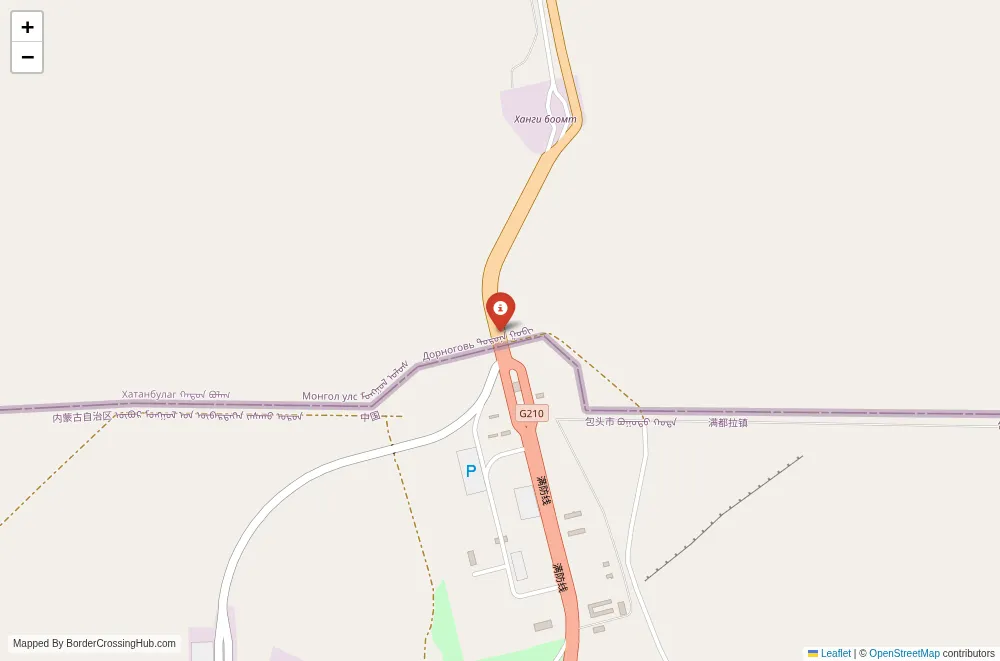
Approximate Border Location
Wait Times
Trucks 60-240m; peaks 240-720m
Just crossed? Tap to report:
Operating Hours
Open 24 hrs (12:00 AM-11:59 PM)
Crossing Types
Freight,cars limited; border controls
Border Type
Land crossing via road (local)
Peak Times
Mon-Fri 02:00-07:00 PM
Daily Crossings
500-3,500/day
Currency Exchange
CNY; MNT; USD common; ATMs limited
Safety Information
Remote steppe; long queues possible
Languages Spoken
Mandarin, Mongolian, English
Accessibility Features
Basic; limited accessibility
About Wanding & Wanding
Monthly Update (March 2026):
As of 03/2026, the Wanding & Wanding Border Crossing stays fairly calm with moderate cross-border movement. Cars and small trucks pass steadily, though inspections on the Chinese side can slow the line during busy periods. Midday tends to move more smoothly. Local trade and regional travel influence the pace.
No Cell Service at the Border? No Problem.
Don’t get caught scrambling for paperwork when you lose signal. Download the complete Asia Transit Guide directly to your device and access every critical detail, fast-track strategy, and border rule – 100% offline.
The Wanding-Wanding border crossing (also known as Wanding in Myanmar’s Shan state and Wanding in China’s Yunnan province) connects the town of Wanding in Ruili city, Dehong Dai and Jingpo Autonomous Prefecture, Yunnan, to the Myanmar border town of Wanding in Muse township, northern Shan state. You reach this point when traveling overland between southwestern China and northern Myanmar, often as part of routes from Kunming or Mangshi toward Mandalay, Lashio, or farther into Myanmar. It serves as a secondary but significant land crossing along the China-Myanmar border, handling passenger traffic, small vehicles, and local trade in a region where cross-border commerce in jade, timber, fruits, and consumer goods has long flourished.
Location and Connections
Wanding (China) lies in Ruili city, about 20 kilometers south of Ruili’s main urban center and roughly 100 kilometers from Mangshi. The Myanmar side, also called Wanding, sits directly opposite in Muse township, with onward roads to Muse town (about 10 kilometers) and farther to Lashio or Mandalay. The crossing features separate immigration and customs facilities on both sides, with a short neutral zone and a paved road bridge over the Shweli River (Ruili River in China). The surrounding landscape includes subtropical hills, rubber plantations, banana fields, and bustling border markets typical of the China-Myanmar frontier. No rail passenger service crosses directly (the main rail link is at nearby Ruili-Muse), but freight trains use adjacent corridors. The area is known for its vibrant jade and gem trade, with markets on both sides drawing merchants from across China and Myanmar.
Historical and Geopolitical Background
The China-Myanmar border stretches 2,129 kilometers, formalized by the 1960 boundary treaty after colonial-era disputes. Wanding has served as a trade route for centuries, used by caravans along the old Yunnan-Burma Road. The crossing gained modern importance after Myanmar opened to China in the 1990s, becoming a key artery for Chinese goods (electronics, machinery, textiles) flowing into Myanmar and Myanmar exports (jade, timber, agricultural products, minerals) entering China. It has remained economically vital despite Myanmar’s political upheavals, including the 2021 coup and ongoing civil conflict in Shan state. Fighting between ethnic armed groups and the Myanmar military has occasionally disrupted operations, but China has maintained strong influence to keep trade flowing. The crossing supports billions in annual trade, with Ruili designated a special economic zone and Muse a major border economic cooperation zone. Fun fact: Wanding’s name in Chinese translates to “ten thousand ding” (a historical unit), reflecting its long role as a trade hub, while the Myanmar side’s markets have become multicultural centers where Burmese, Dai, Jingpo, and Han communities mingle daily.
Current Status and Operating Hours
As of early 2026, Wanding-Wanding operates as a major international crossing for passengers, vehicles, and freight, though with periodic restrictions due to Myanmar’s internal conflict. The crossing opens daily from 8:00 a.m. to 8:00 p.m. (China time; Myanmar is 1.5 hours behind), with extended hours for freight during peak trade seasons. Passenger traffic includes daily buses, private vehicles, and pedestrians, while freight trucks (especially for fruits, rubber, and jade) create long queues during harvest periods. The crossing has seen intermittent closures or reduced operations due to fighting in northern Shan state, but China has prioritized keeping it open for economic reasons. Monsoon rains (June to October) cause flooding risks on Myanmar approaches, while dry season (November to May) provides stable access. Security involves heavy Chinese and Myanmar presence, with thorough checks for goods and documents. Verify status through Chinese Yunnan Border Inspection, Myanmar Immigration, or traveler forums, as conflict or policy changes can affect access.
Crossing Procedures Step by Step
You process exit and entry on both sides. From China to Myanmar: at Wanding Chinese immigration, present your passport for exit stamp, answer questions on purpose and duration, and clear customs if carrying goods. Walk or drive across the bridge to Wanding Myanmar immigration for entry stamp (Myanmar citizens cross freely; foreigners use visa-on-arrival or e-visa). The reverse from Myanmar follows the same sequence: Myanmar exit stamp followed by Chinese entry (customs check for restricted items). Procedures include manual document verification, bag or vehicle scans, and security questions. Wait times range from 30 minutes to several hours, longer for trucks or during peak periods. Foreigners report efficient processing when open, though expect added scrutiny for goods, cash, or longer stays.
Visa Requirements for Foreign Visitors
Chinese and Myanmar citizens cross without visas under bilateral arrangements for border residents or short trips. Foreigners entering Myanmar from China can obtain visa-on-arrival at land borders (30 days for $50 USD for most nationalities; payable in cash, USD preferred). Bring passport photos and exact fees. Passports need six months validity. China requires no visa for Myanmar citizens but may check foreigners for onward permits if traveling to restricted areas in Yunnan. Rules remain stable, but confirm via embassies or official portals, as Myanmar’s conflict and China’s border policies can affect enforcement.
Transportation Options and Road Details
From Kunming, high-speed trains or buses reach Ruili (8-10 hours by bus; train to Mangshi then bus). From Wanding Myanmar side, buses or shared taxis head to Muse, Mandalay, or Lashio. Private cars cross if compliant (insurance, permissions). No direct public buses routinely cross; arrange onward locally after clearance. Roads from Ruili stay paved and modern; Myanmar side includes highways with occasional rough patches and military checkpoints. Monsoon mud or conflict can delay travel. Full Kunming-Mandalay trip takes 2-3 days with border time. Daylight travel essential for safety and visibility.
Scams and Safety Warnings
Common issues include inflated transport fares near Ruili or poor exchange rates (use banks). Touts may offer “fast” services or unofficial currency exchange. Myanmar’s northern conflict brings risks of roadblocks, fighting spillover, or instability; avoid non-essential travel to Shan state. Monitor news closely; register with embassies. Avoid unofficial paths or nighttime travel.
Nearby Attractions and Practical Tips
Ruili offers vibrant markets, jade halls, and Dai minority villages. Muse leads to Mandalay’s temples or Lashio’s markets. Carry USD/CNY/MMK cash, water, snacks, sunscreen, and passport copies. Start early; consider other crossings as backups. Translation apps aid local interactions.
Final Notes for Planning
Wanding-Wanding provides a busy, economically significant crossing between China and Myanmar, with straightforward procedures when open. Confirm status, prepare visas/fees, and monitor security. With preparation, it offers access across this vibrant frontier. Safe travels.
No reviews yet.