
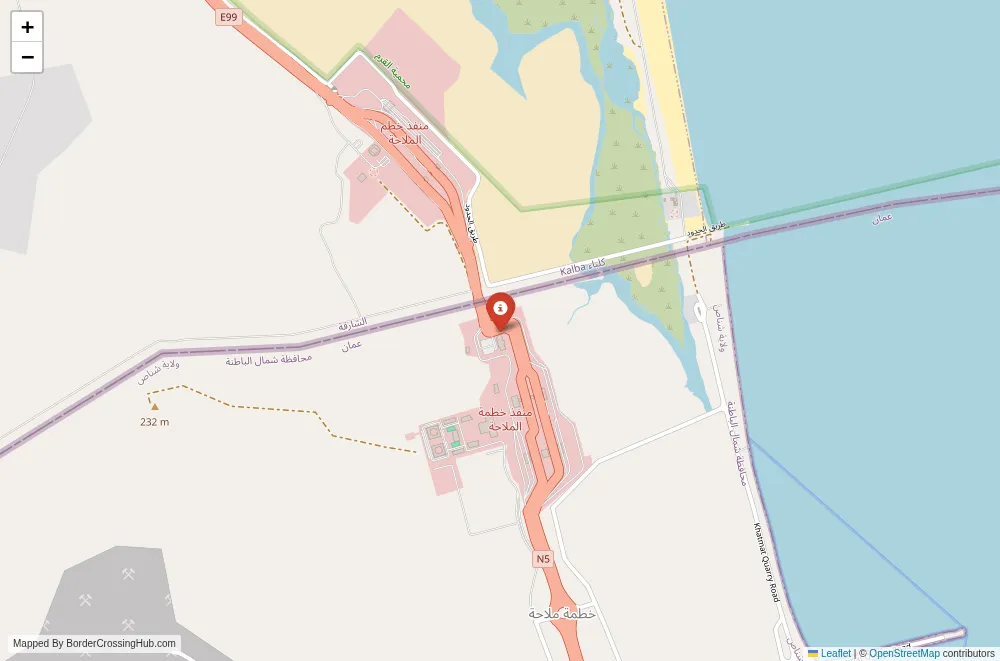
Approximate Border Location
Border Countries
Border Cities
- 🇴🇲Wam
- 🇦🇪Fujairah
Wait Times
Cars 10-40m; peaks 60-150m weekends
Just crossed? Tap to report:
Operating Hours
Open 24 hrs (12:00 AM-11:59 PM)
Crossing Types
Ped,cars,buses; border controls
Border Type
Land crossing via motorway (UAE–Oman)
Peak Times
Thu-Sat 09:00 AM-01:00 PM
Daily Crossings
2,000-9,000/day
Currency Exchange
AED; OMR at posts/towns; ATMs nearby
Safety Information
Queueing possible; keep documents ready
Languages Spoken
Arabic, English
Accessibility Features
Paved lanes; step-free varies
About Wam & Fujairah
The Wam border crossing, also known as the Wam Gate or Dibba Al Fujairah crossing, opened in late February 2025 as a new land link between the United Arab Emirates’ Fujairah emirate and Oman’s Dibba area, providing direct access toward Musandam or northern Oman. You head here primarily from Fujairah or nearby UAE spots to reach Oman’s Musandam Peninsula or onward routes, adding another option alongside established points like Kalba/Tibat or Al Darah. This facility targets improved trade, passenger flow, and connectivity between the two countries.
Location and Connections
The crossing sits in Dibba Al Fujairah, eastern UAE, where UAE roads transition to Omani routes leading into Dibba (shared between Fujairah and Musandam) and beyond to Khasab or other Musandam spots. From Dubai or Sharjah, drive north via E99 through Fujairah (about 2-3 hours), then to the post. On the Omani side, paved roads continue along the coast or inland, reaching Khasab in under an hour. The site covers a large area with multiple buildings for processing. Vehicle traffic dominates, supporting cars, trucks, and some commercial movement.
Historical and Geopolitical Background
This point emerged from UAE-Oman efforts to expand border infrastructure after decades of cooperation since the 1970s peace agreements. Opened February 26, 2025, by UAE authorities (with ICP oversight), it addresses growing demand for easier access to Musandam, an Omani exclave bordered by UAE emirates like Fujairah and Ras Al Khaimah. Musandam’s strategic position near the Strait of Hormuz has long influenced ties, with the crossing boosting local economies through tourism and trade. Fun fact: Dibba’s shared history includes ancient ports and pearl diving, with the area split between UAE and Oman reflecting 20th-century boundary settlements.
Current Status and Operating Hours
By early 2026, the crossing runs actively since its 2025 launch, with no major disruptions noted. Hours align with other UAE-Oman points, often 24/7 or extended daily for passenger and trade use. Peak times hit during UAE holidays, weekends, or national events, leading to queues. Summer heat (May-October) brings intense temperatures and dehydration risks; winter stays comfortable. Fuel and services exist nearby in Fujairah or Dibba. Verify via UAE ICP or Omani ROP sources for any short-term changes.
Crossing Procedures Step by Step
You start with UAE exit at the Fujairah post: present passports, vehicle papers, and possibly NOC for financed cars. Pay the standard AED 35 exit fee per person (cash or card), get stamps, and a gate slip. Drive short distance to Omani immigration for entry checks, visa processing if needed, and vehicle insurance verification (Oman coverage required). Reverse on return. Procedures include basic security and customs scans. Wait times vary from 20-45 minutes off-peak to longer during busy periods; focus remains on quick processing for tourists and residents.
Visa Requirements for Foreign Visitors
Oman entry depends on nationality. Many (including most Western passports and UAE residents) get a 14-day visa on arrival (often free or ~5 OMR/AED 47), with a mandatory digital entry permit applied via ROP app or evisa portal at least 72 hours ahead. GCC citizens cross visa-free. UAE tourist/resident visa holders generally proceed without issues. Passports need six months validity; carry copies and photos. For extended stays, pre-apply for e-visa. UAE exit stays simple. Confirm details with embassies or ROP, as requirements can adjust.
Transportation Options and Road Details
Drive your own or rented car (ensure Oman insurance; get NOC if financed). From Dubai, take E311 to E99 through Fujairah, then local roads to the post. Shared taxis or private transfers operate from UAE cities to Fujairah, with onward taxis in Oman. Roads stay paved and scenic post-crossing, with coastal views and mountains. Full Dubai to Dibba/Khasab trip takes 3-5 hours including border. No regular public buses cross, but tours handle groups.
Scams and Safety Warnings
Hassles stay low at newer facilities, but watch for unofficial helpers charging extra near approaches. Overcharges occur from some drivers in Fujairah. The area remains safe for tourists, with low crime, but remote roads mean breakdowns risk delays; carry water and contacts. Photography limits apply at immigration. Musandam holds no major advisories, though general Gulf monitoring applies for tensions. Arrive early on holidays to cut waits.
Nearby Attractions and Practical Tips
Fujairah side offers beaches, Hajar Mountains hikes, and bull-butting events. In Oman, Dibba leads to Musandam fjords for dhow trips, dolphin watching, snorkeling, or Khasab fort. Carry AED/OMR cash (cards work at border), water, sunscreen, and vehicle kit. Start journeys early for cooler drives and shorter lines. Book accommodations if overnighting.
Final Notes for Planning
Wam adds a fresh, convenient route from Fujairah into Oman, especially useful for Musandam access. Sort visas, fees, and insurance beforehand, time your trip to avoid peaks, and check statuses close to travel. With prep, you clear the post and enjoy the coastal or mountain scenery ahead. Safe journeys. (Word count: 952)
No reviews yet.