
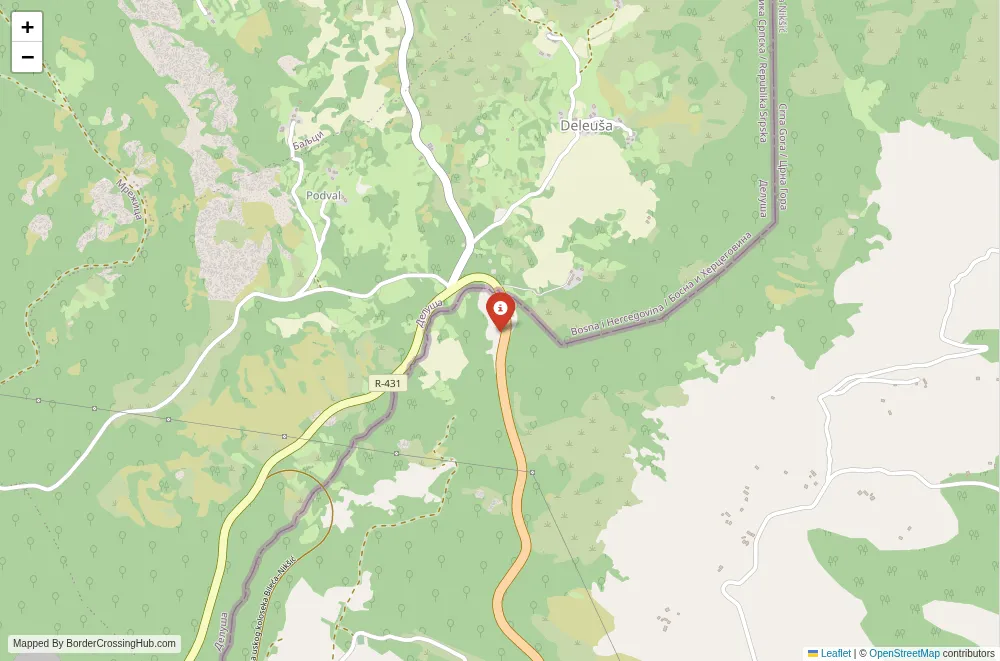
Approximate Border Location
Border Countries
Border Cities
- 🇲🇪Vraćenovići
- 🇧🇦Deleuša
Wait Times
Cars 10-45m; peaks 60-240m summer
Just crossed? Tap to report:
Operating Hours
Open 24 hrs (12:00 AM-11:59 PM)
Crossing Types
Cars,buses; some freight; controls
Border Type
Land crossing via road (regional)
Peak Times
Fri-Sun 09:00 AM-01:00 PM; Jul-Aug
Daily Crossings
2,000-10,000/day
Currency Exchange
EUR; BAM in Trebinje/Nikšić; ATMs
Safety Information
Queues in season; watch sharp bends
Languages Spoken
Montenegrin/Bosnian
Accessibility Features
Paved lanes; step-free varies
About Vraćenovići & Deleuša
The Vraćenovići-Deleuša border crossing stands as one of the newer and more practical inland connections between Montenegro and Bosnia and Herzegovina. It offers a joint facility that streamlines passage through the hilly landscape of eastern Herzegovina and southern Montenegro.
Location and Basic Connections
You reach this crossing along the M-9 road from Nikšić in Montenegro, heading toward Bileća in Bosnia and Herzegovina. Vraćenovići lies on the Montenegrin side in Nikšić Municipality, while Deleuša sits opposite in Republika Srpska entity near Bileća. The point connects rural roads through valleys and low mountains, avoiding the coastal highway entirely. From Nikšić it takes roughly 30 to 40 minutes by car under normal conditions; from Bileća the distance is similar. Private vehicles dominate traffic here, with occasional local buses or taxis linking to larger centers like Podgorica or Trebinje. No heavy freight routes pass through regularly, keeping the crossing focused on passenger movement.
Historical Background
This stretch of frontier follows administrative lines established after the breakup of Yugoslavia, dividing communities in the Herzegovina-Montenegro borderlands where Serb, Montenegrin, and Bosniak populations have long overlapped. The area saw limited fighting during the 1990s conflicts, but the crossing itself emerged later as part of post-war normalization. Construction of the joint facility started in 2019, funded partly through EU support for integrated border management. It opened officially in October 2020, becoming the first joint crossing between Montenegro and Bosnia and Herzegovina located on Montenegrin soil. The shared setup reflects bilateral efforts to reduce duplication and speed up daily cross-border life for residents in this sparsely populated zone.
Current Status and Safety Warnings
The crossing operates without interruption in early 2026, running 24 hours a day for passenger cars and light vehicles. Live feeds from Montenegrin border cameras show consistent low activity, with no recent closures or major incidents. Joint control means officials from both countries work in the same facility, cutting down on repeated checks. Safety concerns remain minimal. The rural setting brings few of the scams or crowds seen at coastal points. Petty theft stays rare due to small numbers of travelers. Language differences can slow things if officials speak only local languages, but English often works at basic levels. The main caution involves mountain roads leading to the crossing; winter ice or summer heat can affect driving. Always check current conditions on Montenegro’s Ministry of Interior camera feeds or Bosnia’s border police website. Weather updates matter more than politics here.
Operating Hours and Wait Times
Twenty-four-hour service applies for people and vehicles. Customs for goods may have daytime limits, but passenger traffic flows around the clock. Average processing takes 15 to 45 minutes, frequently closer to 20 minutes thanks to the single-stop joint system. Queues almost never exceed half an hour, even during summer weekends when tourism increases slightly. Weekday mornings or late evenings often see near-empty lanes.
Visa Requirements for Foreign Visitors
Montenegro grants visa-free entry to citizens of many countries for stays up to 90 days. Bosnia and Herzegovina offers the same for most passports, typically 90 days within 180. At this joint point, you receive entry and exit stamps from both sides in one process. No additional fees or permits apply for tourists. Biometric passports simplify verification. Double-check your nationality’s specific rules, as land border policies align with general visa regimes.
Crossing Procedures Step by Step
Drive up to the joint facility from either direction. Montenegrin and Bosnian officers handle documents together in shared booths. Present passports, vehicle registration, and any declarations. Customs officers may ask about goods or luggage. After clearance, proceed directly onto the road in the other country. The reverse works identically outbound. Facilities include modern lanes, covered areas, and basic restrooms. No neutral zone exists, so the process feels more like one checkpoint than two separate ones.
Transportation Options
Private cars provide the most flexibility on these rural roads. Renting in Podgorica or Nikšić works well for Montenegro arrivals. In Bosnia, options from Trebinje or Bileća include taxis or local minibuses. No international buses regularly stop at the crossing itself; most travelers drive or arrange private transfers. Fuel stations exist in nearby villages, so fill up before the final stretch.
Road Conditions and Scenery
The connecting roads stay paved and generally in good shape, though narrow with gentle curves through valleys and low hills. Some sections show wear after heavy rain. Scenery features open agricultural land, scattered villages, patches of forest, and karst limestone outcrops typical of eastern Herzegovina. The route offers a calm contrast to the busier coastal highway, with occasional views of distant mountains and quiet countryside.
Nearby Attractions
Vraćenovići sits in quiet Montenegrin territory near Nikšić, close to Pivsko Lake for fishing or boating. Nikšić itself holds the royal palace, brewery tours, and access to Durmitor National Park farther north. On the Bosnian side, Deleuša lies near Bileća with its lake and surrounding hills. Trebinje, a short drive away, offers an old town, Orthodox monasteries, and Herzegovinian wine cellars. The crossing serves as a gateway to inland Herzegovina exploration or drives toward Mostar.
Seasonal Variations and Weather Impacts
Year-round 24/7 operation helps, but winter brings snow and ice on the higher roads, sometimes slowing access for days. Spring rain can make surfaces slippery, while summer heat increases traffic slightly from tourists heading inland. Fog in valleys occasionally reduces visibility. Low overall volume keeps seasonal backups rare.
Practical Travel Tips
Carry euros, accepted on both sides. Have local currencies handy for small purchases. Fuel up in towns before the rural final leg. Declare any goods to avoid fines. Bring water and snacks for the drive. Use daylight hours on winding sections if possible. Check live border cameras for queues. Keep documents ready and avoid unofficial helpers if any appear.
Cultural and Economic Role
The point supports daily life for border-area residents, enabling family visits, small trade in agricultural products, timber, or local goods, and easier regional movement. It strengthens economic links in this less-developed corridor, helping tourism reach inland Herzegovina and southern Montenegro while reflecting shared cultural roots in the region.
Summing Up This Inland Crossing
Vraćenovići-Deleuša delivers a smooth, efficient way to cross from Montenegro to Bosnia and Herzegovina away from coastal congestion. The joint setup saves time, the roads offer pleasant scenery, and the low crowds make it a relaxing option. Verify queues and weather before setting out, then enjoy the drive through the hills. Safe travels across the border.
See other crossings between Bosnia & Herzegovina and Montenegro
See other crossings between Bosnia & Herzegovina and Montenegro
No reviews yet.