
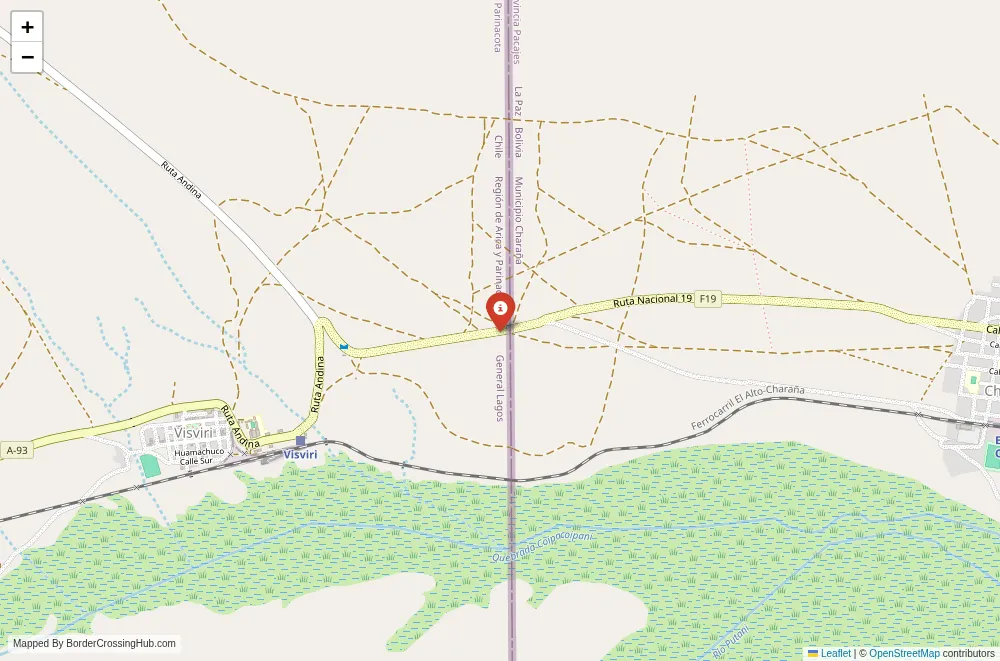
Approximate Border Location
Wait Times
Cars 5-30m; peaks 45-120m
Just crossed? Tap to report:
Operating Hours
08:30 AM-08:00 PM
Crossing Types
Cars/minibuses; rail ops limited; no heavy trucks
Border Type
Land crossing via remote road
Peak Times
10:00 AM-01:00 PM; summer travel peaks
Daily Crossings
80-300/day
Currency Exchange
Bs; CLP mainly in Arica; little at post
Safety Information
Isolated; cold/wind exposure; plan supplies
Languages Spoken
Spanish
Accessibility Features
Basic facilities; uneven ground areas
About Visviri & Charaña
The Visviri-Charaña border crossing sits high in the Andean altiplano at around 4,095 meters, connecting the tiny Chilean settlement of Visviri in the Arica y Parinacota Region’s General Lagos commune to Charaña in Bolivia’s La Paz Department, forming a remote link near the Bolivia-Chile-Peru tripoint.
Location and Basic Connections
You reach this pass along Chilean Route A-93 (or linked to CH-11) from Putre or Arica in the west, while on the Bolivian side it ties into local roads from Viacha or La Paz via the old Arica-La Paz railway corridor. Visviri remains a small outpost with basic facilities, while Charaña offers a bit more in terms of town size and an aerodrome. The area lies close to the tripartite marker where Chile, Bolivia, and Peru meet on the Ancomarca Plateau. Buses or shared transport from La Paz head toward Charaña on certain days, but most foreign travelers use private vehicles or organized rides due to sparse public options. Truck traffic remains limited compared to bigger crossings.
Alternative Names
This point appears as Paso Visviri-Charaña, Complejo Fronterizo Visviri, Paso Fronterizo Visviri, or simply Visviri/Charaña border.
Historical Background
The boundary here stems from the 1904 Treaty of Peace and Friendship between Chile and Bolivia, which fixed the line after the War of the Pacific, running through high Andean markers including Visviri. The zone developed around the historic Arica-La Paz railway (opened 1913), which crosses between the stations of Visviri and Charaña for freight when active. The railway once carried Bolivian exports like minerals to the Pacific, though passenger service ended long ago. A ferrobus (rail bus) still runs sporadically from Viacha to Charaña on select days. The crossing has stayed low-profile, with occasional proposals to upgrade it for better truck flow.
Geopolitical Significance
This pass provides Bolivia one of its few western land links to Chile, though far less used than Chungará-Tambo Quemado. It supports limited local trade and ties near the tripoint. Recent bilateral talks, including the 2025 frontier committee meeting, discussed optimizing Visviri-Charaña for more truck transit and opening new points elsewhere. Freight moves sporadically via the railway corridor, but passenger crossings remain restricted. As of early 2026, the crossing functions but with limitations; always verify current status through Chilean Pasos Fronterizos or Bolivian Aduana, as high-altitude weather or bilateral adjustments can affect access.
Practical Crossing Procedures
You process through separate facilities: Chilean side at Visviri (or linked Chungará zone influence), then a short drive across no-man’s-land to Charaña on the Bolivian side. Exit Chile first with passport stamps and vehicle checks if driving, then enter Bolivia similarly. Chile allows only light vehicles (menores) here; heavier trucks face restrictions. Most nationalities enter visa-free for tourism (90 days each side). Bring your passport valid six months, vehicle registration, insurance, temporary import permit for Chile, and cash for any fees. Disinfection or fumigation may apply on the Chilean side. Everyone exits vehicles for inspections; expect thorough customs for goods. Pedestrians or non-standard transport often face hurdles.
Typical Wait Times and Operating Hours
Chilean side operates from 08:30 to 20:00 daily. Bolivian Aduana at Charaña/Visviri control runs Monday-Friday 07:30 to 19:30, with extended or 24-hour coverage on weekends/holidays in some cases. Waits stay short outside rare peaks, often 20-45 minutes per side due to low volume. High altitude and cold make even brief delays feel longer. Seasonal snow or wind can halt operations entirely.
Transportation Options
Private cars or 4x4s work best on these remote, high roads. Ferrobus from Viacha (near La Paz) reaches Charaña Mondays and Thursdays, but onward to Visviri requires walking or local arrangement (about 5 km). No regular international buses cross here; most travelers drive or hire transport from Putre or La Paz. Hitchhiking possible along Chilean A-93 but sparse. Plan fuel and spares, as services vanish in this isolated altiplano.
Road Conditions and Scenery
Routes climb through stark, windy altiplano with gravel/paved sections, exposed to extreme weather. Chilean A-93 features wide open plains, distant volcanoes, and vicuña herds. Bolivian approach stays flat but rugged near the border. The pass offers sweeping views of barren landscapes, snowy peaks, and the tripoint marker nearby. Altitude demands careful driving; oxygen issues and sudden storms common.
Scams and Warnings
This remote, low-traffic crossing draws almost no touts or scams. Still, avoid unofficial helpers near posts. Currency exchange at border gives terrible rates; change in towns. Altitude sickness hits hard at over 4,000 m; acclimate in Putre or La Paz first, carry meds, hydrate heavily. Carry warm clothes, food, water, and fuel—facilities minimal. Weather closures strand people; monitor forecasts and official updates. Some sources note passenger crossings face practical barriers despite official status.
Nearby Attractions
Visviri offers little beyond frontier quiet and tripoint access (marked monument on Ancomarca Plateau). Charaña provides basic shelter and railway history. Lauca National Park lies west toward Putre, with Lake Chungará, flamingos, and volcanoes. Sajama National Park in Bolivia offers hot springs and Andean peaks. The zone appeals to those chasing remote altiplano exploration or tripoint visits.
Seasonal Variations and Delays
Summer (December-April) brings rain risks but milder cold. Winter (May-November) delivers snow, ice, and frequent closures from blizzards or high winds. Extreme cold drops to -10°C or lower at night. Low traffic keeps things moving when open, but isolation amplifies any delay.
Cultural and Economic Role
Limited daily crossings sustain local ties, with informal trade in goods across the altiplano. The old railway corridor hints at past economic links for Bolivian exports. Aymara influences blend on both sides, seen in roadside life and markets. It remains a quiet frontier point focused on occasional freight and resident movement.
Final Planning Notes
Prepare for high altitude: rest, hydrate, and carry emergency supplies. Confirm hours and status via Chilean Pasos Fronterizos site or Bolivian Aduana. Bring passport copies, small cash (CLP, BOB, USD), warm layers, and vehicle essentials. This suits experienced overlanders comfortable with isolation and elevation challenges. Avoid if not ready for potential weather disruptions.
Crossing This Remote Altiplano Pass
Visviri-Charaña offers a stark, high-elevation frontier experience near the tripoint, where Andean vastness meets limited infrastructure. With thorough prep and current checks, you manage this isolated link between northern Chile and western Bolivia.
No reviews yet.