
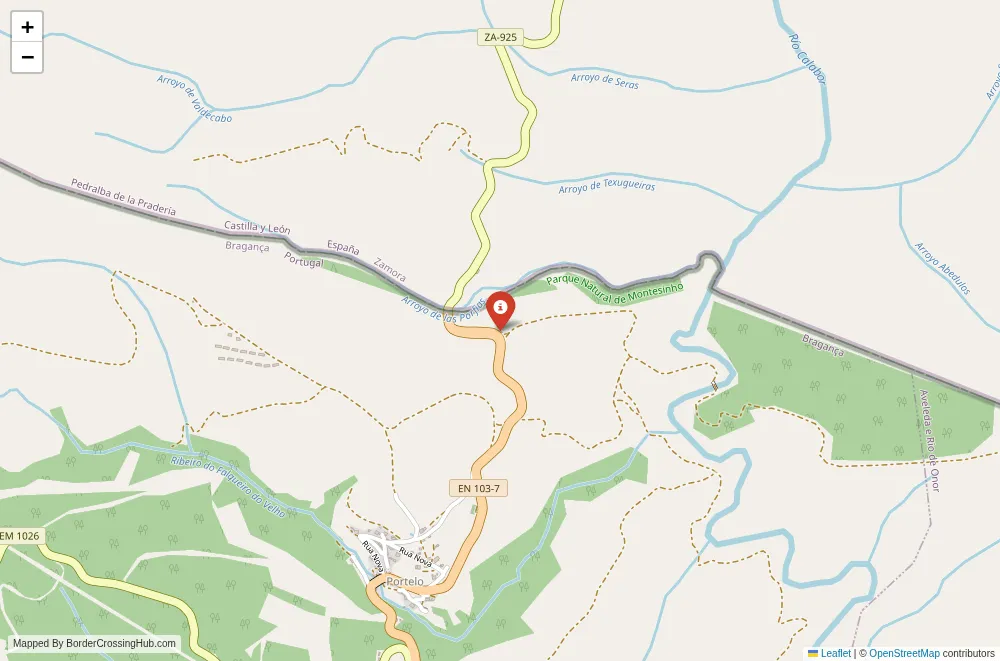
Approximate Border Location
Wait Times
Cars 0-10m; peaks 15-60m summer
Just crossed? Tap to report:
Operating Hours
Open 24 hrs (12:00 AM-11:59 PM)
Crossing Types
Cars,bikes; rural road
Border Type
Land crossing via road (regional)
Peak Times
10:00 AM-04:00 PM; weekends; Aug
Daily Crossings
1,000-5,000/day
Currency Exchange
EUR only; ATMs in Bragança/Alcañices
Safety Information
Remote roads; limited services at night
Languages Spoken
Spanish/Portuguese
Accessibility Features
Paved but narrow; limited curb cuts
About Vila Verde de Ficalho & Rosal de la Frontera
Monthly Update (March 2026):
As of 03/2026, the Vila Verde de Ficalho & Rosal de la Frontera Border Crossing ticks along at a relaxed pace. Vehicles pass easily along the regional road linking southern Portugal and Spain. Afternoons bring a few more drivers returning from errands or work. Holiday travel and local festivals can occasionally bring a small rise in traffic.
No Cell Service at the Border? No Problem.
Don’t get caught scrambling for paperwork when you lose signal. Download the complete Europe Transit Guide directly to your device and access every critical detail, fast-track strategy, and border rule – 100% offline.
The Vila Verde de Ficalho-Rosal de la Frontera border serves as a key inland crossing between Portugal and Spain in the Alentejo-Andalusia region, connecting the small Portuguese parish of Vila Verde de Ficalho (municipality of Serpa) directly to the Spanish village of Rosal de la Frontera.
Alternative Names
This crossing is commonly known as the Vila Verde de Ficalho border, Rosal de la Frontera crossing, the Vila Verde de Ficalho-Rosal de la Frontera frontier, or the IP 8 / A-495 border point.
Current Status
Portugal and Spain are both Schengen countries, so this border remains open with no permanent passport checks or vehicle controls for routine travel. You drive or walk across without stopping under normal conditions. Random spot checks by Portuguese GNR or Spanish Guardia Civil can occur (often targeting commercial vehicles, freight, or specific alerts), but they are infrequent for private cars and tourists. The crossing handles moderate regional traffic and freight, with abandoned former customs buildings on both sides now standing empty as a reminder of pre-Schengen days.
Historical Background
The frontier here follows the Portugal-Spain border established by medieval treaties and solidified over centuries. During the COVID-19 period (2020-2021), this was one of the nine authorized crossing points when temporary controls limited land borders. In normal times, it has served as a practical route for local trade and movement between the Alentejo interior and western Andalusia. The area around Vila Verde de Ficalho and Rosal de la Frontera reflects rural border life shaped by agriculture, cork production, and historic trans-frontier ties.
Geopolitical and Economic Role
This point links the Portuguese IP 8 (from Beja/Serpa) with the Spanish A-495 toward Rosal de la Frontera and onward to Seville or Huelva. It supports cross-border shopping (Portuguese often cross for cheaper Spanish fuel, groceries, or services; Spaniards seek Portuguese products), family visits, and regional tourism. Freight traffic (including trucks) uses the route, though larger volumes flow through nearby motorways like the A-66 or IP 2. The crossing sustains local economies in this sparsely populated area of cork oak groves and open plains.
Visa Requirements for Foreign Visitors
Schengen rules apply equally to Portugal and Spain. If your nationality qualifies for visa-free entry, you cross with just a valid passport or national ID. Most non-EU visitors receive 90 days in any 180-day period across the area. Carry your travel document at all times, though checks are very rare for private travelers here.
Crossing Procedures Step by Step
By car or motorbike, follow the IP 8 from Serpa or Beja toward Vila Verde de Ficalho. You pass through the village, reach the border zone (with disused customs buildings and signs), and continue straight onto the A-495 in Spain toward Rosal de la Frontera. No booths, barriers, or officials are present routinely. Pedestrians and cyclists use the same road (sidewalks are limited or absent); the transition is unmarked beyond basic signs or markers. No forms or queues exist under normal conditions. The reverse direction follows the identical seamless pattern.
Typical Wait Times and Peak Periods
Road crossings take seconds with no wait in normal conditions. Delays only arise during major Portuguese or Spanish holidays (summer vacations, Easter, Christmas) when shopping or family traffic increases, or during occasional police operations. Even then, queues rarely exceed 10-20 minutes. The crossing stays quiet most days due to its inland location.
Operating Hours
The road crossing operates 24 hours a day, every day of the year, as a continuous public link.
Transportation Options to and From the Border
Drive the IP 8 from Beja, Serpa, or Moura to Vila Verde de Ficalho (then cross). On the Spanish side, the A-495 connects to Rosal de la Frontera and onward to Seville (about 1.5-2 hours) or Huelva. Regional buses serve Serpa and nearby towns on the Portuguese side, and Rosal de la Frontera or nearby places on the Spanish side, but direct cross-border buses are limited; you may need to walk or take a short taxi between the villages. Cycling works well on the quiet roads. The nearest train stations are in Beja (Portugal) or Zafra/Jerez de los Caballeros (Spain), both some distance away.
Road Conditions and Scenery
The IP 8 and A-495 are good two-lane highways with decent surfaces. The final approach passes through small villages and open countryside. The landscape features typical Alentejo-Andalusia plains: vast cork oak savannas, olive groves, rolling hills, and wide open spaces. The border itself sits in a gentle valley with few dramatic features beyond the change in road signs and language.
Seasonal Variations and Weather Impacts
Summer brings hotter temperatures and more leisure traffic from tourists or shoppers. Winter can add rain or occasional fog, but the main roads remain reliable. No seasonal closures occur.
Nearby Attractions
Vila Verde de Ficalho itself is a quiet rural parish with basic amenities and a peaceful atmosphere. Nearby Serpa (Portugal, about 20-30 km) offers a historic walled town, castle, and famous cheese. Rosal de la Frontera (Spain) is a small village with traditional white houses. The surrounding region suits slow travel: explore cork oak landscapes, megalithic sites near Serpa, or continue to Seville for major sights. The area feels authentic and off-the-beaten-path.
Common Scams and Warnings
Serious scams are very rare at this low-key crossing. Occasional overcharging can happen at small roadside shops or fuel stations near the border. Keep valuables secure when parking or walking. The rural roads are quiet but narrow in places, so drive carefully. Fuel up on the cheaper side (often Spain for diesel).
Travel Tips and Preparation
Carry euros (both countries use them), passport/ID, and vehicle papers. Use navigation apps to follow IP 8 / A-495, as signage changes language at the line. Bring water and snacks, since services are limited near the crossing. If walking or cycling, the open landscape makes for pleasant but exposed travel.
Cultural and Economic Significance
This crossing highlights the enduring rural connection between Alentejo and western Andalusia, with shared agricultural traditions (cork, olives, livestock) and quiet cross-border routines. Locals move freely for daily needs, showing how Schengen has made an old frontier practically invisible in everyday life.
Final Planning Advice
Check holiday periods for slightly busier conditions. Bring your documents, drive the straightforward road, and take time to experience the vast, quiet Alentejo-Andalusia plains. This understated inland crossing offers a calm, authentic way to move between Portugal and Spain. Safe travels.
No reviews yet.