
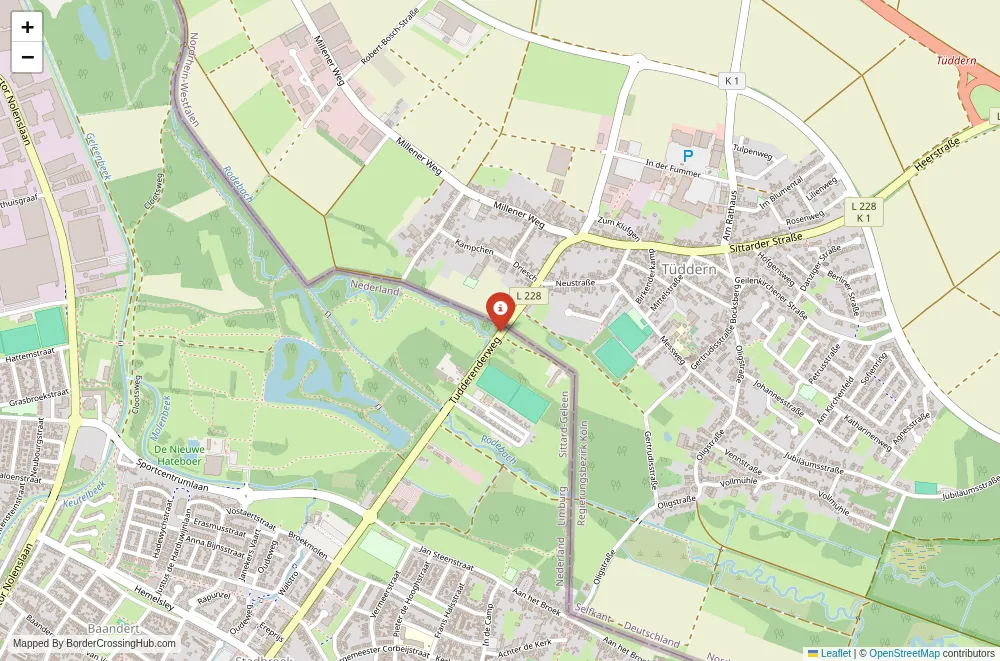
Approximate Border Location
Border Countries
- 🇳🇱Netherlands
- 🇩🇪Germany
Border Cities
- 🇳🇱Sittard
- 🇩🇪Herzogenrath
Wait Times
Cars 0-10m; peaks 15-45m commute
Just crossed? Tap to report:
Operating Hours
Open 24 hrs (12:00 AM-11:59 PM)
Crossing Types
Ped,cars,bikes,buses; no routine checks
Border Type
Land crossing via road (regional)
Peak Times
07:00-09:00 AM; 04:00-06:30 PM
Daily Crossings
20,000-70,000/day
Currency Exchange
EUR only; ATMs common
Safety Information
Urban junctions; occasional controls
Languages Spoken
Dutch/German
Accessibility Features
Step-free routes; accessible transit
About Valença & Tui
Monthly Update (March 2026):
As of 03/2026, the Valença & Tui Border Crossing stays fairly busy but predictable. Cars move steadily across the Minho River bridge, though traffic can slow slightly heading into Spain during late afternoon commuting. Pedestrians cross frequently along the walkway. Weekend shopping and tourism around the historic towns sometimes add more movement.
No Cell Service at the Border? No Problem.
Don’t get caught scrambling for paperwork when you lose signal. Download the complete Europe Transit Guide directly to your device and access every critical detail, fast-track strategy, and border rule – 100% offline.
The Valença do Minho-Tui border marks one of the most scenic and historic land crossings between Portugal and Spain, where the River Minho forms the natural frontier and the two towns face each other across the water.
Alternative Names
This crossing is commonly called the Valença-Tui border, the Valença do Minho – Tui international bridge, the Ponte Internacional de Tui-Valença, or simply the Minho River bridge crossing. The road is often referred to as the N13 (Portugal) / N-550 (Spain) or A-55 (Spain) connection.
Current Status and Safety Note
Portugal and Spain are both Schengen countries, so this border remains fully open with no permanent passport or vehicle controls. You drive, walk, or cycle across the international bridge without stopping under normal conditions. Random spot checks by Portuguese GNR or Spanish Guardia Civil can occur (especially for commercial vehicles or in response to specific security alerts), but they are infrequent and rarely affect ordinary tourists or private cars. The crossing is calm, well-patrolled, and considered one of the safest and least problematic land borders in Europe. No significant scams are widely reported here.
Historical Background
The border along the River Minho has existed since the 12th century, formalized by treaties between the kingdoms of Portugal and León/Castile. The current iron bridge was inaugurated in 1885 (designed by engineer Adolphe d’Almeida and rebuilt after damage in the Spanish Civil War). Valença’s impressive 17th-century fortress walls were built to defend against Spanish incursions, while Tui’s cathedral and old town reflect its role as a strategic Galician stronghold. The crossing has been a peaceful commercial and cultural link for centuries.
Geopolitical and Economic Role
This is the main road and pedestrian connection between northern Portugal (Minho region) and southern Galicia. It handles significant daily cross-border traffic: Portuguese shoppers head to Spain for cheaper fuel, tobacco, and groceries; Spaniards cross for Portuguese textiles, ceramics, and lower prices on certain goods. The bridge supports tourism, family visits, and local commerce in both towns. Larger freight uses nearby motorways (A3 / AP-9), but this bridge remains the symbolic and most-used local link.
Visa Requirements for Foreign Visitors
Schengen rules apply equally to Portugal and Spain. If your nationality qualifies for visa-free entry, you cross with just a valid passport or national ID card. Most non-EU visitors receive 90 days in any 180-day period across the area. Carry your travel document at all times, though checks are very rare on this bridge.
Crossing Procedures Step by Step
By car or motorbike, follow the N13 from Valença toward the bridge. You pass Portuguese customs buildings (usually empty), cross the iron bridge over the Minho River (about 400 meters long), and enter Spain without stopping. The road becomes the N-550 toward Tui. Pedestrians and cyclists use the narrow sidewalk on the bridge; no separate path exists. No booths, queues, or officials are present routinely. The reverse direction is identical. Walking across takes 5–10 minutes depending on pace.
Typical Wait Times and Peak Periods
Most crossings take seconds by car and a few minutes on foot. Waits only occur during major Portuguese or Spanish holidays (Easter, summer vacations, Christmas) when shopping traffic spikes. Even then delays rarely exceed 10–20 minutes unless there is an accident or police operation on the bridge.
Operating Hours
The bridge is open 24 hours a day, every day of the year, as a public road link.
Transportation Options to and From the Border
Drive the N13 from Viana do Castelo or Braga to Valença, then cross to Tui. From Vigo or Pontevedra, follow the A-55 / N-550 to Tui. Regional buses (for example Autna or Rede Expressos) serve both towns but usually require a change or short walk to cross. Trains do not cross here; the nearest rail stations are Valença (Portugal) and Guillarei or Tui (Spain), with no direct passenger link over the bridge. Cycling and walking are popular and straightforward.
Road Conditions and Scenery
The approach roads are good two-lane highways on both sides. The bridge itself is narrow, single-lane in each direction, with a metal surface and low railings. The view is beautiful: the wide Minho River, Valença’s star-shaped fortress walls rising on the Portuguese bank, Tui’s Romanesque cathedral and old town perched above the Spanish side. On clear days you see green hills and vineyards stretching into Galicia and Minho.
Seasonal Variations and Weather Impacts
Summer brings the heaviest pedestrian and shopping traffic. Winter rain and occasional fog can make the narrow bridge slippery, especially for cyclists. Strong winds sometimes affect larger vehicles. The crossing stays open year-round regardless of weather.
Nearby Attractions
Valença is famous for its intact 17th-century fortress (now filled with shops, restaurants, and guesthouses), panoramic river views, and Portuguese crafts. Tui offers a charming historic center, the impressive Cathedral of Santa María, the Paseo da Corredeira riverside path, and access to the Camino Portugués route to Santiago. Both towns are perfect for short walks, photography, and tasting local food (lamprey in season, seafood, vinho verde, and Galician empanadas).
Common Scams and Warnings
Serious scams are very rare here. The most common annoyance is aggressive street vendors or shop owners in Valença’s fortress trying to lure you into their stores with inflated “special” prices. On the Spanish side, some parking areas near the bridge can be chaotic. Keep valuables secure when walking across and avoid leaving items visible in cars.
Travel Tips and Preparation
Park on either side (cheaper and easier on the Spanish side in many cases) and walk across for the best experience. Carry euros (both countries use them) and passport/ID. Bring a camera for the bridge and river views. If driving, note that the bridge is narrow; large vehicles or caravans should use caution. Combine the crossing with a meal on one side and shopping on the other.
Cultural and Economic Significance
The Valença-Tui crossing embodies the deep historical and contemporary ties between Minho and Galicia. The shared river, language similarities (Galician and Portuguese are closely related), and centuries of commerce have created a true borderland culture where people move back and forth daily without thinking about nationality.
Final Planning Advice
Check weather and holiday dates if you want a quieter experience. Bring your documents (even if unlikely to be needed), walk the bridge for the views, and take your time exploring both towns. This short, beautiful crossing delivers one of the most pleasant and photogenic ways to move between Portugal and Spain. Safe travels.
No reviews yet.