
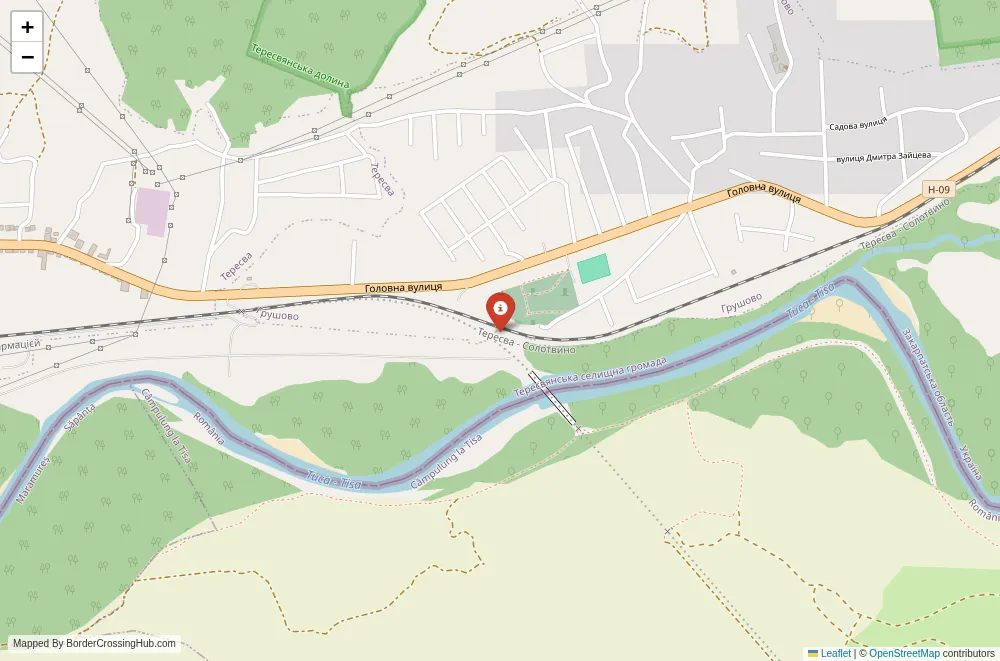
Approximate Border Location
Wait Times
Cars 45-180m; peaks 180-480m
Just crossed? Tap to report:
Operating Hours
08:00 AM-08:00 PM
Crossing Types
Ped,cars; border controls
Border Type
Land crossing via road bridge (Tisza)
Peak Times
10:00 AM-02:00 PM; weekends
Daily Crossings
1,000-6,000/day
Currency Exchange
RON; UAH in Sighet; ATMs limited
Safety Information
Delays possible; standard caution
Languages Spoken
Ukrainian/Romanian
Accessibility Features
Basic step-free; limited ramps
About Valea Vișeului & Dilove
Monthly Update (March 2026):
As of 03/2026, the Valea Vișeului & Dilove Border Crossing ticks along quietly with light local traffic. Vehicles pass the checkpoint without major queues most of the day. Afternoons sometimes bring a few extra drivers returning home. Weather in the nearby mountains can slow the drive at times.
No Cell Service at the Border? No Problem.
Don’t get caught scrambling for paperwork when you lose signal. Download the complete Europe Transit Guide directly to your device and access every critical detail, fast-track strategy, and border rule – 100% offline.
The Valea Vișeului-Dilove border crossing (also known as Valea Vișeului – Dilove, Valya Vysheului, or the Rakhiv – Valea Vișeului rail link) serves as an international railway-only point in the Maramureș-Zakarpattia region, where Romania’s northern Carpathian foothills meet Ukraine’s Tisza valley.
Location and Basic Connections
This crossing connects Valea Vișeului railway station in Romania’s Maramureș County to Dilove station on the Ukrainian side in Zakarpattia Oblast’s Rakhiv Raion. The line runs along the Tisza River valley, linking into broader networks toward Sighetu Marmației in Romania and Rakhiv farther north in Ukraine. No road facilities exist at this specific point; any associated road options remain closed. The rail segment features a transition from standard European gauge (1435 mm) on the Romanian side to broad gauge (1520 mm) on the Ukrainian side, requiring careful coordination for any movements. In its active periods, it has supported passenger trains on short regional routes, with the line passing through scenic, sparsely populated countryside.
Historical Background
The rail corridor dates to the Austro-Hungarian era, when lines integrated Maramureș and Zakarpattia without strict borders. Post-World War I treaties and later Soviet adjustments created the international divide, but the infrastructure persisted for local use. Passenger service halted around 2008 due to declining demand, maintenance costs, and occasional smuggling concerns. The 2022 full-scale invasion prompted urgent restoration efforts: Ukrainian Railways (UZ) repaired tracks on their side, Romanian CFR SA contributed to the Romanian segment, and test runs occurred in late 2022. Regular passenger service resumed in January 2023 with daily trains like Rakhiv – Valea Vișeului – Rakhiv, marking a revival after over a decade of inactivity. This fits into wider EU-Romania-Ukraine cooperation to enhance cross-border rail amid war-related logistics needs.
Current Status and Safety Warnings
As of early 2026, the crossing operates as an international railway point with 24/7 capability listed by Ukrainian authorities, though actual service depends on train schedules and bilateral agreements. Passenger trains run on the Rakhiv – Valea Vișeului route, but volumes stay modest with potential adjustments. Freight may use it sporadically. The area presents limited risks for rail passengers on official services, but the remote border zone requires caution. Unauthorized approaches to tracks or stations risk detention by patrols. While landmine threats concentrate farther east, general security vigilance applies near frontiers. No major scams reported at this quiet rail point, unlike busier road crossings. Check official sources: Romania’s Border Police, Ukraine’s State Border Guard Service (dpsu.gov.ua), CFR SA, or UZ timetables before planning. Avoid independent exploration of rail areas.
Operating Hours and Wait Times
The checkpoint category allows international rail operations around the clock, aligned with train movements rather than fixed hours. When passenger service runs, border processing occurs during stops at Valea Vișeului or Dilove, typically taking minutes to an hour depending on passenger numbers and inspections. Recent schedules show short regional runs with minimal delays, as the point handles low volumes compared to major corridors.
Visa Requirements for Foreign Visitors
Romania (EU external border) grants visa-free entry for many nationalities up to 90 days within 180; confirm your passport rules. Ukraine provides visa-free stays for numerous countries, usually 90 days in 180, or e-visas if applicable. For rail crossings, valid tickets and passports suffice for entry/exit stamps. No special restrictions noted for this point beyond standard document checks. Biometric passports speed processing where systems apply.
Crossing Procedures Step by Step
Procedures follow rail protocols. Trains stop at Valea Vișeului for Romanian exit and customs (document checks, possible luggage scans). The short cross-border segment over the Tisza leads to Dilove for Ukrainian entry formalities (stamps, security verification). The process reverses outbound. Controls focus on manifests, passenger lists, and basic inspections in station facilities. No pedestrian or vehicle options exist; everything stays rail-bound. Luggage remains with passengers.
Transportation Options
Rail is the sole means. Pre- or current schedules include daily trains like those from Rakhiv departing early and afternoon, arriving Valea Vișeului in about 1-2 hours. Tickets require booking via UZ or CFR platforms. No buses or taxis cross directly; nearby road points like Sighetu Marmației handle overland alternatives. For connections, use regional trains from Sighetu Marmației or Rakhiv.
Road Conditions and Scenery
No road crossing applies, but nearby access roads are rural paved or gravel paths subject to weather wear. The Tisza valley scenery stands out: winding river views, dense Carpathian forests, pine-covered hills, small villages, and open meadows. The rail line offers elevated perspectives over the landscape, with seasonal changes from green summers to snowy winters.
Nearby Attractions
Valea Vișeului provides quiet rural Maramureș life with traditional wooden gates and churches. Sighetu Marmației nearby hosts the Memorial to Victims of Communism and prison museum. On the Ukrainian side, Dilove lies near Rakhiv, gateway to the Carpathians with hiking in the Gorgany or Chornohora ranges, Hutsul culture, and sites like the geographic center of Europe marker. The area links to ethnographic trails and nature reserves.
Seasonal Variations and Weather Impacts
Winter snow and ice can delay trains on mountain-adjacent tracks, while spring Tisza floods risk low-line sections. Summer brings lush scenery but possible storms. Low passenger volumes minimize seasonal crowds. Infrastructure status and bilateral decisions influence operations more than weather alone.
Practical Travel Tips
Book rail tickets ahead via official apps or sites. Carry valid ID, cash in local currencies (RON/EUR for Romania, UAH for Ukraine), and snacks for short rides. Declare goods if needed. For safety, stick to official trains and avoid wandering tracks. Monitor timetables, as schedules may shift. Daylight travel eases rural connections.
Cultural and Economic Role
The point revives ties in Maramureș-Zakarpattia communities sharing Hutsul-Romanian influences, dialects, and traditions like woodcarving or folk music. It supports modest passenger movement for family visits or tourism, plus potential freight in timber or goods. Economically small-scale, it aids regional integration amid EU-Ukraine transport goals.
Wrapping Up This Rail Link
Valea Vișeului-Dilove offers a scenic, revived rail option for Romania-Ukraine travel in the Carpathians, ideal if you seek quiet routes over crowds. Verify schedules and prepare documents for a straightforward passage. Safe journeys through the valleys.
No reviews yet.