Monthly Update (October 2026):
Uruguaiana & Paso de los Libres remains one of the busiest Argentina-Brazil freight corridors in October. Commercial traffic continues to be the main source of delays, particularly as the route connects the Brazilian road network with Argentina and the wider Mercosur corridor. Travelers in private vehicles should allow extra time when truck queues build, even when passenger processing is moving normally.
Driving there, or sending a driver? Send them this guide.
For reports and websites
Cite this page
Border Crossing Hub (2026). Uruguaiana & Paso de los Libres Border Crossing. Updated October 2026. https://bordercrossinghub.com/uruguaiana-paso-de-los-libres-border-crossing/<a href="https://bordercrossinghub.com/uruguaiana-paso-de-los-libres-border-crossing/">Uruguaiana & Paso de los Libres Border Crossing (Border Crossing Hub)</a>Put this crossing's card on your website
Free. It updates on its own when our information changes.
<iframe data-bch-card src="https://bordercrossinghub.com/uruguaiana-paso-de-los-libres-border-crossing/?bch_view=card" width="100%" height="980" scrolling="no" style="border:0;max-width:480px;display:block" loading="lazy" title="Uruguaiana & Paso de los Libres border crossing information"></iframe>
<p style="font-size:12px;margin:4px 0 0">Crossing information: <a href="https://bordercrossinghub.com/uruguaiana-paso-de-los-libres-border-crossing/">Border Crossing Hub</a></p>
<script src="https://bordercrossinghub.com/?bch_embed_js=1" async></script>Paste it where you want the card. The last line (a script) only adjusts the height and can be left out.
About this crossing
Location and Connections
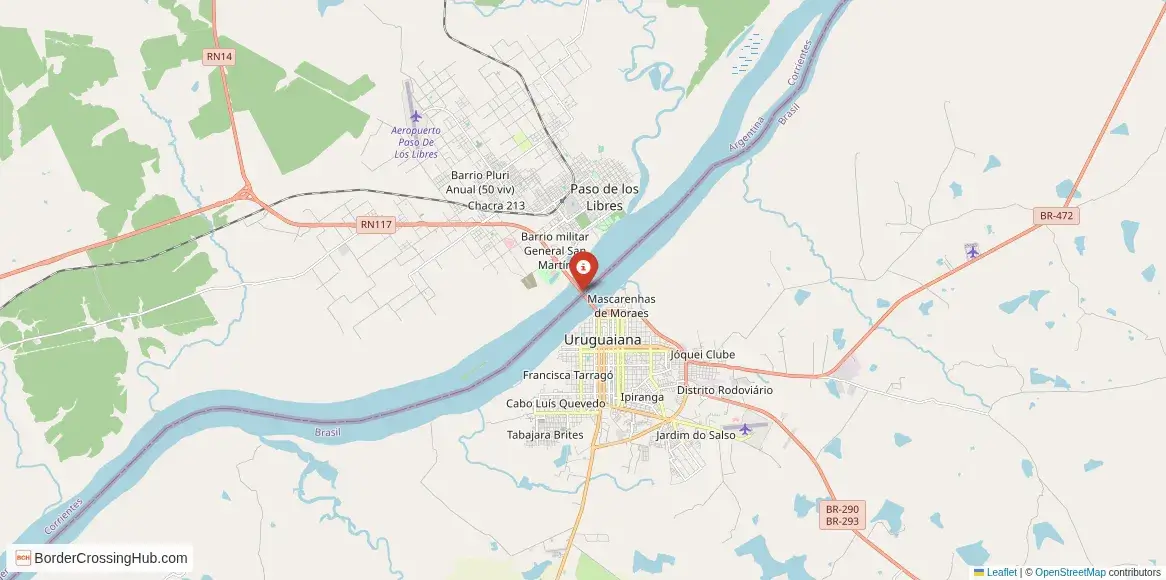
You reach this crossing in western Corrientes province on the Argentine side and southwestern Rio Grande do Sul in Brazil. The bridge, officially named Agustín P. Justo-Getúlio Vargas International Bridge, spans the Uruguay River with both road and rail lanes. It measures over 1,400 meters long. From Paso de los Libres, Ruta Nacional 14 connects eastward toward Corrientes city or southward. In Uruguaiana, BR-290 links to Porto Alegre or other parts of southern Brazil. Long-distance buses from Buenos Aires or Porto Alegre terminate near the bridge approaches.
Historical Background
Construction on the bridge started in 1942 amid World War II challenges, with engineers from both countries collaborating. It opened to traffic on October 12, 1945, and received its official inauguration in 1947 by Presidents Juan Domingo Perón of Argentina and Eurico Gaspar Dutra of Brazil. Named after the leaders who pushed the project, the structure replaced slower ferry services that had handled local trade for decades. The crossing grew into a key trade route for goods like grains, livestock, and manufactured items. Rail traffic once played a bigger role before road transport dominated.
Nearby Border Crossings



Current Status and Operating Hours
This remains one of Argentina's busiest land borders, ranking third in passenger crossings during 2025 with over 3 million people passing through. It operates 24 hours a day, seven days a week in most cases, supporting continuous truck, bus, and private vehicle movement. Immigration and customs function around the clock, though peak processing aligns with daytime hours for many services. No major closures have affected it recently, unlike some river-dependent spots. Still, verify status through official sites like argentina.gob.ar/migraciones or Brazilian federal police pages close to your travel date, especially if weather or maintenance issues arise.
Visa Requirements for Foreign Visitors
Most nationalities qualify for visa-free entry to both Argentina and Brazil for tourism, generally up to 90 days per country. Your passport must hold validity for at least six months beyond arrival. No visa-on-arrival option exists at this post; secure any needed Brazilian visa at a consulate in advance if required by your nationality. Officials stamp passports on both sides. Bring proof of onward travel, accommodation details, and sufficient funds if questioned, though routine checks focus more on locals and frequent crossers.
Crossing Procedures and Wait Times
Start on one side with exit formalities: Argentine immigration and customs for leaving, or Brazilian for the opposite direction. Cross the bridge, then handle entry on the other end. Separate lanes exist for vehicles, buses, and sometimes pedestrians, though most foreigners travel by bus or car. Wait times vary widely—early mornings or late nights move faster, often under 30 minutes. During daytime peaks, especially weekends or holidays, lines stretch to one or two hours, with longer delays for trucks. High summer tourism or holiday periods push queues higher. Fill out any digital arrival forms beforehand if available.
Transportation Options and Road Conditions
Direct buses run from Buenos Aires to Uruguaiana or vice versa, stopping near the bridge for immigration. Private cars use paved highways approaching from both directions. The bridge itself carries smooth traffic, but access roads handle heavy truck volumes. Scenery includes flat pampas, river views, and open fields with cattle ranches. Roads stay paved overall, though rain creates occasional puddles or slowdowns near the river. Tuk-tuks or taxis manage short hops in the towns.
Scams & Warnings
Busy borders like this draw occasional scams. Touts near bus terminals or bridge approaches offer "fast-track" services or currency exchange at bad rates—stick to official counters. Some travelers report pressure from informal guides pushing unnecessary help with forms. Customs inspections target undeclared goods; exceeding duty-free limits on items like alcohol, electronics, or tobacco leads to fines. Petty theft happens in waiting areas during long queues, so keep valuables hidden. No widespread reports of serious issues for foreigners, but the volume of traffic means crowds and potential pickpocketing. Stay alert, use official channels, and avoid handing documents to non-officials.
Nearby Attractions and Practical Tips
Paso de los Libres features quiet plazas and riverfront walks, plus access to Corrientes province's wetlands farther east. Uruguaiana offers markets for Brazilian goods and serves as a base for southern Rio Grande do Sul exploration. Carry Argentine pesos, Brazilian reais, and small USD for fees or buys. Bring water and snacks for waits. Summer heat hits hard, with humidity and possible storms; winter brings cooler, drier conditions. Pack insect repellent for river areas. Allow extra time during holidays when shopping trips spike.
Cultural and Economic Role
The crossing binds two border cities tightly through family visits, shopping, and work commutes. It handles massive trade in agricultural products, vehicles, and consumer goods, supporting jobs in logistics, markets, and services. Daily flows reflect deep economic interdependence in this part of the Mercosur region.
Final Crossing Advice
Check operating details and any recent alerts from migration authorities shortly before departure. Prepare documents, carry cash in small bills, and plan for variable queues by arriving outside peak hours if possible. This major bridge offers a direct, high-volume link between Argentina and Brazil, well-suited for overland travelers moving between Buenos Aires and southern Brazil routes.
View all border crossings between Brazil and ArgentinaHeading to Uruguaiana & Paso de los Libres? Take this with you.
One page with the hours, waits, emergency numbers and coordinates. Works without signal.
Practical information
Fuel
Brazil: <1 km - Argentina: <1 km
Currency
AR$; R$ casas in both cities; ATMs
Safety information
Congestion risk; keep documents secure
Connectivity
Wi-Fi points; 4G
Have you crossed here?
Help other travelers by sharing your experience, wait times, and any updates.