
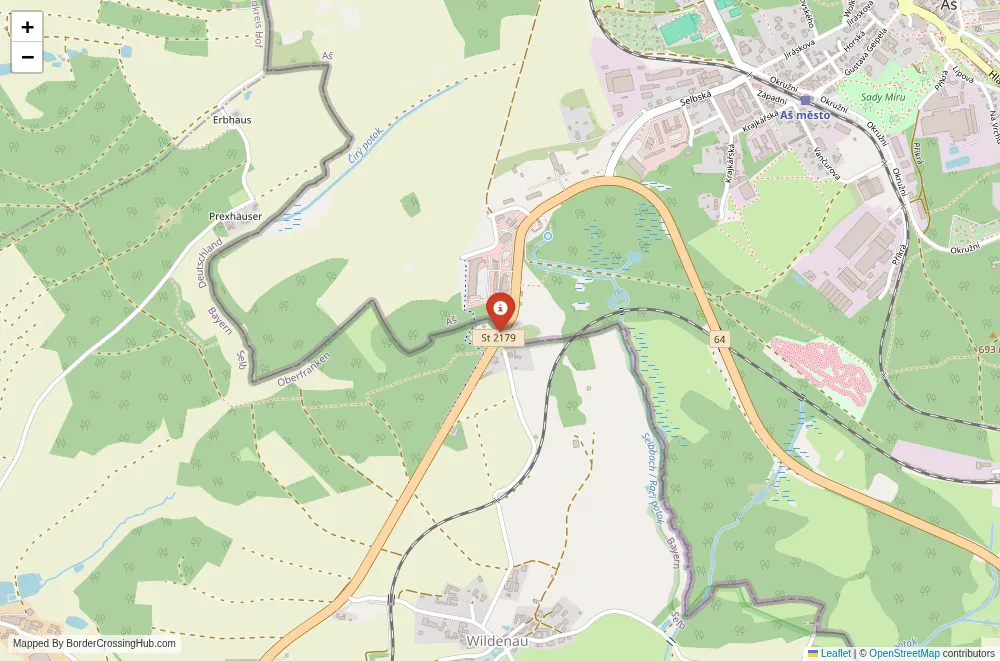
Approximate Border Location
Border Countries
Border Cities
- 🇩🇪Selb‑Wildenau
- 🇨🇿Aš
Wait Times
Cars 0-15m; peaks 20-120m checks
Just crossed? Tap to report:
Operating Hours
Open 24 hrs (12:00 AM-11:59 PM)
Crossing Types
Cars,buses,trucks; main road crossing
Border Type
Land crossing via road (border town)
Peak Times
Mon-Fri 02:00-07:00 PM; weekends
Daily Crossings
6,000-25,000/day
Currency Exchange
EUR; CZK in Aš/Selb; ATMs
Safety Information
Queue spillback at times; follow cones
Languages Spoken
German/Czech
Accessibility Features
Paved pullouts; accessible restrooms nearby
About Unterwiesenthal & Loučná pod Klínovcem
Monthly Update (March 2026):
As of 03/2026, the Unterwiesenthal & Loučná pod Klínovcem Border Crossing stays active but generally stable. Cars move steadily between the two mountain towns, especially with visitors heading toward ski and hiking areas. Late afternoon can bring a short wave of returning traffic. Weather in the Ore Mountains still plays a role in how smooth the drive feels.
No Cell Service at the Border? No Problem.
Don’t get caught scrambling for paperwork when you lose signal. Download the complete Europe Transit Guide directly to your device and access every critical detail, fast-track strategy, and border rule – 100% offline.
The Unterwiesenthal-Loučná pod Klínovcem crossing spans a small bridge over the Pöhlbach stream in the high Ore Mountains, linking the German ski town of Oberwiesenthal (with its lower district Unterwiesenthal) to the Czech settlement of Loučná pod Klínovcem in a shared high-altitude valley that splits the historic Wiesenthal community.
Location and Connections
You find this point along a local road in the Erzgebirge/Krušné hory, where Unterwiesenthal (part of Kurort Oberwiesenthal in Saxony) meets Loučná pod Klínovcem in Chomutov District, Ústí nad Labem Region. The road crosses the Pöhlbach bridge from the German side (often via connections from Oberwiesenthal’s center) into Czech territory. From Oberwiesenthal town center, it’s a quick few minutes downhill to Unterwiesenthal. On the Czech side, Loučná pod Klínovcem sits right at the line, with links toward Klínovec (Keilberg) slopes or farther to Chomutov. Cars, local buses, cyclists, and pedestrians use it; no heavy trucks or major highways run here. The area draws skiers, hikers, and day-trippers between the Fichtelberg and Klínovec resorts.
Alternative Names
It goes by Unterwiesenthal–Loučná pod Klínovcem border crossing, Loučná pod Klínovcem–Unterwiesenthal, or Loučná / Oberwiesenthal (since the Czech town pairs with the larger Oberwiesenthal). Historical names include Böhmisch Wiesenthal for the Czech part.
Historical Background
The valley shared the name Wiesenthal until post-WWII divisions split it: Böhmisch Wiesenthal became Loučná pod Klínovcem in 1947 after expulsions and renaming. First mentioned in 1431, the area grew around mining and later tourism. The Iron Curtain fortified the border from the late 1940s, closing it tightly until reopening in the 1990s. Schengen in 2007 removed permanent controls. The small bridge has served cross-border traffic, but age caught up; by 2026, it’s undergoing replacement as part of EU-supported renovation to strengthen ties and improve safety.
Geopolitical Context
Schengen since late 2007 normally allows free passage with no routine checks. Germany keeps temporary controls on Czech land borders for migration and security. As of February 10, 2026, these extend at least through March 15, 2026 (with some neighbors like Austria running longer into June), enabling Bundespolizei random stops. This minor crossing sees infrequent enforcement compared to motorways, but spot checks for documents or vehicles can happen near the bridge. No fixed booths exist. Check German Federal Police or Czech Interior Ministry for updates.
Practical Crossing Procedures
You drive or walk over the bridge, marked by signs or stones. Temporary rules might prompt a police stop shortly after entering Germany for ID checks, travel questions, or quick reviews. EU citizens show passport or national ID. Non-EU nationals need valid passports, visas/residence permits if applicable, and basics like lodging proof. Carry vehicle insurance. Pedestrians and cyclists share the bridge safely. No vignette required for this local road.
Typical Wait Times
Normally you cross in seconds with no holdup. Random checks add variability: most pass quickly, but selected stops take 10 to 30 minutes if details get examined. Low traffic keeps delays minimal, even during ski season peaks.
Operating Hours
The road bridge operates 24/7 year-round. Schengen ended fixed times. Winter renovations or heavy snow might affect access short-term, but the point stays open otherwise.
Transportation Options and Road Conditions
Own car suits best; local buses connect Oberwiesenthal to Unterwiesenthal and Czech sides to nearby towns. No rail crosses directly (nearest lines serve Oberwiesenthal or Chomutov areas). The road climbs or descends through valleys with good but narrow pavement, curves, and elevation around 900 meters. Scenery includes dense forests, ski slopes, and the Pöhlbach stream. Watch for ice, snow, or hikers in winter.
Scams and Warnings
Scams stay rare at this small, ski-focused crossing. No common touts or fake services reported. Border-area shops in Loučná sell cheaper fuel, groceries, tobacco, or alcohol to Germans; some note pushy vendors or informal rate issues. Secure valuables in cars during stops. Mountain roads demand caution in poor weather.
Nearby Attractions
Loučná pod Klínovcem offers basic services and direct access to Klínovec (1,244 m), the Ore Mountains’ highest peak with large ski resort, lifts, and summer trails. Oberwiesenthal features Fichtelberg (1,215 m) with cable car, ski jumps, and spa facilities. Cross-border paths connect resorts for hiking or skiing. The valley suits winter sports enthusiasts and summer walkers seeking highland views.
Seasonal Variations and Weather Impacts
Winter dominates December to March with heavy snow; winter tires mandatory, and roads ice quickly at altitude. Ski season brings crowds and potential minor backups. Summer opens hiking and biking with clearer access. Autumn delivers foliage amid lighter traffic. Fog, wind, or storms reduce visibility often, but closures remain uncommon.
Travel Tips and Preparation
Carry passport or ID for possible checks. Refuel or shop in Czechia for savings. Download offline maps for mountain signal gaps. Pack warm layers, snow gear in season, and sturdy shoes. Check police sites or apps for border and weather updates. Use marked trails to avoid off-piste risks in ski areas.
Cultural and Economic Significance
Cross-border tourism and shopping link the twin Wiesenthals: Germans visit Czech slopes or shops, Czechs head to Oberwiesenthal’s facilities. Ski resorts drive seasonal jobs and trade. EU projects, like the bridge renovation, foster joint heritage in mining-spa history and mountain conservation.
Before You Cross
Check temporary control and bridge status from official sources near your trip. With prep for spot checks and high-altitude conditions, you manage this scenic valley crossing and dive into Ore Mountains skiing or trails. Safe travels.
No reviews yet.