
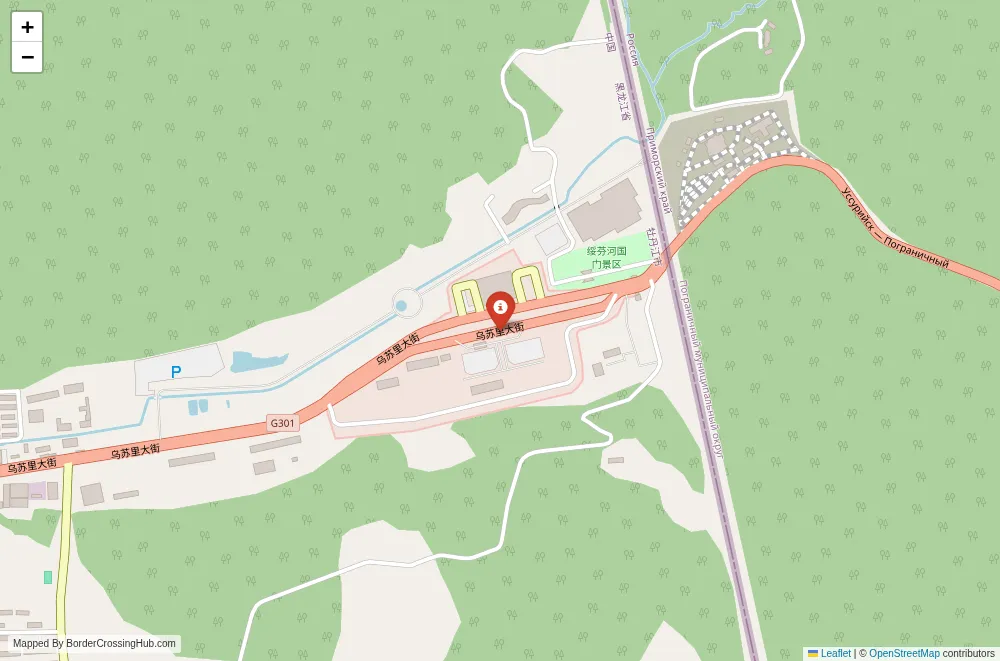
Approximate Border Location
Wait Times
Trucks 60-240m; peaks 240-720m
Just crossed? Tap to report:
Operating Hours
08:00 AM-08:00 PM
Crossing Types
Freight,cars limited; full controls
Border Type
Land crossing via road+rail link
Peak Times
Mon-Fri 09:00 AM-01:00 PM
Daily Crossings
1,500-8,000/day
Currency Exchange
CNY; RUB in Suifenhe/Ussuriysk; ATMs
Safety Information
Queue spillback possible; customs strict
Languages Spoken
Mandarin, Russian, English
Accessibility Features
Basic; step-free varies
About Tongjiang & Nizhneleninskoye
Monthly Update (March 2026):
As of 03/2026, the Tongjiang & Nizhneleninskoye Border Crossing keeps a steady rhythm driven mostly by freight traffic. Trucks gather near the bridge and clear customs in waves once inspections pick up speed. Passenger vehicles are less common. Trade schedules and logistics keep the crossing active.
No Cell Service at the Border? No Problem.
Don’t get caught scrambling for paperwork when you lose signal. Download the complete Asia Transit Guide directly to your device and access every critical detail, fast-track strategy, and border rule – 100% offline.
The Tongjiang-Nizhneleninskoye border crossing marks a significant rail-focused link over the Amur River (Heilongjiang in Chinese), joining Tongjiang in Heilongjiang Province, China, with Nizhneleninskoye in the Jewish Autonomous Oblast, Russia. You encounter this crossing primarily through freight trains or if planning specialized rail travel in the Russian Far East, as passenger options remain limited compared to road-heavy ports. Alternative names include the Tongjiang-Nizhneleninskoye Railway Bridge, Amur River Bridge, or Nizhneleninskoye-Tongjiang crossing.
Location and Basic Connection
Tongjiang sits in northeastern Heilongjiang, near where the Amur flows broadly, while Nizhneleninskoye lies across in a remote part of the Jewish Autonomous Oblast. The crossing centers on a dedicated railway bridge, the first rail span over the Amur between the two countries, spanning about 2.2 km with total infrastructure longer. It integrates Russia’s Trans-Siberian network indirectly via upgrades and China’s rail lines toward Jiamusi and beyond. Freight dominates, with capacity up to 20 million tons annually, though passenger use stays minimal or nonexistent for most foreigners.
Historical Background
The bridge project originated from agreements in the 2010s to boost connectivity amid strengthening Sino-Russian ties. Construction began in 2014 on both sides, with structural completion in 2019 and full rail link in August 2021. The first commercial train crossed in November 2022, opening a new corridor that bypassed older infrastructure limits. Earlier border dynamics reflected mid-20th-century tensions, but this rail link reflects post-2010s economic focus, including Belt and Road alignments and Eurasian integration. Upgrades continued into the mid-2020s, with operators like IFR-1 LLC managing capacity expansions since 2024.
Current Operating Status
As of early 2026, the crossing handles rail freight daily, with operations focused on cargo like containers, commodities, and imports surging nearly 300% in some reports for Tongjiang in 2025. Passenger crossings appear absent or highly restricted; no regular bus, foot, or passenger train services operate here, unlike road bridges at Heihe-Blagoveshchensk. Visa-free pilots allow mutual 30-day short stays for Chinese and Russian ordinary passport holders (Russia’s from December 2025 to September 2026, mirroring China’s from September 2025), but these apply mainly to other ports. Foreigners need standard visas or e-visas; this rail point isn’t listed for general passenger entry. Confirm with rail authorities or embassies, as freight ops run year-round but weather affects schedules.
Practical Crossing Procedures
Procedures center on rail freight: trains undergo customs and inspections at border stations on each side. For any hypothetical passenger scenario (rare and not standard), you would need pre-arranged rail passage with documentation cleared in advance. Russia processes e-visas at select points, but this bridge focuses on cargo manifests, scans, and verifications. No walk-across or vehicle options exist due to the rail-only design. Processing for freight can take hours to days depending on volume; passenger equivalents don’t apply here.
Wait Times and Peak Periods
Freight sees variable delays from high demand and queuing; passenger absence means no typical queues for people. Peaks tie to trade seasons, with surges in commodity flows or post-holiday periods. Recent infrastructure pushes aim to reduce bottlenecks, but rail ops prioritize cargo efficiency over individual travel.
Transportation Options
Rail freight connects via upgraded lines: from Russia, trains link to the Trans-Siberian; from China, to networks toward Harbin or Jiamusi. No public passenger trains cross here (international passenger rail remains limited or suspended on other routes). To reach Tongjiang, use domestic Chinese trains or buses from Jiamusi; Nizhneleninskoye requires Russian domestic rail or road from Khabarovsk or Birobidzhan. Logistics centers develop nearby for transshipment.
Scams and Safety Warnings
This rail-focused, freight-heavy crossing reports few tourist scams due to minimal passenger traffic. General border advice applies: avoid unofficial contacts if near stations. Remote areas limit services; language barriers and isolation increase risks if issues arise. No major safety alerts for the bridge itself, but rail environments demand caution around tracks and cargo. Stick to official channels for any rail-related travel.
Road Conditions and Scenery
No road crossing exists here; approaches involve rail sidings through flat Amur valley terrain. Views feature the wide river, wetlands, and taiga on both sides. Chinese approach passes agricultural plains; Russian side shows sparse settlements and forested expanses. Winter freezes the river, but ops continue via bridge.
Seasonal Variations and Weather Impacts
Extreme northeastern winters bring sub-zero temperatures and snow, but the bridge allows year-round rail without seasonal halts like river ferries elsewhere. Summer offers milder conditions with potential rain affecting rail schedules minimally. Trade volumes fluctuate but remain steady.
Nearby Attractions
Tongjiang offers Amur River views, local markets, and proximity to wetlands for birdwatching. Nearby areas include Sanjiang Plain nature reserves. Nizhneleninskoye stays small; head to Birobidzhan for Jewish cultural sites or Khabarovsk for urban amenities. The bridge itself draws interest from rail and infrastructure enthusiasts.
Cultural and Economic Role
Freight trade drives everything: timber, coal, petrochemicals, and containers move both ways, with terminals expanding for efficiency. It bolsters local economies in remote oblasts and provinces, supporting jobs in rail, logistics, and trade. The link strengthens strategic ties, facilitating Eurasian cargo flows in a key frontier zone.
Final Planning Tips
This crossing suits freight watchers or rail specialists more than casual travelers; verify any rare passenger feasibility through operators. Bring necessary currencies, documents, and translation tools. Monitor rail news for updates on capacity or potential openings. Prep for remote conditions and cold if visiting area stations.
Summing Up the Crossing
Tongjiang-Nizhneleninskoye stands as a modern rail achievement across the Amur, prioritizing massive freight over people movement. Focus on its cargo role and regional context, and it represents a solid piece of the China-Russia connectivity puzzle. Safe travels.
No reviews yet.