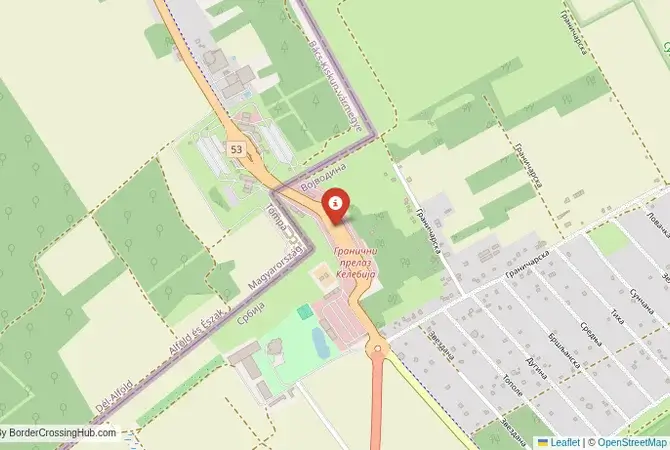
Monthly Update (September 2026):
Kelebia & Tompa remains a useful alternative to the heavily congested Röszke-Horgoš crossing. On September 4, live reports put the wait at roughly 30 minutes in both directions, considerably better than the multi-hour queues reported at Röszke. The crossing operates 24/7 and is open to citizens of all countries. Travelers heading between Hungary and Serbia should consider Tompa-Kelebia when Röszke is backed up.
About this crossing
Historical and Geopolitical Context
The border was established in 1920 by the Treaty of Trianon, assigning Tompa to Hungary and Kelebia to Yugoslavia, later Serbia after 2006. During the Cold War, this crossing was a guarded Iron Curtain checkpoint, restricting travel until 1989. The 1990s Yugoslav Wars disrupted traffic, with tightened controls. Today, it handles daily crossings, driven by trade and tourism. Serbia’s EU candidate status and visa-free entry for 90 days for many nationalities ease travel, but non-EU travelers face checks. Verify border status, as migration checks may cause delays.
Crossing Procedures and Wait Times
EU citizens need a valid ID, while non-EU travelers require a passport, with visa-free entry for Serbia for many nationalities. Customs inspections target alcohol (1L spirits) or tobacco (200 cigarettes), with Hungarian officers strict on undeclared goods. Pedestrians and cyclists cross in 10-15 minutes via side paths, while vehicles wait 20-40 minutes during peak hours (7-9 AM, 4-6 PM). The border operates 24/7, with delays up to 60 minutes in summer (July-August) or during Serbian holidays like St. Sava’s Day. Early crossings or weekdays help avoid congestion.
Nearby Border Crossings


Routes and Transportation
From Tompa, Volánbusz or local taxis (20 minutes, €4-€6) reach Kelebia. By car, the M5/E75 crosses in 15 minutes (8km). Cyclists can use the EuroVelo 11 route, a 20km path through fields. From Kelebia, buses connect to Subotica (30 minutes, €3-€5) or Belgrade (3 hours, €15). Hungary’s M5 links to Budapest. Roads are well-paved, with open plains. Summer traffic or winter snow may slow rural routes, so check conditions. Avoid unofficial taxis at Kelebia’s station, as travelers report €30 overcharges for short trips. Hungary requires a digital vignette (€10 weekly) for highways.
Scams & Warnings
Keep ID or passport ready for checks, especially on buses. Kelebia’s shops advertise deals on rakija or local cheeses, but prices may be inflated; compare at Tompa’s markets. Use ATMs in Tompa or Kelebia for EUR or RSD to avoid poor exchange rates. Pickpocketing is rare but reported at Kelebia’s station during festivals like Subotica’s Harvest Days. Fake border assistants may charge €15 for paperwork; deal only with officials. Declare goods to avoid fines up to €150. Purchase Hungary’s vignette online to avoid penalties.
Cultural and Economic Significance
With daily crossings, the region thrives on trade, tourism, and agriculture. Hungarian and Serbian languages blend, with bilingual menus in cafes. Tompa’s markets sell paprika and goulash spices, while Kelebia’s offer cevapi and ajvar. The Bačka Festival unites both sides with music and crafts. Economic differences fuel shopping, with Hungarians favoring Kelebia’s cheaper goods and Serbs visiting Tompa for EU products, boosting local economies. The E75’s trade corridor role enhances connectivity.
Nearby Attractions
Tompa’s nearby Kiskunhalas offers lace museums and thermal baths. Kelebia’s Subotica features Art Nouveau architecture and Palic Lake. For a detour, Szeged (1 hour) boasts cathedrals, while Novi Sad (1.5 hours) has the Petrovaradin Fortress. Visit Tompa’s tavernas for Hungarian lángos or Kelebia’s cafes for Serbian pljeskavica.
Seasonal and Weather Considerations
Summer (June-August) brings 25-35°C weather, ideal for cycling, but crowds peak during Serbian festivals or Hungarian holidays. Winter (December-February) sees -5-5°C with snow or fog, slowing roads. Spring and fall offer mild 10-20°C weather, though rain may affect cycle paths. Check forecasts for Pannonian fog or sudden snow before traveling.
Planning Recommendations
Cross early to avoid peak delays and carry EUR or RSD. Book bus tickets via Volánbusz or Serbian apps for savings. Confirm border status for checks, especially during holidays or festivals. Visit Kelebia’s tourist office for cycling maps or event schedules. Pack sunscreen for summer or warm layers for winter to handle the region’s weather. Purchase Hungary’s digital vignette online. With preparation, this crossing connects you to the Pannonian Plain’s cultural and scenic allure seamlessly.
View all border crossings between Hungary and SerbiaPractical information
Fuel
Hungary: 500 m - Serbia: 500 m
Currency
Near Tompa (HUF, RSD)
Safety information
Busy, minimal issues
Connectivity
Wi-Fi access, 4G/5G
Have you crossed here?
Help other travelers by sharing your experience, wait times, and any updates.