
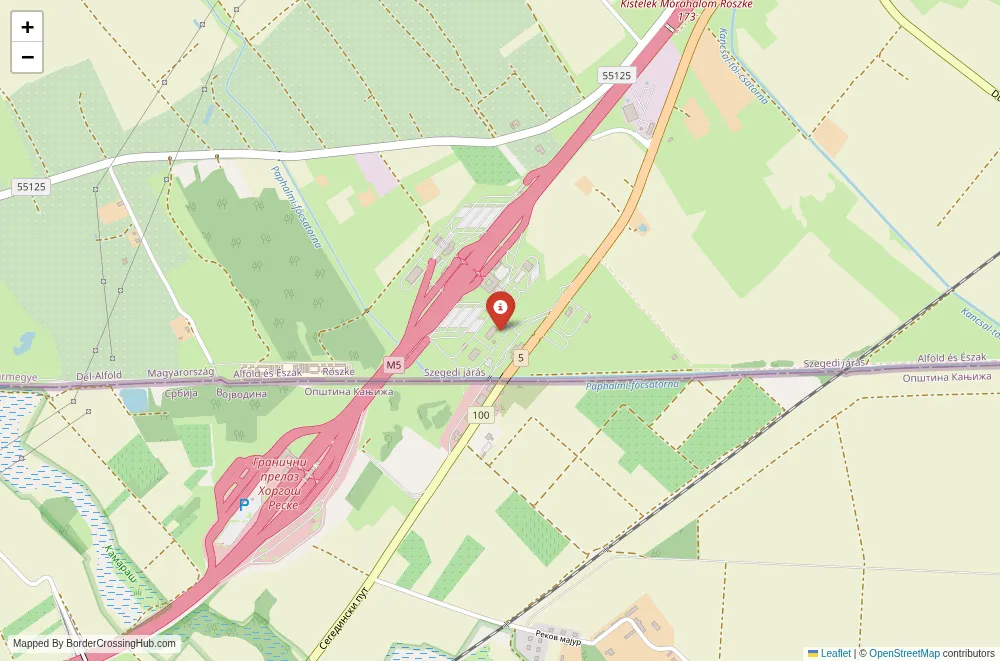
Approximate Border Location
Wait Times
Train 60-180m; peaks 180-360m checks
Just crossed? Tap to report:
Operating Hours
Rail by timetable; typical 06:00 AM-10:00 PM
Crossing Types
Trains only; border checks onboard/stations
Border Type
Land crossing via motorway (M5/E75)
Peak Times
Evenings; summer peaks
Daily Crossings
200-1,200/day
Currency Exchange
HUF; RSD in Szeged/Subotica; ATMs
Safety Information
Lengthy checks; limited station services
Languages Spoken
Hungarian/Serbian
Accessibility Features
Station step-free varies
About Tiszasziget & Đjala
Monthly Update (March 2026):
As of 03/2026, the Tiszasziget & Đjala Border Crossing stays calm with light local traffic. Cars move through the small checkpoint fairly quickly, usually with only a few vehicles at a time. Late afternoon can bring a small bump as residents head home. Local market visits and weekend travel shape most of the activity.
No Cell Service at the Border? No Problem.
Don’t get caught scrambling for paperwork when you lose signal. Download the complete Europe Transit Guide directly to your device and access every critical detail, fast-track strategy, and border rule – 100% offline.
The Tiszasziget-Đala crossing serves as a small, daytime road link between southern Hungary and northern Serbia, tucked along rural roads near the Tisza River in the Csongrád-Csanád county area.
Alternative Names
You might find it as Tiszasziget-Dala, Tiszasziget-Đala, Tiszasziget-Gyála (or Gyala in older spellings), or simply the Tiszasziget border point. Đala (sometimes Đjala or Dala) refers to the Serbian village side.
Location and Connections
This point connects the Hungarian village of Tiszasziget (near Szeged) directly to Đala in Serbia’s Vojvodina province. From Szeged, local roads take you southeast through flat countryside in about 30-45 minutes. On the Serbian side, Đala links to nearby towns like Čoka or Kikinda, with onward routes to Novi Sad or Belgrade via secondary highways. It’s a quiet alternative to busier crossings like Röszke-Horgoš, especially for those heading toward eastern Vojvodina.
Historical Background
The border here follows lines set after World War I treaties that divided the Bačka and Banat regions. The crossing has operated intermittently, with periods of closure or limited use due to infrastructure or security factors. Recent years brought road rehabilitation projects (funded partly by cross-border EU programs) that widened and improved the connecting route from Tiszasziget to the border, making it more usable for local traffic.
Geopolitical and Economic Role
It supports limited personal and local movement in this agricultural border zone with mixed communities. Passenger vehicles dominate, with no freight or buses allowed. It eases short trips for residents, family visits, or regional errands, though restrictions keep it low-volume compared to motorway points.
Operating Hours and Current Status
The crossing runs daily from 07:00 to 19:00 for international passenger traffic (excluding buses). Some seasonal adjustments apply: from May to September it may extend slightly or see more flexible use, while winter months stick to standard hours. No 24-hour access exists here. Always verify via official Hungarian police (police.hu), NAV customs, or Serbian border sources before heading out, as temporary issues or maintenance can affect availability.
Visa Requirements for Foreign Visitors
Access is restricted: primarily Serbian citizens, plus EU/EEA/Swiss nationals and their third-country family members enjoying free movement rights under EU law. Other nationalities generally cannot use this point. Hungary follows Schengen rules, Serbia allows visa-free short stays for many (including US, Canada, Australia). Check your eligibility carefully with embassies, as mismatches lead to denial at the gate.
Crossing Procedures Step by Step
Drive to the Hungarian side (Tiszasziget) for exit checks: present your passport, vehicle registration, and answer basic questions. Proceed across the short border zone to the Serbian side (Đala). There, submit for entry stamping and any customs glance. You stay in your vehicle; procedures remain simple for passenger cars. The whole thing usually takes 10-30 minutes outside any local rushes.
Wait Times and Peak Periods
This low-traffic spot sees minimal waits most days, often under 15 minutes. Occasional peaks during weekends, holidays, or summer (when similar small crossings get extra use) push times to 30-60 minutes or more if multiple lanes open for crowds. Reports show it stays calm compared to Röszke or Tompa.
Transportation Options After Crossing
Private cars provide the main way through; no public buses cross here. From Đala, local roads lead to Čoka or further connections. In Hungary, Tiszasziget ties back to Szeged via quiet rural routes. Taxis exist in nearby towns but add cost in this remote area.
Road Conditions and Scenery
The rehabilitated connecting road offers decent, widened pavement (around 6 meters) through open farmland: fields of crops, small settlements, and river proximity views. Flat terrain means easy driving with no sharp turns or hills. Side roads near Szeged pass through villages at lower speeds.
Weather and Seasonal Impacts
Summers bring heat and drier conditions, with occasional dust on rural stretches. Winters risk fog, frost, or light snow in the plains, though the road holds up. Seasonal extensions help during warmer months for holiday travel.
Nearby Attractions
Tiszasziget has a quiet village feel with local charm near the Tisza. Szeged nearby offers thermal baths, river walks, and cultural sites. On the Serbian side, Đala sits close to Čoka or Kikinda with regional history and markets. The area suits peaceful rural exploration.
Practical Travel Tips
Confirm your eligibility first due to restrictions. Cross during daylight hours within operating windows. Carry euros or local currencies for any small needs. Use border apps (like BorderAlarm or BorderWatcher) for real-time reports. Fill up fuel near Szeged if prices favor it.
Common Scams and Warnings
This quiet crossing reports few problems. Avoid unofficial money changers near the border for bad rates. Ignore any “assistance” approaches. Travelers describe straightforward checks if eligible, with no major scam patterns noted.
Cultural and Economic Notes
The zone reflects shared rural life between Hungarian and Serbian communities, with agriculture driving local economies and cross-border ties supporting family connections.
Final Planning Advice
Pick this crossing for a low-key route from Szeged toward eastern Serbia if you qualify and want to skip crowds. Double-check hours and restrictions via official channels, arrive prepared, and enjoy the calm farmland drive. Safe travels.
No reviews yet.