
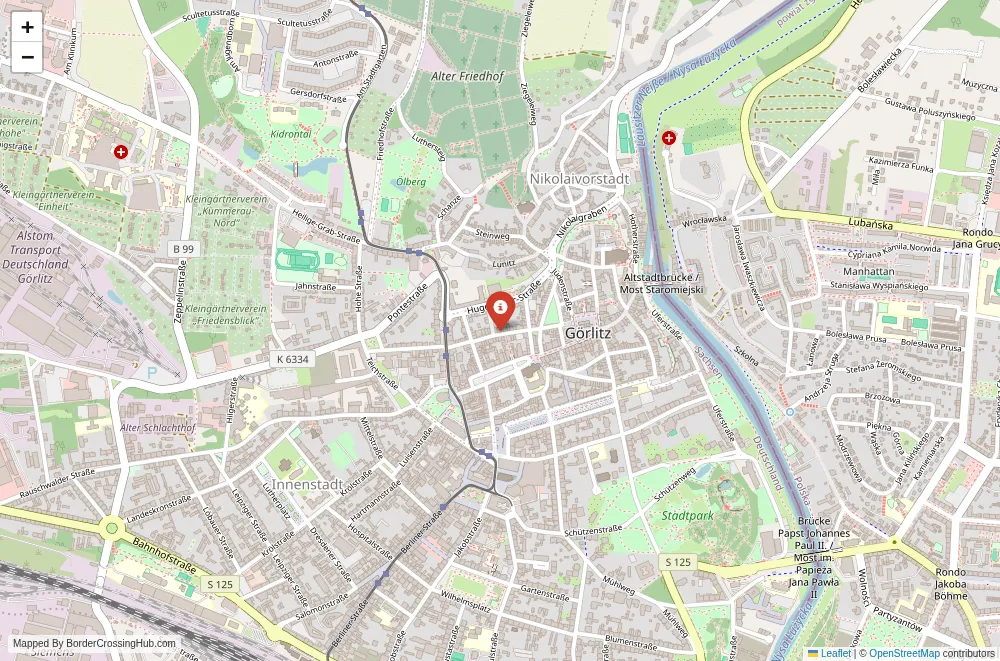
Approximate Border Location
Wait Times
Cars 0-15m; peaks 20-90m rush
Just crossed? Tap to report:
Operating Hours
Open 24 hrs (12:00 AM-11:59 PM)
Crossing Types
Ped,cars,bikes,buses; bridges
Border Type
Land crossing via city road bridges
Peak Times
07:00-09:00 AM; 04:00-07:00 PM
Daily Crossings
20,000-80,000/day
Currency Exchange
EUR; PLN in both cities; many ATMs
Safety Information
Busy intersections; occasional police checks
Languages Spoken
German/Polish
Accessibility Features
Good sidewalks; step-free routes common
About Świnoujście & Ahlbeck
Monthly Update (March 2026):
As of 03/2026, the Świnoujście & Ahlbeck Border Crossing moves easily along the seaside road and cycle paths. Cars and cyclists pass without stops most of the time. Sunny weekends bring extra tourist traffic along the coast. Otherwise it stays quiet and smooth.
No Cell Service at the Border? No Problem.
Don’t get caught scrambling for paperwork when you lose signal. Download the complete Europe Transit Guide directly to your device and access every critical detail, fast-track strategy, and border rule – 100% offline.
Świnoujście connects Poland to Germany on the island of Usedom, where the border runs along a shared beach promenade and links two seaside resorts in a unique coastal setting divided by history.
Location and Basic Connections
You reach this crossing where the Polish port city of Świnoujście meets the German seaside resort of Ahlbeck (part of Heringsdorf municipality) on Usedom island in the Baltic Sea. It features multiple points: a main road bridge for vehicles, pedestrian paths along the longest beach promenade in Europe (over 12 km), and a rail connection via the Usedomer Bäderbahn (UBB) line. Foreign visitors cross here when traveling between northwestern Poland (including Świnoujście’s ferry links to Scandinavia) and northeastern Germany (Usedom resorts or toward Greifswald and Berlin), or simply to stroll the shared beach. Alternative names include the Świnoujście Ahlbeck border or Usedom island crossing. As a Schengen internal point, it normally allows free movement, but temporary controls remain in effect as of February 10 2026 on both the German and Polish sides.
Historical Background and Geopolitical Role
The border follows the Oder-Neisse line set in 1945 after World War II, which placed the eastern part of Usedom (including Swinemünde, the pre-war German name for Świnoujście) under Polish administration while the western part stayed German. Świnoujście developed as a spa and port town from the 19th century, with Ahlbeck emerging as one of the “Kaiserbäder” (imperial baths) around the same time. The area saw heavy damage during the war, but the beach promenade survived as a unifying feature. After Poland’s Schengen entry in 2007, the rail line extended across in 2008, and pedestrian access improved, turning it into a symbol of cross-border tourism. The shared 12 km promenade connects Ahlbeck through Heringsdorf and Bansin to Świnoujście, fostering joint events and daily exchanges in this Baltic coastal zone.
Current Status and Safety Considerations
Germany conducts temporary checks at all land borders, including with Poland, until at least March 15 2026, citing irregular migration, smuggling networks, asylum pressures, and security concerns from global conflicts. Poland extends controls on its German border until April 4 2026, due to migratory spillover from Belarus routes, illegal crossings on the Polish-German side, and public security risks. At this coastal crossing, police perform random stops for ID verification on roads, the promenade, beach areas, or rail rather than permanent booths. The promenade and beach fall under control zones, with occasional checks for pedestrians or cyclists. Travelers report these as infrequent and brief in this tourist-focused spot, with no long queues. The area remains safe for visitors, with low crime and no widespread scams or aggressive touts documented. Carry your passport or national ID at all times to handle any verification.
Operating Hours and Wait Times
Road, pedestrian, and rail crossings operate around the clock with no routine barriers under Schengen norms. Temporary controls add variability: most passages occur without intervention, while a random check takes 5 to 20 minutes for document review or questions. This popular tourist point sees seasonal peaks in summer, with potential minor delays on the promenade or bridge during holidays or weekends. Off-peak times, especially early mornings or weekdays, move quickly. Weather can influence foot traffic—strong Baltic winds, rain, or winter cold reduce crowds but rarely close paths.
Visa Requirements for Foreign Visitors
Schengen rules govern entry: EU/EEA/Swiss citizens travel freely with valid ID or passport. Non-EU nationals qualify for visa exemptions up to 90 days in any 180-day period if eligible, or require a Schengen visa. The Entry/Exit System registers non-EU travelers at external borders but not routinely here; spot checks may verify your documents or stay details. Present your passport during any control, plus proof of accommodation, funds, or onward travel if requested. No fees apply at this crossing.
Crossing Procedures Step by Step
You approach via streets in Świnoujście or Ahlbeck, reaching the border on the road bridge, promenade, or rail line where the river or markers indicate the line and signs change languages. Normally, drive, cycle, walk, or take the train across as the beach and resorts continue unbroken. If police run a control, expect a roadside, promenade, or station stop for ID presentation and basic travel questions. Provide documents calmly; the process ends fast amid tourist activity. Pedestrians enjoy seamless beach walks. Rail on the UBB line crosses without standard stops, though occasional verifications occur.
Transportation Options and Road Details
The UBB narrow-gauge railway runs from Świnoujście through Ahlbeck to other Usedom towns and connects to mainland Germany. Local buses serve the resorts, while ferries from Świnoujście link to Denmark and Sweden. Driving uses paved roads leading to the bridge, passing coastal dunes, pine forests, and spa architecture. Scenery features wide sandy beaches, the Baltic Sea, piers, and historic villas. Traffic remains moderate outside summer peaks. Cycling thrives on flat paths along the promenade.
Nearby Attractions and Practical Tips
Ahlbeck boasts the iconic pier and classic seaside villas; Świnoujście offers fortifications, a lighthouse, and ferry views. Stroll the shared promenade for beach access on both sides. Carry ID due to controls. Euros work on both sides, zloty useful in Poland; cards widely accepted. Pack sunscreen, windproof layers, and comfortable shoes for beach walks. Enjoy fresh seafood or spa treatments. Cross on foot or bike for the full coastal experience.
Cultural and Economic Significance
The crossing drives tourism in this shared Usedom region, where visitors enjoy seamless beach days and events. Spa traditions from the imperial era blend with modern resorts, supporting local economies through cross-border stays and services. It exemplifies Schengen’s coastal integration amid temporary security adaptations.
Final Planning Notes
Check official EU or national sources for updates on temporary controls before your trip, keep ID ready, and allow flexibility for random checks. This scenic beach-linked route makes for a relaxing border passage between Poland and Germany when you stay prepared.
No reviews yet.