
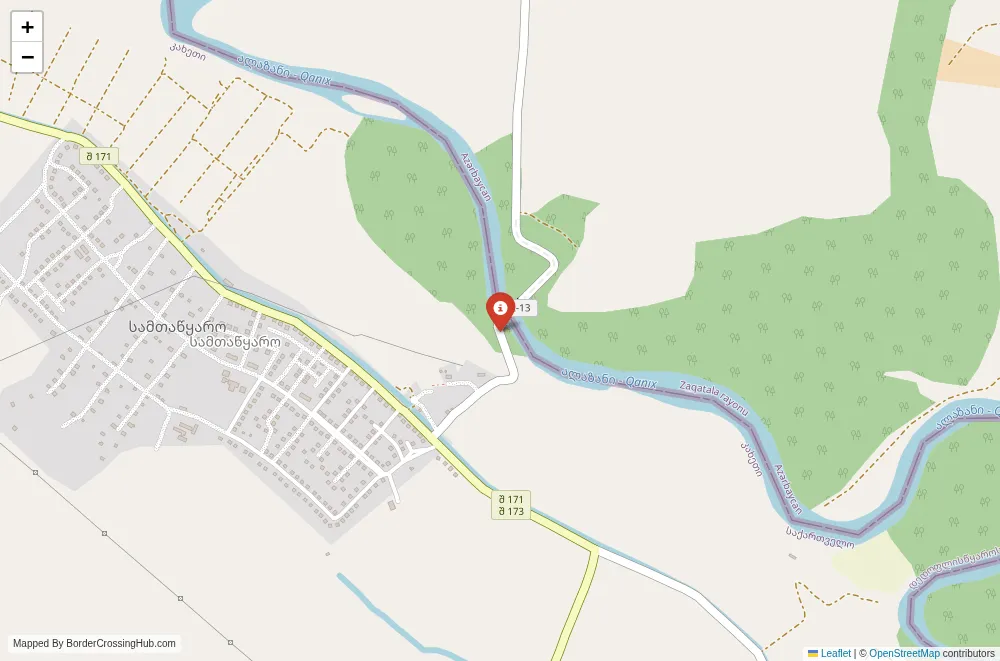
Approximate Border Location
Border Countries
- 🇦🇿Azerbaijan
- 🇬🇪Georgia
Border Cities
- 🇦🇿Mughanli
- 🇬🇪Samtatskaro
Wait Times
Cars 15-60m; peaks 90-240m
Just crossed? Tap to report:
Operating Hours
07:00 AM-07:00 PM
Crossing Types
Ped,cars,buses; border controls
Border Type
Land crossing via rural road
Peak Times
08:00-10:00 AM; 04:00-07:00 PM
Daily Crossings
800-4,000/day
Currency Exchange
AZN; GEL in Marneuli; ATMs
Safety Information
Rural post; limited services nearby
Languages Spoken
Georgian/Azerbaijani
Accessibility Features
Uneven approaches; minimal ramps
About Sumar & Mandali
Monthly Update (March 2026):
As of 03/2026, the Sumar & Mandali Border Crossing sees moderate cross-border traffic and feels a bit variable. Cars and trucks move through the checkpoint in clusters, especially during daytime hours. Inspections on both sides can stretch waits. Regional trade and security checks influence how quickly things move.
No Cell Service at the Border? No Problem.
Don’t get caught scrambling for paperwork when you lose signal. Download the complete Asia Transit Guide directly to your device and access every critical detail, fast-track strategy, and border rule – 100% offline.
The Mandali-Sumar border crossing links Iraq and Iran as a functional yet under-the-radar point in Diyala Province, handling steady non-oil trade amid upgrades aimed at boosting bilateral flows.
Current Status and Safety Note
As of early 2026, this crossing operates as an international border point following Iraq’s Council of Ministers designation in January 2026. It remains open for trade and limited crossings, with recent agreements (from late 2025) to extend hours, upgrade facilities, and dedicate lanes for goods like food imports. No blanket closures appear in recent reports, but the region carries inherent risks from past instability in Diyala and border-area tensions. Foreign travelers face challenges: Iraq requires visas in advance (often hard to obtain for land entry), and security checks can be thorough. Iran issues visas on arrival or e-visas for many nationalities at land points. Always cross-reference current advisories from your government’s foreign ministry, Iraq’s Border Crossings Authority, or Iran’s border police. The area sees heavy truck traffic but low tourist volume; avoid if you’re not prepared for potential delays or scrutiny.
Alternative Names
Commonly called Mandali-Sumar, Sumar-Mandali, or Mandali border crossing (Iraqi side) and Sumar (Iranian side). Some references list it as Soomar-Mandali or Zarneh on maps.
Location and Connections
Mandali sits in Iraq’s Diyala Governorate, about 155 km northeast of Baghdad and roughly 15 km from the actual checkpoint. Sumar lies in Iran’s Kermanshah Province. The crossing connects via local roads to the main Baghdad-Kermanshah corridor, though not on the busiest highways. It serves as an alternative to more prominent points like Zurbatiyah-Mehran or Khosravi, linking rural Diyala to western Iran. From Baghdad, you reach Mandali via highways toward Khanaqin; onward in Iran, it heads toward Qasr-e Shirin or Kermanshah city.
Historical Background
The border traces the 1975 Algiers Agreement line (adjusted post-1980-1988 war), with this point in the Zagros foothills. It reopened around 2014 after decades of closure due to conflict and sanctions. A 2018 earthquake sequence in the Mandali-Sumar area caused minor disruptions but no long-term damage to infrastructure. Recent upgrades stem from bilateral pacts to revive trade routes, reflecting post-ISIS stabilization in Diyala and efforts to diversify economic ties beyond southern crossings. It has gained traction for non-oil commerce, positioning it as a growing economic link in the region.
Practical Crossing Procedures
You clear separate controls: Iraqi exit at Mandali, short drive/walk to Iranian entry at Sumar. Iraq demands pre-arranged visas for most foreigners (no reliable visa on arrival at land borders); bring passport photos, application proof, and cash. Iran often grants visa on arrival (around $50-80 USD depending on nationality, payable in cash) with forms on-site. Vehicles need green card insurance (buyable near borders), registration, and customs declarations. Expect thorough vehicle searches, especially for goods. The process includes passport stamps, fingerprinting, and questions about travel purpose. Recent plans add dedicated gates for specific imports to speed things.
Wait Times and Operating Hours
Hours have extended under 2025 agreements, likely covering longer daily windows (possibly 24/7 for freight, daylight for passengers). Passenger waits vary: 1-3 hours typical with low crowds, but truck queues push longer for commercial traffic. It handles about 105,000 tons of non-oil goods monthly, so peaks occur with trade surges. Early mornings often move quicker for personal crossings.
Transportation Options
No regular international buses target this crossing due to low tourist use. From Baghdad, shared taxis or private cars reach Mandali (3-4 hours on decent roads). In Iran, taxis or local transport continue to Kermanshah (several hours). Roads stay paved and in fair condition through the plains, though hilly approaches near the border can feel rough. Overlanders report using it occasionally, but most foreigners opt for busier southern or Kurdish crossings.
Scams and Warnings
Low foreigner traffic reduces touts compared to Mehran or Khosravi, but border areas still see currency exchange rip-offs (use official rates or ATMs in towns). Unofficial “helpers” might offer visa/form assistance at inflated prices; ignore them and head to marked booths. Some reports note extra scrutiny or delays for non-locals. Women traveling alone advise daylight crossings and firm boundaries with approaches. Report any issues to border officials.
Nearby Attractions
Mandali offers a quiet Iraqi town feel with local markets and proximity to Khanaqin’s historic sites. In Diyala, Balad or Baqubah provide regional flavor. On the Iranian side, Sumar connects to Qasr-e Shirin (ancient ruins) or Kermanshah’s Taq-e Bostan rock reliefs and Bisotun inscriptions (UNESCO). The Zagros scenery adds mountain views along the route.
Seasonal Variations and Weather Impacts
Dry summers bring dust and heat, potentially slowing checks outdoors. Winter rain or snow in the Zagros can close access roads briefly. Trade volumes fluctuate with seasons, but passenger impact stays minimal.
Cultural and Economic Significance
It supports growing non-oil trade (food, construction materials) between Iraq and Iran, serving as a model for cooperation per recent talks. The crossing reflects shared border communities with historical ties, aiding local economies in Diyala and Kermanshah through commerce and family movement.
Planning Recommendations
Secure visas well ahead (Iraq especially). Carry USD cash, passport copies, vehicle insurance, and snacks/water for waits. Monitor Iraq’s mcbpc.gov.iq or Iranian customs sites for updates. Consider flights to Baghdad/Tehran as backups during any instability. Cross early and stay alert in rural border zones.
Final Note on Mandali-Sumar
Mandali-Sumar provides a straightforward trade-oriented crossing with recent momentum toward better facilities. It suits those with solid prep and regional focus, but remains niche for most international travelers. Track developments closely and prioritize safety. Safe crossing when you go. (Word count: 1058)
No reviews yet.