
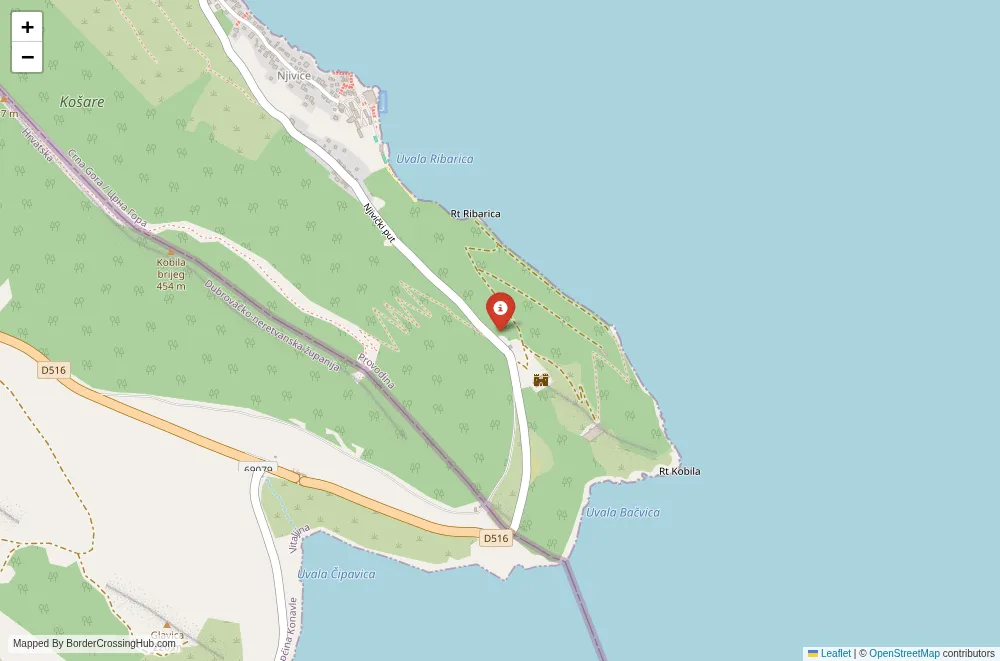
Approximate Border Location
Border Countries
- 🇭🇷Croatia
- 🇲🇪Montenegro
Border Cities
- 🇭🇷Vitaljina
- 🇲🇪Kobila
Wait Times
Cars 0-20m; peaks 30-150m summer
Just crossed? Tap to report:
Operating Hours
Open 24 hrs (12:00 AM-11:59 PM)
Crossing Types
Ped,cars,bikes; border controls
Border Type
Land crossing via coastal road
Peak Times
10:00 AM-06:00 PM; Jul-Aug
Daily Crossings
1,500-7,000/day
Currency Exchange
EUR only; ATMs in Herceg Novi/Dubrovnik
Safety Information
Coastal traffic; queues on peak days
Languages Spoken
Montenegrin/Croatian
Accessibility Features
Paved lanes; step-free varies
About Šula & Vitina
Monthly Update (March 2026):
As of 03/2026, the Šula & Vitina Border Crossing stays quiet with light local traffic. Cars move through the rural checkpoint without much buildup, often just a few vehicles at a time. Afternoons sometimes bring a small wave of drivers returning toward Croatia. Local errands and cross-border family visits shape most of the activity.
No Cell Service at the Border? No Problem.
Don’t get caught scrambling for paperwork when you lose signal. Download the complete Europe Transit Guide directly to your device and access every critical detail, fast-track strategy, and border rule – 100% offline.
The Šula-Vitina border crossing (also known as Šula – Vitina, Šula – Vitine, or Витине – Шула) functions as a minor, low-volume land point on the Montenegro-Bosnia and Herzegovina frontier, though it occasionally appears in contexts linked to Croatia due to regional proximity and shared Adriatic influences; however, it primarily connects Montenegro to Bosnia and Herzegovina in the Foča-Pljevlja area.
Location and Basic Connections
This crossing joins the Montenegrin village area of Šula (in Pljevlja Municipality) to Vitina (Vitine) on the Bosnian side (in Foča-Ustikolina Municipality, Bosnian-Podrinje Canton). It lies along a secondary rural road in the mountainous northeastern Herzegovina region, far from major highways like the M18 or Adriatic routes. Access involves winding local paths from Pljevlja in Montenegro or Foča in Bosnia, with no direct link to Croatian infrastructure despite occasional mentions in broader Balkan border discussions. Private cars and light vehicles use it mainly, with pedestrian crossings possible in this quiet, forested zone. Heavy traffic or buses avoid it due to poor road quality.
Historical Background
The border here follows post-Yugoslav lines through the rugged terrain of the upper Drina valley, dividing communities with shared Slavic heritage. Šula-Vitina served as a local passage during the Yugoslav era and persisted post-1990s conflicts for regional movement. It gained temporary attention during the COVID-19 period when Montenegro closed it briefly (along with Šćepan Polje-Hum) in 2020 before reopening. As a passenger point, it has remained operational under bilateral agreements, though never upgraded to major status. The area reflects ongoing efforts for cross-border cooperation in remote parts of the Western Balkans.
Current Status and Safety Warnings
As of early 2026, this remains a functional but limited passenger crossing, open for international traffic without major reported closures. It appears in Montenegrin and Bosnian border lists as a road point for people, though usage stays very low. The remote mountainous setting poses standard rural risks: poor road conditions in bad weather, limited services, and potential for minor delays from patrols or checks. No widespread scams or crowds occur here, unlike busier points. Petty theft or unofficial helpers are rare due to isolation. Approach with caution in winter or after rain; verify status via Montenegro’s MUP border cameras/sites or Bosnia’s Granična Policija before travel, as smaller crossings can face temporary issues from maintenance or politics.
Operating Hours and Wait Times
The point typically operates daytime hours (around 7:00 a.m. to 7:00 p.m. or similar, varying seasonally), with processing quick due to negligible traffic—often 10 to 30 minutes total. Queues almost never form; waits exceed 15 minutes only during rare local events or holidays.
Visa Requirements for Foreign Visitors
Montenegro allows visa-free entry for many nationalities up to 90 days; Bosnia and Herzegovina provides similar visa-free access (90 days) for most passports. At this land crossing, standard stamps apply without noted extras. Biometric passports help; no special restrictions for foreigners beyond routine checks. Confirm your nationality’s rules, as land borders follow general policies.
Crossing Procedures Step by Step
From Montenegro at Šula, clear exit formalities (passport, basic vehicle check if driving). Cross the short connecting road, then handle Bosnian entry at Vitina with stamp and possible declaration. The reverse applies outbound. Facilities are minimal: small booths, focused on documents in this low-key setup. Luggage stays with you; no advanced scanners.
Transportation Options
Private cars or off-road capable vehicles suit the rural, potentially rough roads best. No public buses or taxis directly serve this point; arrange rides from Pljevlja (Montenegro) or Foča (Bosnia). Onward connections link to larger towns for buses or trains.
Road Conditions and Scenery
Approaches consist of unpaved or poorly maintained gravel/dirt tracks in places, with steep inclines and curves through mountains. Conditions deteriorate quickly after rain or snow. Scenery rewards with dramatic Balkan highlands: dense forests, river valleys, rocky peaks, and isolated hamlets, offering a wild, untouched feel.
Nearby Attractions
Šula lies in remote Montenegrin countryside with hiking potential. Vitina connects to Foča area, known for Drina River rafting, Sutjeska National Park (WWII history, Perućica primeval forest), and Tara Canyon views farther north. The region appeals to nature enthusiasts but lacks major infrastructure.
Seasonal Variations and Weather Impacts
Winter snow and ice often close or severely limit mountain roads for days. Spring mud and summer storms affect unpaved sections. Low traffic means minimal seasonal crowds, but weather dominates access more than anything else.
Practical Travel Tips
Carry euros (accepted both sides) or local currencies (euro in Montenegro, convertible mark in Bosnia). Fuel up before remote areas. Declare goods honestly. Time crossings for daylight on tricky roads. Use official paths only. Bring water/snacks for waits or breakdowns. Monitor border sites closely.
Cultural and Economic Role
It sustains modest local ties in this sparsely populated mountainous zone, supporting family visits, small trade in produce or timber, and rural connections despite isolation. The point embodies quiet cross-border life in the Balkans’ highlands.
Final Thoughts on This Remote Crossing
Šula-Vitina suits adventurous travelers seeking an off-the-beaten-path Montenegro-Bosnia passage in the mountains, far from tourist crowds. Prepare for basic conditions, check weather and status rigorously, and embrace the rugged scenery. Safe travels in the Balkans.
See other crossings between Bosnia & Herzegovina and Croatia
See other crossings between Bosnia & Herzegovina and Croatia
No reviews yet.