
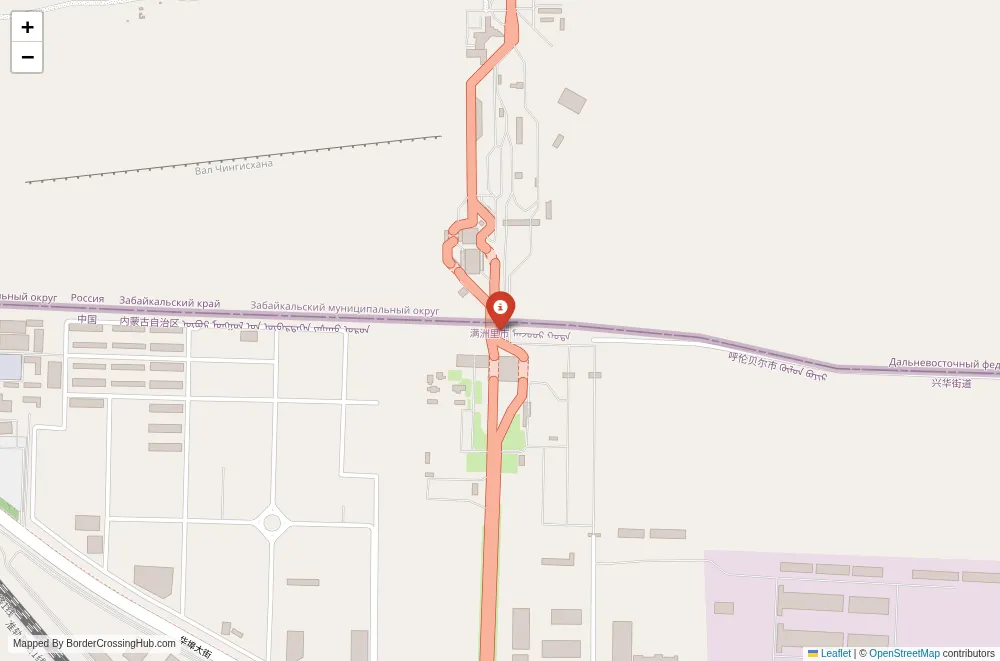
Approximate Border Location
Wait Times
Cars 30-150m; peaks 180-480m
Just crossed? Tap to report:
Operating Hours
Open 24 hrs; passenger windows vary
Crossing Types
Cars,buses,trucks; major controls
Border Type
Land crossing via road+rail corridor
Peak Times
Mon-Fri 08:00 AM-12:00 PM; holidays
Daily Crossings
8,000-35,000/day
Currency Exchange
CNY; RUB in Manzhouli/Chita; ATMs
Safety Information
Congestion likely; strict inspections
Languages Spoken
Mandarin, Russian, English
Accessibility Features
Accessible services vary by terminal
About Suifenhe & Pogranichny
Monthly Update (March 2026):
As of 03/2026, the Suifenhe & Pogranichny Border Crossing remains one of the steadier routes for freight in the region. Trucks stack up at times before clearing customs on the Russian side. Passenger traffic moves through more quickly once inspections begin moving. Trade flows largely set the rhythm here.
No Cell Service at the Border? No Problem.
Don’t get caught scrambling for paperwork when you lose signal. Download the complete Asia Transit Guide directly to your device and access every critical detail, fast-track strategy, and border rule – 100% offline.
The Suifenhe-Pogranichny border crossing operates as one of the most active land connections between China and Russia, channeling significant passenger and cargo flows in Heilongjiang Province and Primorsky Krai. You reach this point most commonly when traveling from Harbin or Mudanjiang toward Vladivostok or Ussuriysk, making it a practical route for overland journeys in the Russian Far East. Alternative names include Suifenhe Port, Pogranichny checkpoint, or the Suifenhe-Grodekovo crossing (Grodekovo being a nearby Russian rail station).
Location and Basic Connection
Suifenhe sits in southeastern Heilongjiang Province, China, while Pogranichny lies in Primorsky Krai, Russia, about 20-30 km apart with a no-man’s-land in between. The crossing supports both highway and rail traffic, linking Chinese routes like highways from Mudanjiang to Russian roads toward Ussuriysk and Vladivostok. It ranks high in volume among China-Russia land ports, handling millions in trade and growing passenger numbers, especially since late 2025 visa changes.
Historical Background
This crossing traces origins to the Chinese Eastern Railway built in the early 1900s under Russian influence, which shaped Suifenhe as a rail hub with early modern amenities arriving via the line. The frontier saw shifts during Sino-Soviet tensions in the mid-20th century but reopened for trade in the late 1980s. A symbolic 1987 exchange of goods between Suifenhe and Pogranichny marked renewed ties. Geopolitically, it underscores deepening China-Russia relations, serving as part of corridors linking the Belt and Road Initiative to Eurasian networks, with recent policies amplifying people and goods movement amid global realignments.
Current Operating Status
In early 2026, the border runs daily with extended hours for passenger and freight processing, often incorporating joint inspection halls that speed clearances. A mutual 30-day visa-free pilot for ordinary passport holders (tourism/business) started in late 2025: China first allowed Russians visa-free from September, followed by Russia reciprocating for Chinese from December 1, 2025, through September 14, 2026. This has driven sharp increases in crossings. E-visas remain available for many nationalities at this point, but foreigners should confirm eligibility and requirements like proof of accommodation, insurance, and funds. Hours typically cover daytime peaks but adapt to demand; check official sources for holiday adjustments.
Practical Crossing Procedures
You cross by bus, train, or private vehicle. From the Chinese side in Suifenhe, complete exit at immigration and customs. Proceed across to Pogranichny for Russian entry. Joint counters in some halls stamp you out of one country and into the other quickly, sometimes under 90 seconds for straightforward cases. Bring passport, supporting documents, and cash. Officers scan docs, ask questions, and inspect luggage or vehicles. The process averages 30-60 minutes with upgrades, though groups or peaks extend it.
Wait Times and Peak Periods
Waits have shortened with infrastructure like e-channels and joint halls, but surges occur with visa-free tourism. Early 2026 saw over 10,000 tourist crossings in the first week of January, an 83% year-on-year jump. Midday and warmer months bring more buses and day-trippers; early mornings often move faster. Freight remains heavy, but passenger lanes prioritize.
Transportation Options
Buses run frequently from Suifenhe to Pogranichny (30 minutes to an hour) and onward to Vladivostok or Ussuriysk. Trains include local services like the shuttle to Grodekovo/Pogranichny, with changes for gauge. From Harbin or Mudanjiang, high-speed trains reach Suifenhe, then connect across. Private cars cross with paperwork; official taxis or shared vans operate from stations. Direct international buses handle the border stop while you clear formalities.
Scams and Safety Warnings
This active crossing has fewer targeted tourist scams than some borders, but watch for unofficial helpers offering “faster” processing or poor-rate currency exchanges. Counterfeit goods appear in markets; Russian warnings note fakes labeled as authentic. Pickpocketing risks rise in crowds or stations, so secure belongings. Language barriers slow resolutions, so use apps. The area feels commercial and safe during operations for foreigners, with no major recent issues beyond general border caution. Avoid unsolicited deals and stick to official zones.
Road Conditions and Scenery
Roads approach through northeastern China’s hilly, forested terrain with Russian influences visible. Crossing into Russia, expect rural Primorsky views: taiga, small settlements, and open land. Paved highways perform well, though winter ice or summer rain affects sections. Freight trucks share routes, adding traffic.
Seasonal Variations and Weather Impacts
Winter cold slows travel with snow and ice; summer offers clearer conditions but rain potential. Visa-free boosts peak in warmer months and holidays. Infrastructure handles most weather, but plan buffers.
Nearby Attractions
Suifenhe features the National Gate Park at the border for views and photos, plus the Border Trade Market selling Russian goods. Daguangming Temple offers cultural interest. In Pogranichny, Grodekovo station ties to rail history; head to Ussuriysk or Vladivostok for more. The area suits border and trade enthusiasts.
Cultural and Economic Role
Trade dominates: cars, coal, consumer goods, and e-commerce flow both ways, with record cargo in recent years. Tourism surges from visa-free rules support local shops and services. Suifenhe grew as a trade hub with Russian architectural echoes, fostering cross-border contacts in this strategic zone.
Final Planning Tips
Arrive early with yuan/rubles, printed docs, translation tools, and weather prep. Verify visa-free or e-visa details, as the pilot ends mid-2026. Allow time for checks and enjoy the cross-cultural shift. With basics in place, you handle the crossing and continue into the Russian Far East.
Summing Up the Crossing
Suifenhe-Pogranichny delivers high-volume, facilitated travel between China and Russia, especially with recent visa changes. Time it for off-peak, stay alert to routines, and it opens efficient access to regional routes. Safe travels.
No reviews yet.