
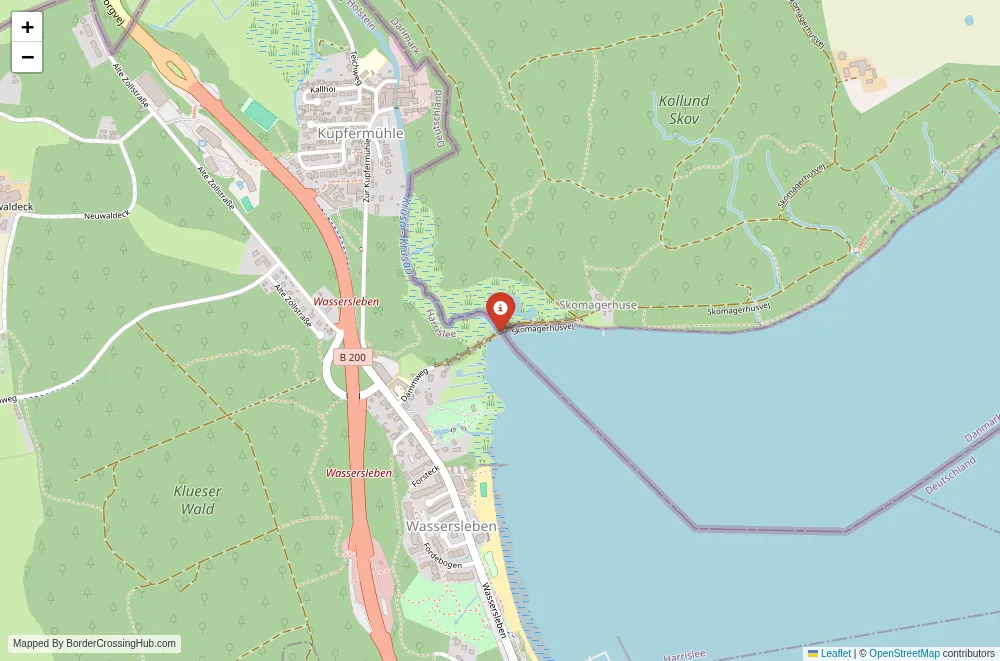
Approximate Border Location
Wait Times
0-5m; rare checks 10-30m
Just crossed? Tap to report:
Operating Hours
Open 24 hrs (12:00 AM-11:59 PM)
Crossing Types
Ped,bikes only; path crossing
Border Type
Land crossing via foot/cycle path
Peak Times
Daylight 09:00 AM-05:00 PM; summer
Daily Crossings
50-400/day
Currency Exchange
EUR; DKK in Tønder; ATMs
Safety Information
Isolated path; avoid after dark
Languages Spoken
German/Danish
Accessibility Features
Unpaved sections; not step-free
About Skomagerhus & Grenze foot/cycle
The Skomagerhus foot and cycle crossing offers one of the most intimate ways to step between Denmark and Germany, right where a tiny wooden bridge spans a small stream at the eastern end of their shared land border.
Current Status and Safety Note
As of February 2026, this remains an open Schengen internal border with no routine controls. Denmark maintains temporary spot checks at various points along the frontier due to security issues like migration and crime concerns, though they rarely appear at this remote pedestrian spot. You face little risk walking or cycling here; the area stays peaceful with no notable scams or incidents reported. Carry your passport or national ID card anyway, since Danish police can ask for it during random checks elsewhere nearby. Always double-check current rules via Danish police or your embassy’s travel advice before setting out.
Alternative Names
People refer to it as Skomagerhus grænseovergang (Danish), Schusterkate Grenze (German), or simply the Skomagerhus footbridge crossing. The bridge itself goes by Dambroen or Dammbrücke in some references.
Location and Basic Connection
You reach this point on the edge of Kollund Forest in southern Jutland, Denmark, where the Krusåen stream flows into Flensborg Fjord (Flensburg Fjord). The Danish side lies near Kruså, while the German side connects to the area around Wassersleben or nearby Flensburg outskirts. A narrow wooden footbridge carries you across the stream, marking the border precisely in the middle. This serves as the easternmost land crossing along the 68 km frontier, with border stone number 1 standing close by. Cars stay barred; only pedestrians and cyclists use it.
Historical Background
The crossing dates to the 1920 Schleswig plebiscites after World War I, when northern Schleswig joined Denmark following votes that redrew the line based on population wishes. Before Schengen, it functioned as a minor notification post with restricted access, mainly for locals like schoolchildren heading to Flensburg, forest workers, or officials with special permits. During World War II, authorities closed it entirely. Post-1945, guards watched it briefly before things eased. Since Denmark joined Schengen in 2001, the bridge has stayed open 24/7 without fixed police or customs presence. The name Skomagerhus comes from an old shoemaker’s cottage planned nearby, though only one house ever appeared.
Geopolitical and Economic Role
Inside Schengen, this spot sees no formal trade or heavy commuter use. Locals occasionally walk or bike across for short trips, perhaps to visit family or enjoy fjord views on the other side. The border supports cross-regional life in subtle ways, tying into tourism along paths like the Gendarmstien trail. No major commerce flows here; bigger economic activity happens at vehicle crossings further west. The wild boar fence runs in sections along the frontier but skips this watery end.
Practical Crossing Procedures
No barriers or booths exist. You approach from the Danish forest path, step onto the narrow wooden bridge (Dambroen), walk or push your bike across the short span over Krusåen, and emerge on the German side. The border line sits roughly in the middle of the bridge. No stamps or questions occur under normal conditions. If spot checks happen (unlikely here but possible nearby), Danish officers might stop you entering Denmark for ID verification, taking just a minute or two. Non-EEA visitors need valid entry documents as usual for Schengen. The crossing operates continuously with no closing hours.
Transportation Options
Reach the Danish side by bike or on foot along the Gendarmstien (Gendarme Path), a popular long-distance trail that passes right by. From Kruså or Kollund, local roads or paths lead here in a short distance. Public buses serve nearby towns like Kruså, then you walk or cycle the rest. On the German side, paths connect to Flensburg, where trains link to other cities. No taxis wait at the bridge itself; plan for self-powered travel. Cycling works perfectly on the flat, well-marked routes.
Road Conditions and Scenery
No roads exist here; you follow forest trails or the narrow bridge path. The terrain stays level with gentle forest surroundings, reed-lined stream banks, and open views toward the fjord. Birds call from the wetlands, and the air carries a salty tang near the water. In summer, greenery thickens; autumn brings colorful leaves. Winter can turn paths icy or muddy after rain, but the short bridge crossing poses no real challenge.
Scams and Warnings
This isolated footbridge attracts almost zero trouble. No touts or fake fees show up like at larger crossings. The main issue might involve temporary path closures from weather or maintenance, though rare. During past events like COVID lockdowns, authorities taped it off briefly, but it reopened quickly. Keep an eye on footing on the wooden planks when wet.
Nearby Attractions
The Gendarmstien trail stretches along much of the border, offering hikes with historical markers and coastal scenery. Kollund Forest provides peaceful walks with fjord glimpses. On the German side, Flensburg’s old town and harbor sit a short bike ride away, with museums and waterfront spots. Border stone 1 stands nearby for photos. The fjord area draws birdwatchers year-round.
Seasonal Variations and Weather
Summer invites more walkers and cyclists with long days and mild temperatures. Autumn colors the forest vividly. Winter shortens light and adds wind chill near the water; snow or ice can slick the bridge. Spring migration brings flocks to the fjord. Rain soaks trails occasionally, turning dirt paths soft, but the bridge itself drains fast.
Travel Tips and Preparation
Wear sturdy shoes for forest paths and bring water, especially in warmer months. Download trail maps offline since mobile signal fades in spots. Check weather for wind or rain that affects the open bridge. If biking, ensure your bike fits the narrow planks (most do fine). Respect protected nature areas by sticking to paths. For longer trips, combine with the full Gendarmstien route.
Wrapping Up Your Plans
This tiny bridge delivers a personal touch to the Denmark-Germany border, perfect for a quiet walk or cycle detour. Confirm no unusual restrictions ahead, gear up for the trails, and savor the peaceful shift from one country to the next.
No reviews yet.