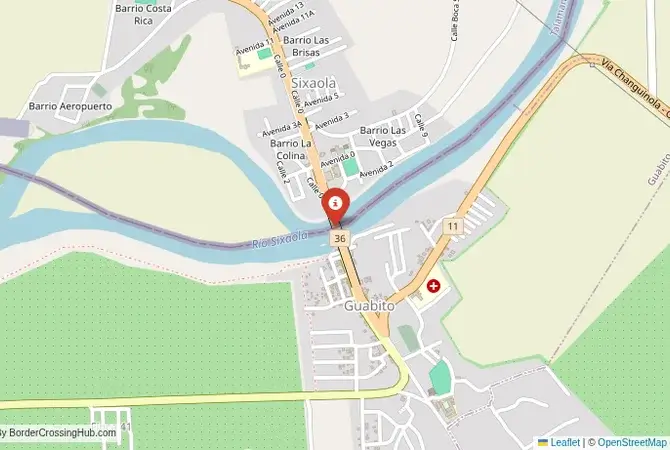
Monthly Update (September 2026):
Guabito & Sixaola Border Crossing remains an important local crossing over the Sixaola River, with no significant September closure identified. The Costa Rica-Panama frontier is also seeing broader cooperation aimed at improving movement and security around the three official crossings, including Sixaola. A new bilateral arrangement entering into force on September 18 will further facilitate movement for qualifying residents of the border region, although it does not replace normal immigration procedures for tourists.
About this crossing
Historical and Geopolitical Background
Spanning the Sixaola River, this crossing has been a key route since the early 20th century, when a 1908 railway bridge facilitated banana trade. The original rickety bridge was replaced in 2020 with a modern binational bridge, improving safety for the 100,000 annual travelers. Geopolitically, it’s less tense than other regional borders, but Panama’s stricter entry rules, like proof of onward travel, contrast with Costa Rica’s relaxed CA-4 visa agreement (with Nicaragua, Honduras, and Guatemala). Occasional disputes over the San Juan River nearby can lead to temporary disruptions, so check border status before traveling.
Crossing Procedures and Wait Times
From Costa Rica to Panama, pay a $7-9 exit tax (card or cash) at a kiosk before getting an exit stamp. Cross the Sixaola River bridge (a 5-minute walk) to Panama’s immigration, where you’ll pay a $3-4 entry fee and show onward travel proof (e.g., a bus ticket to Panama City). From Panama to Costa Rica, no entry fee is required, but you’ll need onward travel proof and a passport valid for six months. The border operates from 7:00 AM to 5:00 PM Costa Rica time (8:00 AM to 6:00 PM Panama time, as Panama is one hour ahead). Wait times range from 15 minutes in the early morning to 3-4 hours during peak holiday periods like Independence Day.
Nearby Border Crossings




Routes and Road Conditions
From Puerto Viejo, Costa Rica, hourly buses to Sixaola (1.5 hours, $3.40) pass lush rainforests and banana plantations. From Almirante, Panama, take a $1 bus to Changuinola, then a $1 bus or $6 shuttle to Guabito (1 hour total). The Pan-American Highway’s Caribbean spur is paved but narrow, with occasional construction delays. The Costa Rican side feels sleepy, with basic shops, while Panama’s side has duty-free stores. The bridge offers scenic river views, but watch for stray dogs and vendors underfoot.
Practical Tips for a Safe Journey
Scams are frequent; touts may charge $10 for express services or push overpriced minivans ($10 instead of $2 to Almirante). Pay taxes only at official kiosks and use US dollars or Costa Rican colones to avoid poor exchange rates. ATMs are absent, so bring cash; Soda Martha in Sixaola accepts dollars for meals. Theft is a risk on buses, so keep bags close. Carry a printed bus ticket for onward travel proof, as digital copies may not suffice. Public restrooms cost $0.50-$1 and are often basic. Drones are restricted in Panama, so don’t bring them.
Cultural and Economic Significance
The crossing buzzes with backpackers and locals, blending Costa Rica’s Afro-Caribbean culture with Panama’s indigenous Ngäbe-Buglé influences. Duty-free shops in Guabito sell liquor at low prices, while Sixaola’s markets offer local fruits. The CA-4 visa allows 90 days across four countries, but Panama’s separate 90-180-day visa draws adventure travelers to Bocas del Toro. Economically, the border supports small-scale trade, with bananas and crafts crossing daily, though its tourism focus overshadows cargo compared to Paso Canoas.
Nearby Attractions to Explore
In Costa Rica, Puerto Viejo (1.5 hours) offers vibrant beaches and Salsa Brava for surfing. Cahuita National Park (2 hours) is ideal for wildlife spotting. In Panama, Bocas del Toro (1-hour ferry from Almirante) boasts coral reefs and nightlife. The Gandoca-Manzanillo Wildlife Refuge, 30 minutes from Sixaola, offers hiking and lagoons. These spots make the crossing a gateway to Caribbean adventures.
Seasonal and Weather Impacts
The dry season (December to April) brings 27°C temperatures and faster crossings, ideal for travel. The rainy season (May to November) can cause muddy paths and delays, with queues lengthening during holidays like Christmas. Heavy rain may slow bridge crossings, so check weather forecasts. Early weekday mornings avoid peak crowds and potential disruptions from construction or regional disputes.
Planning Your Crossing
Arrive by 7:00 AM to beat queues and ensure same-day travel to Bocas del Toro or Puerto Viejo. Carry US dollars, a valid passport, and a printed onward travel ticket. Book a shuttle ($6 from Almirante) for convenience, but negotiate fares to avoid scams. Check border status online, as closures are rare but possible. Spend a night in Puerto Viejo to enjoy its Caribbean charm before or after crossing for a richer experience.
View all border crossings between Costa Rica and PanamaPractical information
Fuel
Costa Rica: <1 km - Panama: <1 km
Currency
Near Sixaola: CRC, PAB, USD
Safety information
Rural zone; river conditions
Connectivity
4G LTE coverage
Have you crossed here?
Help other travelers by sharing your experience, wait times, and any updates.