
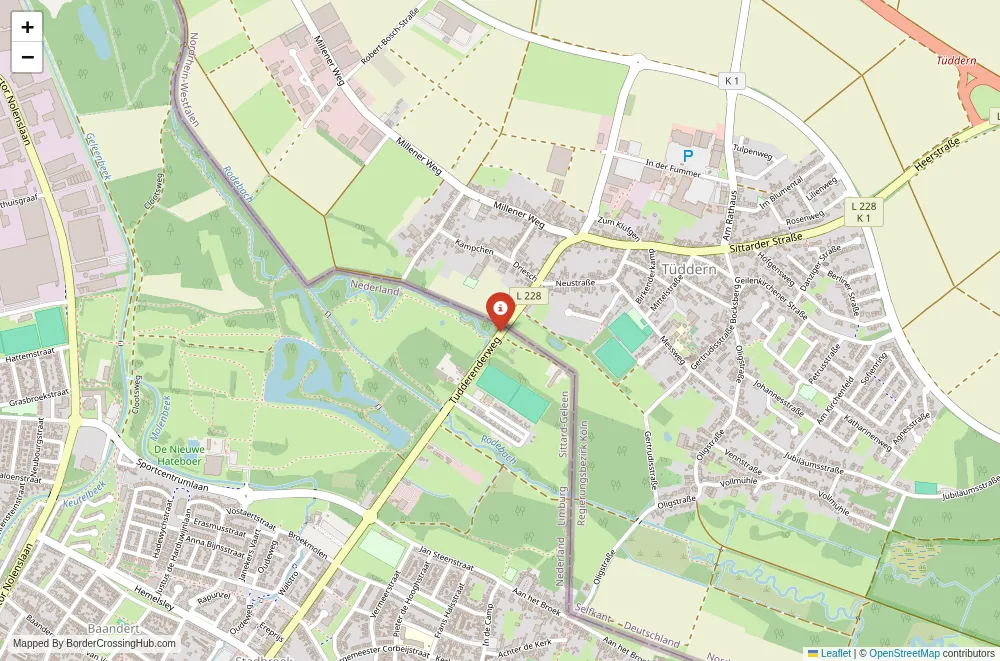
Approximate Border Location
Border Countries
- 🇳🇱Netherlands
- 🇩🇪Germany
Border Cities
- 🇳🇱Sittard
- 🇩🇪Herzogenrath
Wait Times
Cars 0-10m; peaks 15-45m commute
Just crossed? Tap to report:
Operating Hours
Open 24 hrs (12:00 AM-11:59 PM)
Crossing Types
Ped,cars,bikes,buses; no routine checks
Border Type
Land crossing via road (regional)
Peak Times
07:00-09:00 AM; 04:00-06:30 PM
Daily Crossings
20,000-70,000/day
Currency Exchange
EUR only; ATMs common
Safety Information
Urban junctions; occasional controls
Languages Spoken
Dutch/German
Accessibility Features
Step-free routes; accessible transit
About Sittard & Herzogenrath
The Sittard-Herzogenrath rail line carries you across the Netherlands-Germany border on a regional train through the heart of the Euregio Meuse-Rhine, linking the Dutch city of Sittard directly to the German border town of Herzogenrath in under an hour.
Alternative Names
This route is known as the Sittard–Herzogenrath railway, the Heerlen-Herzogenrath line segment, or the Drielandentrein / Dreiländerzug / LIMAX corridor (especially on the extended Maastricht-Aachen-Liège service). Locals often just call it the cross-border train from Sittard via Heerlen to Herzogenrath.
Current Status and Safety Note
The Netherlands and Germany are Schengen countries, so this rail crossing normally has no permanent checkpoints or routine passport controls. You board the train in one country and step off in the other without formalities. Both nations maintain temporary random spot checks at various border points (Netherlands until 8 June 2026, Germany until mid-March 2026) due to migration and security concerns. These are selective and intelligence-based rather than systematic, so most passengers experience no interruption, but occasional document checks or brief train stops can occur. The area feels safe, commuter-normal, and well-integrated, with no significant reports of scams or issues for ordinary travelers.
Historical Background
The railway opened in 1896, creating a vital link between Dutch Limburg and the Aachen region. The single-track section from Landgraaf to Herzogenrath was electrified and modernized in the late 2010s (completed around 2018-2019) to support reliable cross-border services. This line has long tied mining and industrial communities together; today it forms part of the Three Countries Train network that extends from Maastricht through Heerlen to Aachen and sometimes Liège.
Geopolitical and Economic Role
This route strengthens ties in the Meuse-Rhine Euregio, where Dutch, German, and Belgian areas blend closely. It serves commuters, students, shoppers, and tourists moving between Limburg and North Rhine-Westphalia. The rail line supports regional mobility, with connections to larger networks toward Maastricht, Eindhoven, Aachen, and beyond. Cross-border shopping and daily routines thrive, especially around Heerlen and Herzogenrath.
Visa Requirements for Foreign Visitors
Schengen rules apply equally. If your nationality qualifies for visa-free entry, you cross with just a valid passport or national ID. Most non-EU visitors receive 90 days in any 180-day period across the area. Carry your travel document at all times, as random spot checks can take place anywhere in the border zone.
Crossing Procedures Step by Step
Board a regional train (often RE18 or similar Arriva/DB service) at Sittard station. The train runs via Geleen Oost, Geleen-Lutterade, Susteren, Echt, Roermond, Heerlen, Landgraaf, and Eygelshoven Markt before crossing the border and reaching Herzogenrath. No immigration or customs checks occur on board due to Schengen. The border is crossed between Eygelshoven Markt (Netherlands) and Herzogenrath (Germany). Disembark normally. The reverse direction follows the same relaxed process. No forms or officials wait routinely.
Typical Wait Times and Peak Periods
The train ride from Sittard to Herzogenrath takes about 50-70 minutes depending on stops. No border wait exists; delays only come from normal rail operations. Morning and evening commuter hours see busier services. Weekends and university periods add passenger numbers but rarely cause issues.
Operating Hours
Regional trains run roughly hourly during the day (early morning to late evening), with reduced frequency at night. The line operates daily year-round.
Transportation Options to and From the Border
Take regional trains from Sittard toward Heerlen and Herzogenrath (check NS, Arriva, or DB for exact times). Driving uses local roads like the N281/N299 (Netherlands) connecting to German routes near Herzogenrath (no direct motorway crossing here). Buses serve Sittard and Heerlen; cycling follows regional paths. Herzogenrath station links onward to Aachen and Mönchengladbach.
Road Conditions and Scenery
The rail route passes through flat to gently rolling Limburg and Aachen countryside: former mining areas, green fields, small towns, and wooded patches. Views include suburban stations, open landscapes, and occasional industrial remnants. The train offers a relaxed way to watch the subtle shift from Dutch to German signage and architecture.
Seasonal Variations and Weather Impacts
No major seasonal closures occur. Winter rain, fog, or light snow can affect rail punctuality slightly, but services remain reliable. Summer brings more leisure riders and pleasant views.
Nearby Attractions
Sittard offers a historic center with a market square, churches, and museums. Heerlen (midway) features the Glaspaleis, Thermenmuseum, and shopping. Herzogenrath provides a quiet German town feel with easy access to Aachen’s cathedral, thermal baths, and old town. The nearby Vaals tripoint (three-country point) lies a short trip away for the symbolic border marker.
Common Scams and Warnings
Serious scams are rare on this regional route. Some note higher prices at cross-border shops or occasional crowded trains during peak times. Random spot checks are brief and focus on specific cases. Normal rail precautions apply (keep belongings secure).
Travel Tips and Preparation
Check current timetables via NS International, Arriva, or DB apps. Carry your passport/ID. Buy tickets in advance or use contactless payment where available. The regional train makes this one of the easiest border hops. Pack water and comfortable shoes if planning to explore stations or nearby areas.
Cultural and Economic Significance
This rail crossing keeps Dutch Limburg and the Aachen region closely connected, supporting shared commuter life, education, shopping, and tourism. It shows how open Schengen borders sustain everyday integration in the tri-country Euregio.
Final Planning Advice
Check for any spot-check updates through official Marechaussee or Bundespolizei sources if concerned. Bring your documents, board the regional train, and enjoy the smooth journey from Dutch Limburg to German borderlands. This quiet rail link offers a simple, scenic way to move between the two countries. Safe travels.
No reviews yet.