
Monthly Update (September 2026):
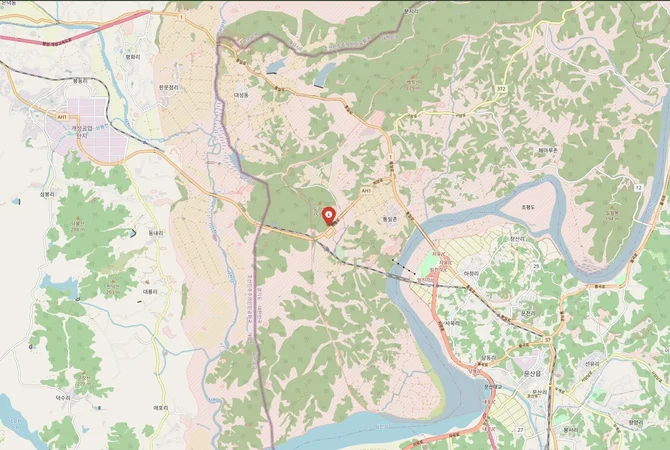
Seoul Kaesong Border Crossing remains unavailable for ordinary international travel. The heavily restricted inter-Korean frontier does not function as a normal road border where independent travelers can simply cross between Seoul and Kaesong. There is no September reopening or regular civilian crossing service to report. Travelers should therefore treat this as a restricted frontier rather than a practical Korea-to-Korea travel route.
About this crossing
A Border You Cannot Freely Cross
You cannot independently cross between South Korea and North Korea at this location. The border is heavily fortified, and all movement is strictly controlled by both governments. Tourism into North Korea is tightly regulated, and entry is only possible through approved tours, usually starting from China, not South Korea. Direct crossings from Seoul to Kaesong for foreign visitors are not permitted under normal circumstances. Even South Korean citizens face severe restrictions, and crossings only occur under specific government-approved programs, which are often suspended.
The Korean Demilitarized Zone
The border between the two Koreas is defined by the Korean Demilitarized Zone, commonly known as the DMZ. Despite its name, it is one of the most militarized areas in the world. Established after the 1953 armistice that paused the Korean War, the DMZ stretches about 250 kilometers across the peninsula. It acts as a buffer zone separating the two countries. Within this area lies the Joint Security Area at Panmunjom, where negotiations and limited interactions between the দুই sides have taken place.
Nearby Border Crossings


Historical Role of the Kaesong Route
The Seoul–Kaesong connection has periodically opened and closed depending on political relations. One of its most notable uses was for the Kaesong Industrial Complex, a joint economic project where South Korean companies operated factories in North Korea. This initiative allowed limited cross-border movement for workers and goods. However, it has been shut down multiple times due to political tensions and remains inactive as of recent years. The route reflects how closely politics influences any form of movement across this border.
No Standard Immigration Process
There is no public immigration checkpoint where you can exit South Korea and enter North Korea here. If you travel to North Korea as a foreign visitor, you will typically enter via flights or trains from China, such as through Beijing or Dandong. The Seoul–Kaesong route is not part of that process. Attempting to approach or cross the border outside authorized areas is illegal and can lead to serious consequences.
Visiting the Border From the South Korean Side
While you cannot cross, you can visit areas near the border from the South Korean side. Tours from Seoul take you to DMZ observation points, tunnels, and the Joint Security Area. These visits are controlled but accessible to foreign travelers. You will be required to follow strict rules, including dress codes and behavior guidelines, as the area remains sensitive.
The Short Distance That Feels Much Larger
Geographically, Seoul and Kaesong are only about 60 kilometers apart. Under normal circumstances, this would be a journey of little more than an hour. However, due to the division of the Korean Peninsula, this short distance becomes effectively impassable for regular travel. The separation is political rather than physical, which makes it particularly striking.
Transport and Infrastructure on Both Sides
On the South Korean side, infrastructure is modern and extensive, with highways and rail lines leading toward the border. North of the DMZ, Kaesong has road and rail connections within North Korea, but these are not linked for international use. There have been discussions and symbolic projects aimed at reconnecting railways between the two Koreas, though progress remains limited.
Security and Restrictions
Security presence is extremely high along the DMZ. Surveillance, checkpoints, and military patrols are constant. Photography is restricted in certain areas, especially near military installations. You should always follow instructions from guides or officials when visiting the border region. The seriousness of the security environment cannot be overstated.
Cultural and Political Significance
This border is one of the most significant symbols of division in modern history. It represents the unresolved state of the Korean War and the broader tensions on the peninsula. At the same time, it has also been a site of dialogue, diplomacy, and occasional cooperation. Summits between leaders of North and South Korea have taken place at Panmunjom, drawing global attention. The proximity of shared culture, language, and history contrasts sharply with the separation enforced by the border.
Nearby Points of Interest
From Seoul, DMZ tours often include:
- Observation decks overlooking North Korea
- The Third Infiltration Tunnel
- Dorasan Station, a symbolic railway stop pointing toward the North
These sites provide insight into the history and current situation of the peninsula without crossing the border. Kaesong itself, while inaccessible from the South, is known for historical sites dating back to Korea’s Goryeo Dynasty.
Why This Crossing Stands Out
The Seoul–Kaesong border crossing is unique because it exists more as a political boundary than a usable travel route. You can stand relatively close to North Korea and observe it, yet crossing remains out of reach for almost all travelers. Few borders in the world combine such proximity with such strict separation.
Final Notes
If you are interested in this border, you should approach it as a place to observe rather than cross. Visiting the DMZ from Seoul offers a controlled way to understand its significance. Travel between South Korea and North Korea requires entirely different routes and strict arrangements. The Seoul–Kaesong connection remains one of the clearest examples of how politics can shape geography and travel.
View all border crossings between South Korea and North KoreaPractical information
Currency
None
Safety information
Extremely sensitive
Connectivity
—
Have you crossed here?
Help other travelers by sharing your experience, wait times, and any updates.