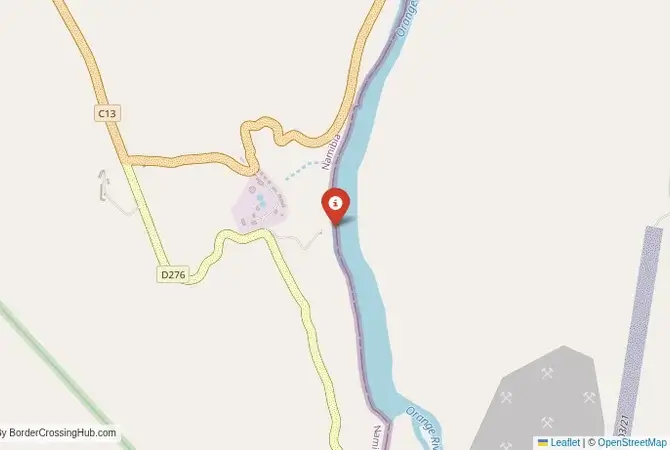
Monthly Update (September 2026):
Sendelingsdrif has an important September development: the pontoon ferry across the Orange River was scheduled to reopen on September 1 after being unavailable, restoring the direct connection between Namibia's /Ai-/Ais area and South Africa's Richtersveld. The crossing is specifically designed for tourists traveling through the transfrontier park, and the pontoon is the key link between the two sides. Because the route is inside a rugged park environment, travelers should still plan around daylight travel and park access requirements rather than treating it like a conventional highway border.
About this crossing
A History of a Park Without Fences
The history of this crossing is the history of the Ai-Ais/Richtersveld Transfrontier Park. The region is the traditional homeland of the Nama people, nomadic pastoralists who have lived in this harsh desert environment for centuries. The Orange River was a lifeline, not a barrier. The colonial border, which designated the river as the boundary between German South West Africa and the British Cape Colony, was a line on a map that had little practical meaning. The modern history of the crossing begins with the creation of the transfrontier park in 2003. This was a landmark conservation agreement between Namibia and South Africa, designed to protect the unique desert ecosystem and the incredible biodiversity of the region, particularly its world-renowned succulent flora. The Sendelingsdrif pontoon was established as the key tourist link, the physical manifestation of the "peace park" concept, allowing visitors to experience the entire, unified conservation area. It is a border that was created not to divide, but to unite a wilderness.
The Border Crossing Procedure: A Rustic Bush Post and a Ferry Ride
This is a very quiet border, and the process is relaxed and personal. The border is open only during daylight hours, and its operation is dependent on the river level. It can close without notice if the river is in flood or during low water periods. You must have your visas sorted in advance. Prerequisites: You must be a bona fide tourist staying within the transfrontier park. This is not a transit route for public roads. A 4x4 vehicle is not strictly required to reach the border posts, but it is essential for any travel within the park itself. You must pay the daily conservation fees for the park. Exiting Namibia: The Namibian immigration and customs post is a small, rustic building located at the main reception for the Ai-Ais Hot Springs Game Park. The officials are park staff who are also trained as immigration officers. You will present your passport and get your exit stamp. The process is very relaxed and friendly. The Pontoon Ferry: You will then drive down to the river bank and wait for the pontoon. The ferry can take two vehicles at a time. The short journey across the Orange River is very scenic, with the dramatic, rocky mountains of the Richtersveld rising on all sides. Entering South Africa: On the South African side, you will disembark and drive to the equally rustic border post, which is also the main reception for the Richtersveld National Park. You will present your passport to the officer and get your entry stamp. The customs process for your vehicle is a formality. The officials are friendly and will provide you with maps and information about the park.
Nearby Border Crossings


Route, Onward Travel, and The Richtersveld
This crossing is for 4x4 travel within the Ai-Ais/Richtersveld Transfrontier Park. On the Namibian side, the main access road is the gravel road that leads from the main highway to the Ai-Ais Hot Springs resort. On the South African side, you are in the heart of the Richtersveld National Park. The "roads" here are a network of challenging 4x4 tracks. This is a true wilderness area, and you must be completely self-sufficient with fuel, food, water, and camping equipment. There are a series of beautiful, remote community-run campsites along the river. The park is a paradise for adventurous drivers, photographers, and botanists. The landscape is otherworldly, a desert of stark, volcanic mountains and bizarre-looking succulent plants. This is not a route for the inexperienced. It requires careful planning, a GPS, and a high degree of self-reliance.
Final Planning Advice for a Wilderness Crossing
The Sendelingsdrif crossing is a unique and incredible adventure, but it is only for a very specific type of traveler. The key to a successful journey is meticulous planning and preparation. You must have a fully equipped 4x4 vehicle. You must have your visas (if required) in your passport before you arrive. You must confirm that the pontoon is operational, especially during the rainy season or low water periods. And you must be completely self-sufficient for a multi-day wilderness expedition. This is not a shortcut; it is a destination in itself. For the dedicated 4x4 enthusiast and nature lover, it is one of the greatest border crossing experiences in the world, a true journey into the wild heart of the Ai-Ais/Richtersveld Transfrontier Park. It is a border that truly lives up to the ideal of a "peace park," a place where nature has been allowed to triumph over the divisions of man.
View all border crossings between Namibia and South AfricaPractical information
Fuel
South Africa: <1 km - Namibia: 20 km
Currency
Limited exchange (NAD, ZAR)
Safety information
Safe, river nearby
Connectivity
Limited Wi-Fi, 3G
Have you crossed here?
Help other travelers by sharing your experience, wait times, and any updates.