
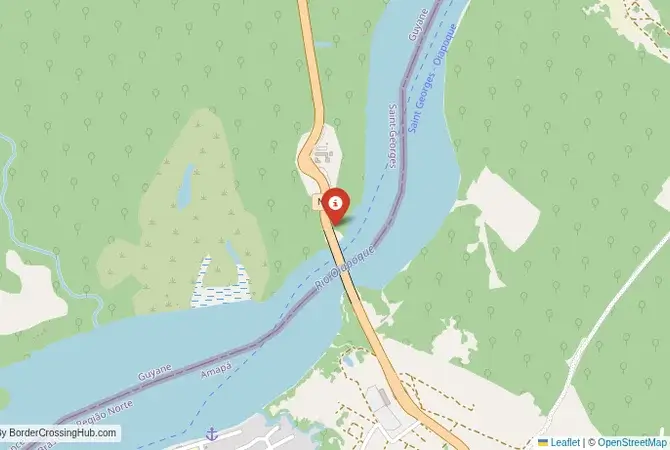
Approximate Border Location
Border Countries
- 🇬🇫French Guiana
- 🇧🇷Brazil
Border Cities
- 🇬🇫Saint-Georges-de-l’Oyapock
- 🇧🇷Oiapoque
Wait Times
15–45 min at checkpoints
Just crossed? Tap to report:
Operating Hours
Bridge 24/7; immigration 8:00–18:00 Mon-Sat
Crossing Types
Vehicle, pedestrian bridge
Border Type
River (Oyapock – bridged)
Peak Times
Daytime trade & tourism
Daily Crossings
Unknown (24/7 bridge)
Currency Exchange
EUR, BRL
Safety Information
Medium: occasional crime, poor roads
Languages Spoken
French, Portuguese
Accessibility Features
Ramps and elevators; accessible checkpoints
About Saint-Georges-de-l’Oyapock & Oiapoque
Monthly Update (February 2026):
A short pause on the bridge is common before papers get checked at the French Guiana Brazil Border Crossing. Recent weeks leading into February 2026 have felt mostly stable, with Brazil-bound vehicles clearing a bit faster. Pedestrian traffic stays light compared to cars. Weather and holiday travel are the main reasons lines suddenly grow.
Saint-Georges-de-l’Oyapock to Oiapoque: The Only Road Bridge Between France and Brazil
After half a century of broken promises, a sleek modern bridge across the Oyapock River finally opened in 2017 and created the first (and still only) road connection between France and Brazil anywhere on earth. Travelers simply call it the Saint-Georges to Oiapoque crossing. You can walk the 378-metre span in ten minutes, stare into the Amazon on both sides, and realise you are crossing from the European Union into South America’s biggest country without a single boat ride.
From Talks in the 1960s to Reality in 2017
France and Brazil first agreed to build a bridge in 1960. Construction started, stopped, restarted, and stopped again for decades while the jungle slowly reclaimed the half-finished pillars. The completed Oyapock River Bridge finally opened quietly in 2017. It remains strangely underused, often almost empty, which makes the whole experience feel like you have stumbled onto a secret highway.
Operating Hours Both Sides Agree On
Immigration posts on the French and Brazilian sides are open from 08:00 to 12:00 and 14:00 to 18:00 every day except French and Brazilian holidays. Outside those hours the police close the road barriers and you are stuck until morning. The bridge itself is open 24 hours, but without stamps you cannot legally continue.
French Guiana to Brazil (The Busier Direction)
Arrive at the French immigration building just before the bridge in Saint-Georges-de-l’Oyapock. Officers are usually quick and friendly; you get your Schengen exit stamp in minutes. Then walk, cycle, or drive across the empty bridge (ten minutes on foot). On the Brazilian side the Federal Police post stamps most nationalities in for 90 days visa-free. They sometimes ask to see a yellow-fever vaccination certificate and occasionally proof of funds, but rarely for Western passports.
Brazil to French Guiana
Brazilian exit formalities at the Oiapoque Federal Police post are straightforward. Cross the bridge, then clear French entry on the Saint-Georges side. You receive the standard 90 days in the Schengen area. French police almost never ask for onward tickets or hotel bookings from people arriving by land.
Transport Reality on Both Sides
From Saint-Georges shared taxis to Cayenne (3 to 4 hours, 40 to 50 euros per seat) or to Régina leave when four passengers appear. From Oiapoque the only onward option is the long ride to Macapá: brutal 10 to 12-hour buses or shared cars on a mostly unpaved road (R$100 to 130). Services leave early morning; miss them and you are stuck until the next day.
Hassles and Scams (Thankfully Few)
This crossing stays remarkably calm. The biggest irritation is taxi drivers on the Brazilian side quoting ridiculous prices to Macapá until you start walking away; the real shared fare is about half their first offer. On the French side prices are fixed and fair. No fake officials, no passport grabbers, no visa scams reported in recent years.
Weather and Road Conditions
The bridge itself is fine year-round, but heavy rain from December to July can turn the Brazilian access road into mud and delay departures for hours. February to April and August to November are the driest and easiest periods. Bring water and snacks; facilities on both sides are basic.
Nearby If You Have Time
Saint-Georges village has a couple of simple restaurants and a quiet riverside feel. Oiapoque town is rougher but offers cheap Brazilian food and cold beer. Most travelers just keep moving.
Last Thought
A modern European bridge surrounded by raw Amazon jungle, linking the eurozone to Brazil with almost no traffic. You can stand in the middle, look one way at France and the other at Brazil, and feel the absurdity of geography. Enjoy the emptiness and the silence while it lasts; one day the trucks will discover it.
No reviews yet.