
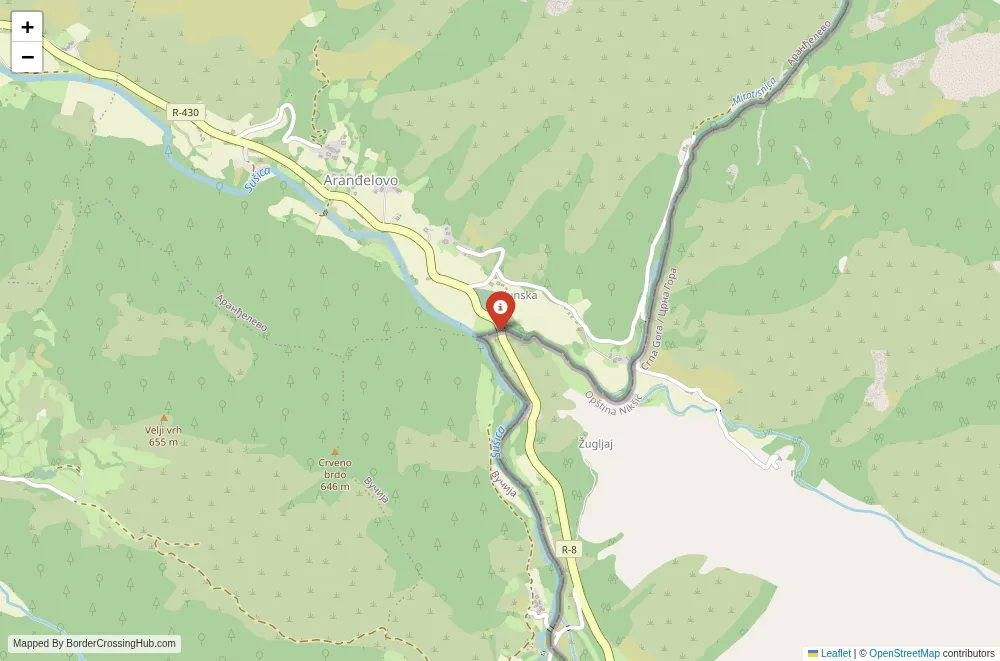
Approximate Border Location
Border Countries
Border Cities
- 🇲🇪Krstac
- 🇧🇦Aranđelovo
Wait Times
Cars 10-40m; peaks 60-180m summer
Just crossed? Tap to report:
Operating Hours
07:00 AM-07:00 PM
Crossing Types
Ped,cars; mountain road controls
Border Type
Land crossing via mountain road pass
Peak Times
10:00 AM-04:00 PM; Jul-Sep
Daily Crossings
600-3,000/day
Currency Exchange
EUR; BAM in Nikšić/Trebinje; ATMs
Safety Information
Steep road; fog/ice outside summer
Languages Spoken
Montenegrin/Bosnian
Accessibility Features
Limited; narrow shoulders
About Rudozem & Xanthi
Monthly Update (March 2026):
As of 03/2026, the Rudozem & Xanthi Border Crossing stays moderately active but predictable. Cars pass steadily through the checkpoint, though inspections on the Greek side can slow things a bit during busier hours. Midday often moves more smoothly. Regional travel and tourism toward the mountains keep traffic flowing.
No Cell Service at the Border? No Problem.
Don’t get caught scrambling for paperwork when you lose signal. Download the complete Europe Transit Guide directly to your device and access every critical detail, fast-track strategy, and border rule – 100% offline.
The Rudozem-Xanthi border crossing (also known as Rudozem – Xanthi, or sometimes Dimario-Rudozem on the Greek side) opened in January 2026 as a fresh direct link across the Rhodope Mountains between Bulgaria and Greece, ending decades of limited connectivity in this remote southern region.
Location and Basic Connections
You locate this point in the Rhodope Mountains, linking the Bulgarian town of Rudozem in Smolyan Province to the Greek area near Xanthi in the Eastern Macedonia and Thrace region (via Dimario on the Greek side). It sits at the Aegean Pass, reaching about 1,010 meters elevation at the border. The crossing connects upgraded roads: on Bulgaria, Rudozem to Smolyan and Plovdiv; on Greece, Dimario to Xanthi and the Egnatia Motorway. Private cars and light lorries use it primarily, shortening routes between southern Bulgaria and northern Greece. No major highways pass directly through yet, so secondary mountain roads lead in from both sides.
Historical Background
This frontier traces long-standing divisions in the Rhodope Mountains, where Bulgarian and Greek communities have lived with cultural overlaps but restricted movement for over 30 years. Plans for a crossing dated back to a 1995 agreement, but construction lagged due to terrain challenges and funding. Bulgaria finished its checkpoint by 2021 (costing around €5.6 million for the Smolyan side), while Greece completed its road segment late 2024. The official opening came on January 20, 2026, funded partly by EU programs like Interreg Greece-Bulgaria. It forms part of visions for new corridors through the Rhodopes, boosting ties in a historically isolated area.
Current Status and Safety Warnings
The crossing opened fully in January 2026 and runs normally as of early 2026, handling passenger cars and light lorries (trucks limited due to Greek road conditions). It’s designed for people and goods movement in a region long without direct access. Risks remain typical for mountain borders: winding roads prone to weather issues, limited services nearby, and potential for delays if queues build during initial months. No major scams or security concerns reported yet, given the newness and low initial traffic. Rural isolation means help could take time if needed. Check official sources like Bulgarian Ministry of Regional Development, Greek police border info, or EU-funded project sites before going. Monitor for any teething problems in the early operational phase.
Operating Hours and Wait Times
It operates daily, likely aligning with standard border hours (around 7:00 a.m. to 10:00 p.m. or similar, though exacts may evolve). As a new point, processing should stay quick with low volumes—expect 15 to 60 minutes, often shorter midweek. Queues could grow during summer tourism or holidays as awareness spreads, but initial reports suggest minimal waits.
Visa Requirements for Foreign Visitors
Bulgaria (EU but non-Schengen until full integration) and Greece (Schengen) allow visa-free entry for many nationalities up to 90 days in 180. Since Bulgaria’s Schengen accession in 2025, controls may ease for some travelers, but stamps still apply at land points. Standard entry/exit procedures hold; no special restrictions noted for this new crossing. Biometric passports help. Confirm your passport rules, especially if transiting.
Crossing Procedures Step by Step
Drive to the Bulgarian checkpoint at Rudozem for exit stamp and customs (vehicle and luggage checks). Cross the short border segment, then clear Greek entry near Dimario/Xanthi with stamp and possible declaration. The reverse applies outbound. Facilities are new and modernized, with lanes for cars and light vehicles. Focus on documents and basic inspections; no elaborate setups yet.
Transportation Options
Private cars suit the mountain roads best. No direct buses or taxis target this new point initially; drive from Smolyan/Rudozem (Bulgaria) or Xanthi/Dimario (Greece). Taxis or local rides cover short legs. Onward, connect to Plovdiv or Thessaloniki via upgraded routes.
Road Conditions and Scenery
Both sides feature rebuilt, modern roads through the Rhodopes: paved with curves, elevation changes, and potential for weather wear. Scenery stands out with forested peaks, river valleys, meadows, and panoramic mountain views. The Aegean Pass offers dramatic highland landscapes, especially in clear weather.
Nearby Attractions
Rudozem in Bulgaria provides quiet mountain town life with access to Smolyan and Rhodope hikes. Xanthi in Greece features historic old town, Ottoman architecture, museums, and Thrace cultural sites. The region ties into Rhodope nature trails, eco-tourism, and cross-border exploration.
Seasonal Variations and Weather Impacts
Mountain elevation means winter snow or ice can slow roads or cause temporary halts. Summer brings clearer drives but more potential traffic as the crossing gains popularity. Rain or fog affects visibility on curves. Low initial use minimizes seasonal backups.
Practical Travel Tips
Bring euros (accepted both sides). Fuel up before mountain stretches. Declare goods accurately. Drive cautiously on curves. Arrive daylight for safety. Use official apps or sites for updates. Carry snacks/water for remote areas.
Cultural and Economic Role
It fosters ties between Bulgarian and Greek Rhodope communities, supporting trade, tourism, and daily mobility. The crossing boosts economic activity in isolated areas, enhancing connectivity through the mountains.
Planning Your New Rhodope Crossing
Rudozem-Xanthi gives a fresh, scenic Bulgaria-Greece route through the mountains. As a recent opening, expect quick passage but monitor for updates. Prepare for rural drives and enjoy the highland views. Safe crossing ahead.
No reviews yet.