
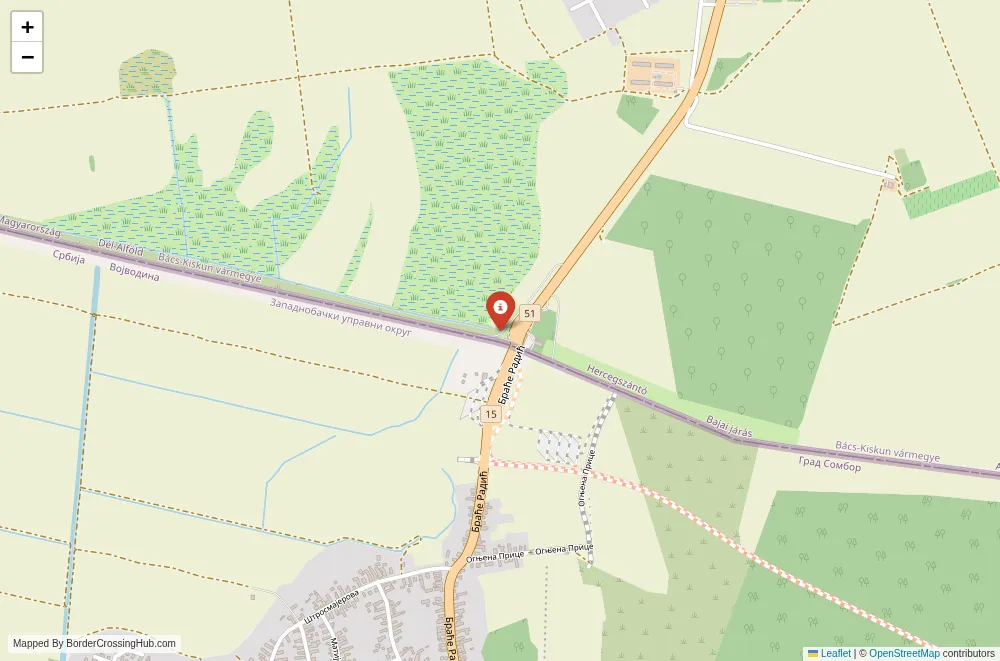
Approximate Border Location
Wait Times
Cars 10-45m; peaks 60-240m summer
Just crossed? Tap to report:
Operating Hours
06:00 AM-10:00 PM
Crossing Types
Ped,cars,buses; border controls
Border Type
Land crossing via road (Danube area)
Peak Times
08:00-10:00 AM; 04:00-07:00 PM
Daily Crossings
2,000-10,000/day
Currency Exchange
HUF; RSD, EUR in Sombor; ATMs
Safety Information
Queues at times; keep documents ready
Languages Spoken
Hungarian/Serbian
Accessibility Features
Paved lanes; step-free varies
About Röszke & Horgoš (Serbia)
Monthly Update (March 2026):
As of 03/2026, the Röszke & Horgoš (Serbia) Border Crossing on the motorway stays busy and sometimes unpredictable. Long-distance traffic and freight trucks often stack up on the Serbian approach, especially during peak travel periods. Passenger cars move faster once lanes open up. Holiday travel and weekend returns toward Hungary can stretch waits noticeably.
No Cell Service at the Border? No Problem.
Don’t get caught scrambling for paperwork when you lose signal. Download the complete Europe Transit Guide directly to your device and access every critical detail, fast-track strategy, and border rule – 100% offline.
The Röszke-Horgoš motorway crossing handles the heaviest traffic along the Hungary-Serbia border, serving as the primary highway link on the E75 corridor between Budapest and Belgrade.
Alternative Names
It appears as Röszke-Horgoš, Horgoš-Röszke, Röszke autópálya (motorway), or simply the M5/E75 border point. Röszke refers to the Hungarian side, Horgoš (or Horgos) to the Serbian.
Location and Connections
This crossing lies on Hungary’s M5 motorway south of Szeged, connecting directly to Serbia’s E75 expressway toward Subotica, Novi Sad, and Belgrade. From Budapest, the M5 takes you straight there in about two to three hours. In Serbia, the route continues as a major north-south artery. Buses from Budapest or Szeged often use this path, and long-distance coaches between the capitals pass through regularly. Driving your own car gives the most control over timing.
Historical Background
The border line dates to post-World War I treaties that divided the Bačka region. The motorway crossing gained prominence during the 2015 migration crisis, when large groups gathered here, leading to clashes known as the “Battle of Röszke” and Hungary’s subsequent fence construction along the Serbian frontier. It has since remained a focal point for migration management, with ongoing upgrades to facilities.
Geopolitical and Economic Role
As the main motorway entry from Serbia into the EU (via Hungary’s Schengen area), it carries significant passenger and freight volumes. Trucks move goods between Central Europe and the Balkans, while personal vehicles dominate summer travel to vacation spots. The point supports trade and family visits in Vojvodina’s mixed communities, though occasional migrant pressures or system issues cause disruptions. Recent agreements between Hungarian and Serbian authorities aim to streamline controls for road, rail, and water transport.
Operating Hours and Current Status
The main motorway crossing (Röszke 1 / Horgoš 1) operates 24 hours a day for international passenger and freight traffic, including vehicles with dangerous goods. A separate nearby road crossing (Röszke 2 / Horgoš 2) handles passengers only (no buses) and typically runs limited hours like 07:00-19:00 or extended seasonally, but the highway remains open round-the-clock. Railway checks here have faced temporary closures in the past due to security. Verify via police.hu or Serbian border sites for any short-term changes.
Visa Requirements for Foreign Visitors
Hungary applies Schengen rules: many nationalities get visa-free entry for short stays if eligible. Serbia offers visa-free access to citizens of numerous countries (including US, Canada, Australia, EU passports) for up to 90 days. Third-country nationals may face the EU’s Entry/Exit System (EES) for biometric registration at this border. Check your specific status with embassies, as requirements must align for both directions. No visa-on-arrival issues for most at this point.
Crossing Procedures Step by Step
Approach from Hungary (Röszke) for exit checks: present passport, vehicle papers, and possibly answer questions. Proceed through the intermediate zone to Serbia (Horgoš) for entry stamping and customs review. For passenger cars, officers scan documents and may inspect vehicles briefly. Freight follows separate lanes. You stay in your vehicle; no walking across the motorway. The full process varies from 10-30 minutes in quiet periods to much longer during peaks.
Wait Times and Peak Periods
Waits fluctuate: recent reports show 5-10 minutes on the Hungarian side and up to 30 minutes on the Serbian side during lighter traffic, but queues build to 45 minutes-2 hours (or 3-6 hours in extreme cases) when the intermediate zone fills or during holidays/summer weekends. Peaks hit midday or evenings with vacation traffic; early mornings or late nights often move faster. Use apps like BorderWatcher or BorderAlarm for live updates from drivers and cameras (mostly Serbian side visible).
Transportation Options After Crossing
On the Serbian side, the E75 leads south to Subotica (quick) or Belgrade (3-4 hours). Buses from Budapest continue to Novi Sad or Belgrade. In Hungary, the M5 connects north to Szeged or Budapest. Taxis or rideshares work near towns, but own transport suits best for flexibility.
Road Conditions and Scenery
The M5 and E75 offer high-standard motorway driving: smooth pavement, multiple lanes, and rest areas. Flat plains dominate with fields, occasional villages, and open views. No major elevation changes or tricky sections. Buy a Hungarian vignette (motorway toll sticker) before entering Hungary, available at stations near the border.
Weather and Seasonal Impacts
Summers bring heat and heavy vacation traffic, pushing waits higher. Winters risk fog, ice, or snow on open plains, though motorways get cleared quickly. Holiday periods (summer, Christmas) see the worst congestion; off-peak avoids most delays.
Nearby Attractions
Szeged in Hungary features thermal baths, architecture, and paprika markets. Subotica on the Serbian side boasts Art Nouveau buildings and a relaxed town feel. Further south, Novi Sad offers festivals and the Danube, while Belgrade lies a few hours away.
Practical Travel Tips
Check live wait times via police.hu, BorderWatcher, or BorderAlarm before setting off. Purchase your Hungarian vignette early (gas stations near the border sell them). Carry euros or local currencies, water, and snacks for potential queues. Avoid peak hours if possible; consider alternatives like Tompa-Kelebija during holidays.
Common Scams and Warnings
This busy crossing sees occasional issues: unofficial money changers near lanes offer bad rates, or people may approach with “help” offers that lead to overcharges. Stick to official booths and lanes; ignore unsolicited assistance. Some drivers report system glitches causing extra delays, but no major widespread scams stand out compared to smaller points. Keep valuables secure in traffic.
Cultural and Economic Notes
The area mixes Hungarian and Serbian elements, with bilingual signs and shared agricultural roots. Cross-border commerce and family ties keep it active beyond just transit.
Final Planning Advice
Choose this motorway crossing for direct speed between Budapest and Belgrade, but monitor conditions closely to dodge crowds. Prepare docs, check real-time data, and time your trip for quieter slots. It links two regions reliably when traffic cooperates. Safe travels.
No reviews yet.