
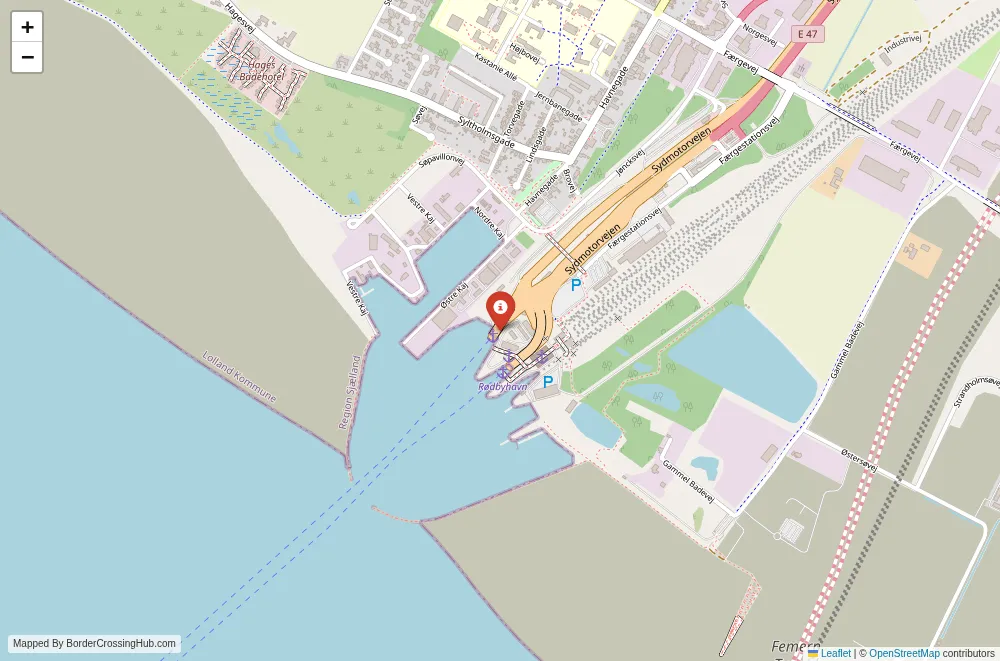
Approximate Border Location
Wait Times
Ferry queues 15-60m; peaks 60-180m
Just crossed? Tap to report:
Operating Hours
24 hr sailings; frequency varies by season
Crossing Types
Cars,buses,trucks; ped limited/seasonal
Border Type
Border crossing via car ferry
Peak Times
Fri-Sun 10:00 AM-06:00 PM; Jul-Aug
Daily Crossings
3,000-15,000/day
Currency Exchange
EUR; DKK at ports; ATMs
Safety Information
Port traffic; follow marshals in queues
Languages Spoken
German/Danish
Accessibility Features
Ramps, lifts on ferry; accessible toilets
About Rødby & Puttgarden
The Rødby-Puttgarden ferry carries you across the Fehmarn Belt in just 45 minutes, linking the Danish island of Lolland directly to the German island of Fehmarn.
Alternative Names
Travelers often refer to this as the Rødbyhavn-Puttgarden ferry, the Puttgarden-Rødby route, or simply the Scandlines Fehmarn Belt crossing.
Current Status
This ferry operates normally with frequent departures. Scandlines runs the service 24 hours a day, every day of the year. One vessel may be in shipyard maintenance at times, leading to departures every 40 minutes instead of 30 during those periods, but the route stays active. Weather can cause minor delays or adjustments to crossing times.
Historical Background
The ferry service began after World War II as a key link along the Vogelfluglinie (Bird Flight Line), the shortest overland-plus-ferry path from northern Germany to Scandinavia. It replaced older, slower connections and handled both road vehicles and trains until the 1990s when train ferries ended. The route has carried millions across the 18-20 km strait. A massive immersed tunnel project, the Fehmarnbelt Fixed Link, is under construction nearby and set to open around 2029, which will eventually replace the ferry with a 10-minute drive or 7-minute train ride.
Geopolitical and Economic Role
As part of the Schengen Area, this crossing connects Central Europe to Scandinavia without regular border checks. It forms a vital artery for freight, tourism, and commuter traffic between Germany, Denmark, Sweden, and beyond. Duty-free shopping on board and at port BorderShops draws many passengers. The route shortens journeys significantly compared to driving around or taking longer ferries.
Visa Requirements for Foreign Visitors
Denmark and Germany share Schengen rules. EU/EEA/Swiss citizens need only a valid ID card or passport with no visa required. Non-EU visitors usually enter visa-free for up to 90 days in any 180-day period, but confirm based on your nationality. Carry your passport at all times since random checks can occur anywhere in the border region, even though formal controls are rare here.
Crossing Procedures Step by Step
You travel by vehicle (car, motorbike, camper, bus) or as a foot passenger; no bicycles without special arrangements in some cases. Drive or walk to the check-in area at the port at least 15 minutes before departure. Present your ticket or buy one on site. Border and customs checks are minimal due to Schengen, though random inspections happen occasionally. Board the ferry, park or settle in, and enjoy the short sail. Disembarkation takes about 10 minutes. The process repeats in reverse on the other side.
Typical Wait Times and Peak Periods
With departures every 30 minutes (or 40 during maintenance), waits rarely exceed that interval if you arrive on time. Peak times include summer holidays, weekends, and major travel periods when lines form at check-in. Arrive early during high season to secure space without stress.
Operating Hours
The route runs around the clock. Ferries depart from roughly 00:15 to 23:59 or similar, with night sailings hourly in quieter hours. Schedules adjust slightly by season but maintain near-constant service.
Transportation Options to and From the Border
From Copenhagen, drive or take a train/bus combo to Rødbyhavn (about 1.5 hours by car). From Hamburg or Lübeck, head to Puttgarden via the A1/E47 (around 1-2 hours). Trains reach Puttgarden station right by the port. On the Danish side, onward buses or trains connect to Copenhagen or other parts of Zealand. Many use through-tickets that include the ferry.
Road Conditions and Scenery
Approach roads on both sides are modern highways with good surfaces. The ferry ride offers open Baltic Sea views, wind turbines on the horizon, and sometimes passing cargo ships. The short crossing feels relaxing with deck space for fresh air.
Seasonal Variations and Weather Impacts
Summer brings the most passengers and pleasant sailing. Winter storms or high winds can delay departures or extend crossing times slightly. Ice is rare but possible in severe cold. Schedules remain reliable year-round.
Nearby Attractions
In Denmark, Lolland offers Knuthenborg Safaripark, medieval villages, and beaches. Rødbyhavn itself has little beyond the port and shops. On the German side, Fehmarn provides coastal paths, beaches, and the Meereszentrum aquarium. From Puttgarden, you reach Lübeck or Hamburg quickly.
Common Scams and Warnings
This route sees few serious scams. Some travelers report overpaying when booking combinations (like ferry plus bridge) online if not careful with options. Duty-free purchases follow strict personal-use limits; exceeding them can lead to customs issues. Occasional complaints mention inflexible ticket rules or delays during weather. Avoid unofficial helpers at ports. Keep documents handy and book directly through Scandlines for clarity.
Travel Tips and Preparation
Book online in advance for better prices and to lock in low-price or flexible options. Arrive 15-30 minutes early for check-in. Bring passport/ID, vehicle papers if driving, and cash or card for on-board purchases. Foot passengers have limited options but can buy pedestrian tickets. Check departures before heading out, especially in winter. Pets travel with rules; prepare documentation.
Cultural and Economic Significance
The ferry supports cross-border life, trade, and tourism in northern Europe. It keeps freight moving quickly between Scandinavia and the continent. Duty-free sales and on-board amenities make the short trip a small break in longer journeys.
Final Planning Advice
Check the latest departures and any temporary timetable changes on the Scandlines site before you go. Prepare your documents, book ahead if possible, and factor in a buffer for check-in. This quick ferry ride remains one of the simplest ways to hop between Denmark and Germany. Enjoy the crossing.
No reviews yet.