
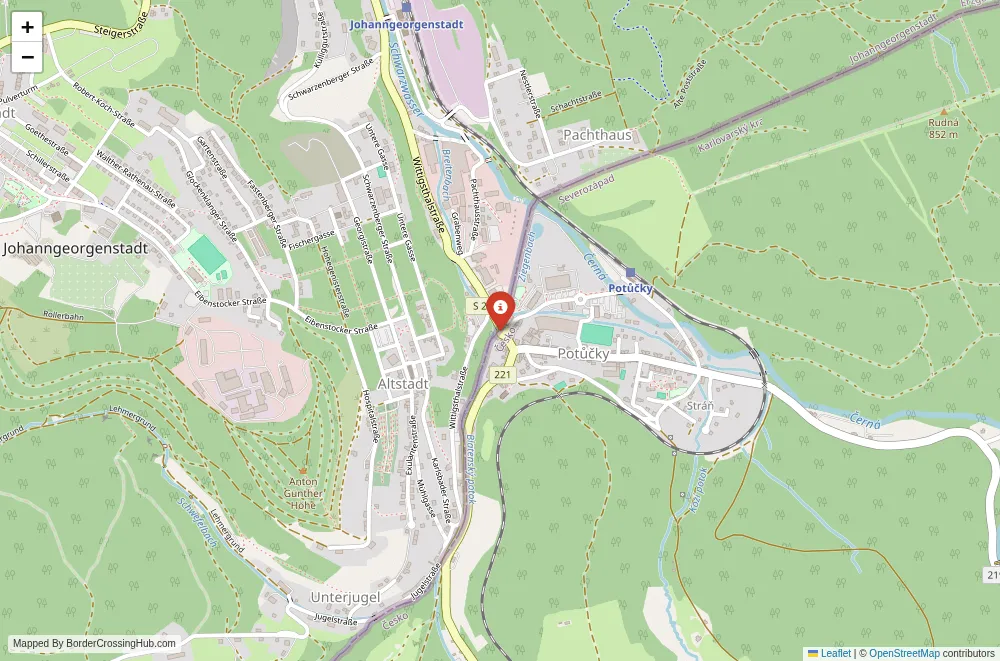
Approximate Border Location
Border Countries
Border Cities
- 🇨🇿Potůčky
- 🇩🇪Johanngeorgenstadt
Wait Times
Cars 0-10m; peaks 20-90m winter weekends
Just crossed? Tap to report:
Operating Hours
Open 24 hrs (12:00 AM-11:59 PM)
Crossing Types
Ped,cars,bikes; mountain pass road
Border Type
Land crossing via town road bridge
Peak Times
09:00 AM-03:00 PM; Dec-Mar weekends
Daily Crossings
2,000-9,000/day
Currency Exchange
EUR; CZK in Karlovy Vary; ATMs in towns
Safety Information
Snowdrifts possible; steep approaches
Languages Spoken
German/Czech
Accessibility Features
Paved but narrow; limited accessible toilets
About Reitzenhain & Hora Svatého Šebestiána
Monthly Update (March 2026):
As of 03/2026, the Reitzenhain & Hora Svatého Šebestiána Border Crossing feels fairly steady. Cars and trucks move along the mountain road toward the main routes, though vehicles sometimes bunch up briefly on the Czech side during peak hours. Midday crossings usually pass quickly. Weather in the hills can slow travel at times.
No Cell Service at the Border? No Problem.
Don’t get caught scrambling for paperwork when you lose signal. Download the complete Europe Transit Guide directly to your device and access every critical detail, fast-track strategy, and border rule – 100% offline.
The Reitzenhain-Hora Svatého Šebestiána crossing perches high on the Ore Mountains ridge, where a modest road bridge spans the old frontier line between Saxony and northern Bohemia.
Location and Connections
You arrive here along Bundesstraße 174 (B174) from the German side, which ends at the border and picks up as Silnice I/7 (part of European route E48) toward Chomutov in Czechia. Reitzenhain belongs to the Marienberg area in Saxony’s Ore Mountains, about 20 to 30 minutes drive from Marienberg or around an hour from Chemnitz. Hora Svatého Šebestiána sits just across in Chomutov District, roughly 15 minutes from Křimov or 45 minutes to an hour from Chomutov. Cars dominate traffic, with some trucks, buses, and local vehicles; cyclists and pedestrians cross the bridge too. The route links central German regions to northwest Czechia, often used by shoppers or those heading toward Prague via D7.
Alternative Names
It appears as Reitzenhain–Hora Svatého Šebestiána border crossing, Hora Svatého Šebestiána–Reitzenhain, Sankt Sebastiansberg-Reitzenhain from older German usage, or the B174/I/7 crossing.
Historical Background
The area served as a trade route through the Erzgebirge for centuries, with the modern road link developing in the 19th century. A railway once ran parallel via the Chomutov–Vejprty line extension to Reitzenhain, built in the late 1800s for coal transport from Bohemian mines to Saxony. Post-WWII, the Iron Curtain closed it tightly from the late 1940s onward, with the border heavily fortified and villages like nearby Pohraniční (Böhmisch Reizenhain) abandoned or depopulated. Reopening came gradually after 1989, full access with Schengen in 2007. The rail section to the border saw limited revival but no through passenger service today. The crossing bridge itself stands as a quiet reminder of divided eras.
Geopolitical Context
Schengen integration since late 2007 removed permanent controls. Germany maintains temporary checks across all Czech land borders due to migration and security matters. As of February 10, 2026, these extend at least through March 15, 2026, with random Bundespolizei stops possible at or near the line. This smaller crossing gets less frequent attention than major motorways, but spot checks for documents or vehicle details happen. No fixed booths exist, and the point stays fully open. Check German Federal Police announcements or Czech sources for any short-notice shifts.
Practical Crossing Procedures
You drive over the bridge without routine stops in standard Schengen flow. A border marker and perhaps a small sign indicate the line. Under current temporary rules, police may flag you down shortly after crossing into Germany for ID checks, travel purpose questions, or quick vehicle glances. EU citizens present passport or national ID. Non-EU nationals carry valid passports, visas/residence permits if needed, and basics like accommodation proof. Carry car insurance papers. Pedestrians and cyclists walk across easily, with the bridge providing a safe path.
Typical Wait Times
Usually you cross in under a minute with no interruption. Random checks add time: most clear fast, but detailed ones take 10 to 40 minutes if selected or if a short line builds. Weekends see more local cross-border shoppers, mildly increasing odds of stops. Midweek or early/late hours often pass quickest.
Operating Hours
The road bridge operates 24 hours a day, every day. Schengen eliminated fixed times long ago. Winter snow or ice might slow the approach roads temporarily, but the crossing itself doesn’t close.
Transportation Options and Road Conditions
Your own car suits best for flexibility; regional buses connect from Marienberg or Chomutov sides. No regular rail crosses here now, though the old line traces remain visible. The B174/I/7 climbs steadily through forested hills with good asphalt but tight curves, elevation around 780 meters, and exposure to mountain weather. Watch for fog, fallen branches, or wildlife on rural stretches. Views include thick spruce woods, rocky outcrops, and distant valleys.
Scams and Warnings
Scams stay rare at this remote, low-traffic spot. No common touts or fake services appear in reports. Border-area shops in Hora Svatého Šebestiána offer cheaper fuel, tobacco, alcohol, and groceries for Germans; occasional complaints involve aggressive pricing or weak exchange deals at informal spots. Secure belongings in cars during any stops. The mountain roads require cautious driving, especially in slick conditions.
Nearby Attractions
Hora Svatého Šebestiána provides basic services, a small casino, and border retail. Reitzenhain features quiet village life and access to Ore Mountains trails. The surrounding Erzgebirge/Krušné hory offer hiking paths, cross-border nature reserves, winter skiing at nearby spots like Klínovec, and historic mining sites. Chomutov lies farther with regional museums and parks. The area favors outdoor pursuits in a peaceful setting over crowded sights.
Seasonal Variations and Weather Impacts
Winter hits hard December through March with snow accumulation; winter tires prove mandatory, and chains may help on icy climbs. Summer draws hikers and bikers with clearer roads. Autumn foliage adds color to the forests with reduced crowds. Fog and rain often blanket the ridge, cutting visibility on bends, though full road closures for weather occur infrequently.
Travel Tips and Preparation
Keep passport or ID handy for possible checks. Get Czech vignette online if continuing on highways. Refuel and stock up in Czechia for lower costs. Download offline maps due to variable mountain signal. Bring layers for quick weather shifts at altitude. Monitor police sites or border info apps before departure. Follow marked trails in the mountains to steer clear of restricted zones.
Cultural and Economic Significance
Local trade thrives on cross-border shopping: Germans seek affordable Czech goods, sustaining small businesses in Hora Svatého Šebestiána. The route supports regional ties in the Ore Mountains, with shared mining heritage, seasonal festivals, and joint environmental work in the highlands.
Before You Set Off
Look up the latest on temporary controls from official channels near your travel time. With prep for random stops and mountain driving, you handle this elevated, understated crossing and continue into the wooded ridges. Safe travels.
No reviews yet.