
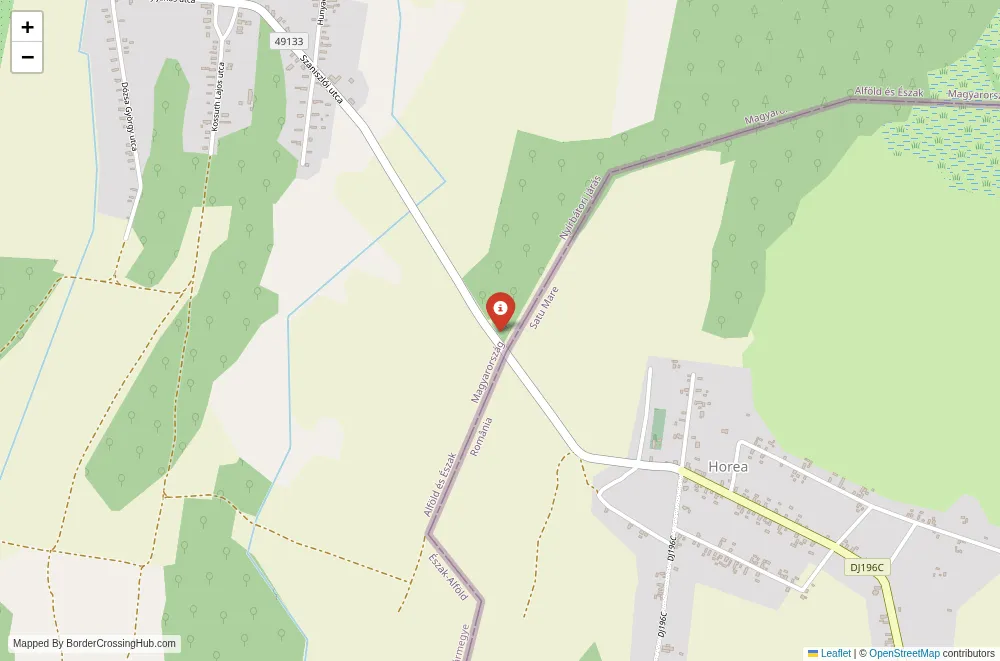
Approximate Border Location
Wait Times
Cars 0-10m; peaks 15-45m weekends
Just crossed? Tap to report:
Operating Hours
Open 24 hrs (12:00 AM-11:59 PM)
Crossing Types
Ped,cars,bikes; rural EU crossing
Border Type
Land crossing via local road
Peak Times
10:00 AM-04:00 PM; summer
Daily Crossings
200-1,200/day
Currency Exchange
HUF; RON in Carei; ATMs
Safety Information
Quiet crossing; limited lighting at night
Languages Spoken
Hungarian/Romanian
Accessibility Features
Uneven shoulders; minimal ramps
About Rail: Tiborszállás/Ágerdőmajor & Carei
Monthly Update (March 2026):
As of 03/2026, the Rail: Tiborszállás/Ágerdőmajor & Carei Border Crossing runs at a steady rail rhythm. Freight trains pass regularly, with passenger services appearing less often but usually on time. Activity tends to cluster around scheduled arrivals rather than constant movement. Freight demand and track maintenance sometimes shift timing a little.
No Cell Service at the Border? No Problem.
Don’t get caught scrambling for paperwork when you lose signal. Download the complete Europe Transit Guide directly to your device and access every critical detail, fast-track strategy, and border rule – 100% offline.
The Tiborszállás (Ágerdőmajor)-Carei railway crossing links northeastern Hungary to northwestern Romania along a historic short cross-border line in the Szatmár region, once part of broader Austro-Hungarian networks.
Alternative Names
It is known as Tiborszállás-Carei vasútvonal, Ágerdőmajor (Tiborszállás)–Carei (vasút), or the Mátészalka–Nagykároly (Carei) line section (number 115). Ágerdőmajor refers to the former Hungarian border halt near Tiborszállás station.
Location and Connections
The crossing runs on the non-electrified, single-track line 115, spanning about 16 km from Tiborszállás in Hungary to Carei (Nagykároly) in Romania. Tiborszállás connects westward to Mátészalka and further to Nyíregyháza or Debrecen via MÁV services. On the Romanian side, Carei links to Satu Mare, Oradea, or Cluj-Napoca through CFR Călători networks. The route passes through flat rural plains with small villages and agricultural fields.
Historical Background
Built in 1905 under Austro-Hungarian rule, the line connected Mátészalka to Nagykároly (now Carei) as part of regional development. The Treaty of Trianon in 1920 made it an international border crossing. It operated passenger and freight services through the 20th century, with interruptions during wars and political shifts. Border checks occurred at Ágerdőmajor until around 2004, when the halt closed for trains. Passenger services ran sporadically post-EU accession, with joint MÁV-CFR operations in recent years.
Geopolitical and Economic Role
This rail point supports local cross-border ties in areas with Hungarian and Romanian communities, aiding commuting, family visits, and minor freight. It handled two daily train pairs in recent timetables, with stops at Tiborszállás for checks. Romania’s full Schengen accession on January 1, 2025, eased formalities, though Hungary reintroduced temporary entry controls for security. The line remains one of five active Hungary-Romania rail crossings, though low-volume compared to Lőkösháza-Curtici or Biharkeresztes-Episcopia.
Operating Hours and Current Status
The border point is listed for international rail traffic, but passenger services suspended from December 10, 2024 (or after December 9, 2023, per some reports), due to construction work on the line. No trains currently run between Carei and Tiborszállás. Freight may continue limited, but passenger operations remain halted as of early 2026. Check MÁV (mavcsoport.hu) or CFR Călători sites for resumption updates, as works or seasonal timetables can affect status. Hungary’s spot checks apply if services restart.
Visa Requirements for Foreign Visitors
Hungary and Romania are EU and Schengen members (Romania fully since January 2025). EU/EEA/Swiss citizens travel freely with ID. Third-country nationalities (US, Canada, Australia, etc.) get visa-free short stays up to 90 days in 180 under Schengen rules. On rail, border police handle checks onboard or at stations; carry your passport for possible spot verifications or EES biometric registration.
Crossing Procedures Step by Step
Board in Hungary (e.g., Mátészalka to Tiborszállás) or Romania (Carei direction). The train stops at Tiborszállás for Hungarian exit/entry checks: officers board, review passports, and stamp if needed. You stay seated; checks take 10-20 minutes historically. Proceed to Carei for Romanian processing if not combined. No disembarkation required; the short segment crosses quickly. When active, joint or onboard controls minimized hassle.
Wait Times and Peak Periods
When running, border procedures added 15-20 minutes at Tiborszállás, with minimal extra waits due to low passenger numbers. No long queues formed, unlike road points. Peaks aligned with local commuter times or weekends, but the line’s rural nature kept it calm.
Transportation Options After Crossing
From Tiborszállás, MÁV trains connect to Mátészalka, Nyíregyháza, or Debrecen. In Carei, CFR services reach Satu Mare or Oradea for onward travel. No direct long-distance international trains use this route; local or regional hops dominate. Taxis or buses in stations provide last-mile options.
Road Conditions and Scenery
Not rail-specific, but the parallel landscape features flat plains: corn and sunflower fields, small farms, villages, and open views. Tracks run through quiet countryside with no major gradients.
Weather and Seasonal Impacts
Summers offer reliable service; winters risk fog or frost delays on non-electrified tracks. Construction suspensions tie more to works than weather, but low water or snow can affect rural lines indirectly.
Nearby Attractions
Tiborszállás has a quiet village feel near Mátészalka with local markets. Carei boasts historic sites like the Karolyi Castle and museums. The region mixes Hungarian-Romanian culture with rural charm and thermal spots in Satu Mare area.
Practical Travel Tips
If services resume, buy tickets via MÁV or CFR apps/sites for low fares. Carry passport and snacks for short rides. Monitor timetables closely due to suspensions. Use rail apps for updates; consider alternatives like Nyírábrány-Valea lui Mihai if this line stays closed.
Common Scams and Warnings
Low-traffic rail crossings see few issues. No major scam reports; onboard checks stay official. Avoid unofficial “help” if any appears at stations. Travelers note straightforward processes when running, with minimal hassle.
Cultural and Economic Notes
The line revives historic links in bilingual rural zones focused on agriculture and local trade. It supports commuter patterns and family connections in Szatmár/Satu Mare areas.
Final Planning Advice
This rail crossing offers a scenic rural hop between Hungary and Romania when active, ideal for regional exploration. Check official railway sources for resumption after construction, prepare documents for spot checks, and consider it for authentic borderland travel. Safe journeys.
No reviews yet.