
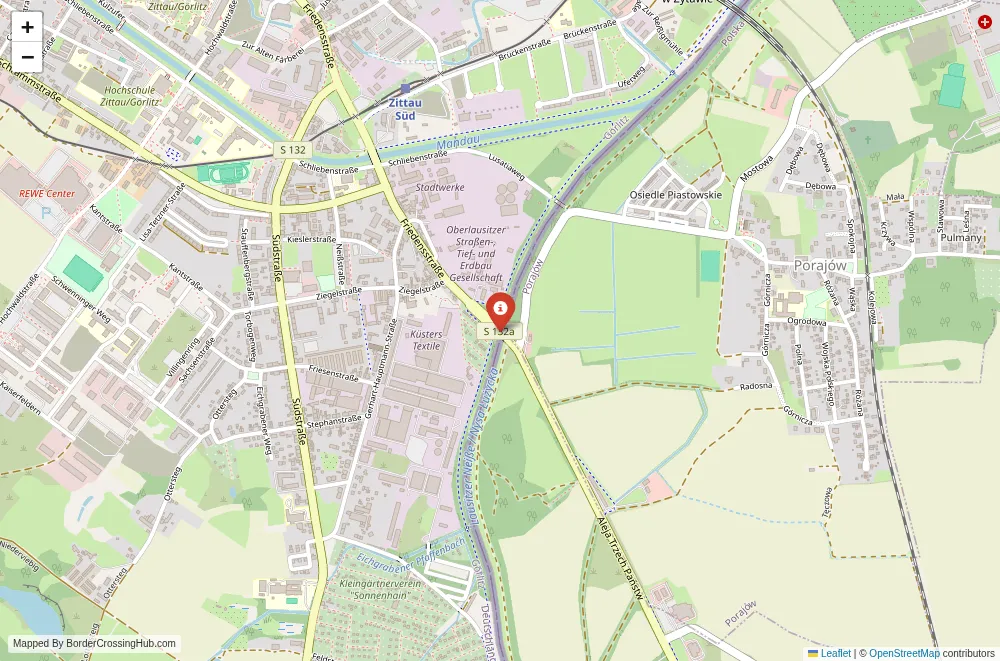
Approximate Border Location
Wait Times
Cars 0-10m; peaks 15-60m weekends
Just crossed? Tap to report:
Operating Hours
Open 24 hrs (12:00 AM-11:59 PM)
Crossing Types
Ped,cars,bikes; local roads
Border Type
Land crossing via road (tri-border area)
Peak Times
Fri-Sun 11:00 AM-05:00 PM
Daily Crossings
2,000-10,000/day
Currency Exchange
EUR; PLN in Zgorzelec/Zittau; ATMs
Safety Information
Low risk; occasional ID stops
Languages Spoken
German/Polish
Accessibility Features
Paved approaches; limited marked bays
About Radomierzyce & Hagenwerder
Monthly Update (March 2026):
As of 03/2026, the Radomierzyce & Hagenwerder Border Crossing stays calm with light daily traffic. Cars pass freely along the bridge without queues. Late afternoon sometimes brings a few extra vehicles returning toward Poland. Local travel patterns shape the rhythm.
No Cell Service at the Border? No Problem.
Don’t get caught scrambling for paperwork when you lose signal. Download the complete Europe Transit Guide directly to your device and access every critical detail, fast-track strategy, and border rule – 100% offline.
Radomierzyce connects Poland to Germany across the Lusatian Neisse River, where the border divides a quiet rural area south of Görlitz in a lesser-used local crossing near the tripoint with Czechia.
Location and Basic Connections
You reach this crossing where the Polish village of Radomierzyce (also known historically as Radmeritz) meets the German district of Hagenwerder in Görlitz, Saxony. It sits along the Neisse River, with a road bridge and pedestrian facilities immediately behind former control buildings on the German side. Foreign visitors cross here when traveling between southwestern Poland (near Zgorzelec or Bogatynia) and eastern Germany (Görlitz or toward Dresden), or to visit nearby attractions like the Berzdorfer See lake. Alternative names include the Radomierzyce Hagenwerder border or Radmeritz Hagenwerder crossing. As a Schengen internal point, it normally allows free movement, but temporary controls remain in effect as of February 10 2026 on both sides due to ongoing migration and security policies.
Historical Background and Geopolitical Role
The border follows the Oder-Neisse line fixed in 1945 after World War II, which redrew Lusatia and placed this area on the new frontier. The crossing opened on October 22 2003 as a modern road point, replacing earlier informal or restricted passages from the Cold War era when the Iron Curtain divided East Germany and Poland. Hagenwerder, a former industrial suburb of Görlitz with coal and power ties, connects to Radomierzyce’s rural setting. The Neisse River marks the line, with the bridge positioned close to old passport buildings now largely unused. It supports local commuting, tourism to the Berzdorfer See (popular with Polish visitors), and cross-border daily life in this southern Görlitz fringe, reflecting post-Schengen reconciliation in the region.
Current Status and Safety Considerations
Germany continues temporary checks at all land borders with Poland until at least March 15 2026, citing high irregular migration, smuggling networks, asylum system strain, and security impacts from global conflicts including Ukraine and the Middle East. Poland maintains controls on its German border until April 4 2026, due to migratory pressure from Belarus routes, increased illegal crossings on the Polish-German side, and threats to public order. At this small rural crossing, police carry out random stops for ID verification on the bridge or approaches rather than permanent booths. Travelers note these occur infrequently here compared to busier points, with quick interactions when they happen. The zone has low crime typical of quiet border villages, with no reported scams or aggressive touts. Carry your passport or national ID at all times to respond to any check without issues.
Operating Hours and Wait Times
The bridge and road stay open 24 hours with no routine barriers under Schengen rules. Temporary controls create sporadic variability: most crossings pass without notice, while a random stop adds 5 to 20 minutes for document review or questions. This low-volume point rarely sees queues, even during spot operations. Local peaks around weekends or lake visitors might slightly increase police presence near the bridge. Weather has little impact, though river fog, winter frost, or rain can slow driving on local roads.
Visa Requirements for Foreign Visitors
Schengen standards apply: EU/EEA/Swiss citizens travel freely with valid ID or passport. Non-EU nationals get visa exemptions for up to 90 days in any 180-day period if eligible, or hold a Schengen visa. The Entry/Exit System registers non-EU travelers at external borders but not routinely here; spot checks may verify your documents or stay details. Present your passport during any control, plus proof of accommodation, funds, or onward travel if requested. No fees occur at this crossing.
Crossing Procedures Step by Step
You approach on local roads from Radomierzyce or Hagenwerder, reaching the bridge where the Neisse marks the line and signs switch languages. Normally, drive, cycle, or walk across as the river continues and the road resumes. If police conduct a control, expect a roadside or bridge stop for ID presentation and basic travel questions. Provide documents promptly; the process wraps up fast in this sparse area. Pedestrians and cyclists use the same bridge without separate lanes. The transition appears seamless, with rural scenery flowing on both sides.
Transportation Options and Road Details
Local buses connect Görlitz to Hagenwerder and nearby Polish villages, with some services reaching Radomierzyce. Driving uses paved secondary roads leading to the bridge, passing farmland, small settlements, and river views. Scenery includes the Neisse’s gentle flow, open fields, and occasional woods. Traffic remains light outside local commutes. Cycling suits the flat terrain with paths along the river or nearby routes.
Nearby Attractions and Practical Tips
Hagenwerder provides access to the Berzdorfer See for swimming, sailing, or walks; Radomierzyce features a baroque palace with gardens and river surroundings. Carry ID consistently due to controls. Euros work on both sides, zloty useful in Poland; cards see acceptance in towns. Pack for northern weather with layers for river chill or wind. Watch for agricultural vehicles on rural approaches. Cross in daylight for better visibility on smaller roads.
Cultural and Economic Significance
The crossing sustains local cross-border routines in this Lusatian pocket, where people shop, visit family, or enjoy the lake across the line. Shared regional history appears in architecture and traditions, while the river ties communities together. It facilitates modest trade and tourism to natural spots, exemplifying Schengen’s quiet integration amid temporary security measures.
Final Planning Notes
Verify the latest on temporary controls from official EU or national sites close to your trip, keep ID accessible, and include a short buffer for random checks. This low-key river bridge route offers a calm way to move between Poland and Germany when you stay alert to current conditions.
No reviews yet.