
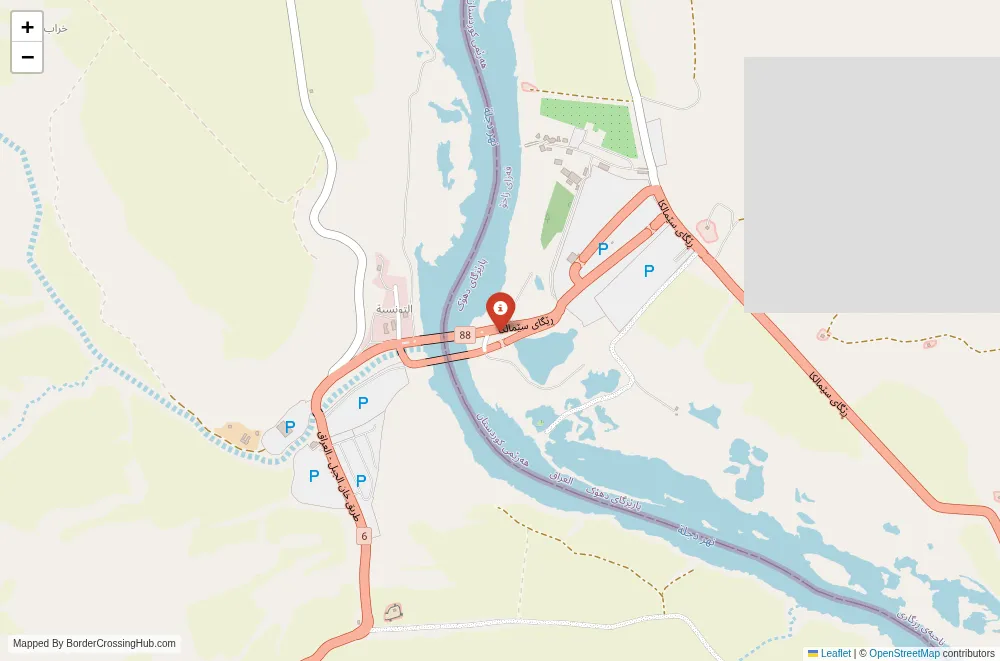
Approximate Border Location
Wait Times
Closed/very limited; delays 240-720m if open
Just crossed? Tap to report:
Operating Hours
Hours variable; often restricted
Crossing Types
Ped,cars by permit; limited movements
Border Type
Land crossing via pontoon bridge
Peak Times
N/A; access restrictions
Daily Crossings
0-300/day
Currency Exchange
USD common; IQD/SYP exchange limited
Safety Information
High security; access can change quickly
Languages Spoken
Arabic
Accessibility Features
Minimal; not accessible
About Rabia & Al–Yaarubiyah
Monthly Update (March 2026):
As of 03/2026, the Rabia & Al-Yaarubiyah Border Crossing sees limited but occasional traffic. Movement tends to come in small bursts tied to official or logistical crossings. Most of the time the checkpoint area stays quiet. Regional security conditions continue to shape activity here.
No Cell Service at the Border? No Problem.
Don’t get caught scrambling for paperwork when you lose signal. Download the complete Asia Transit Guide directly to your device and access every critical detail, fast-track strategy, and border rule – 100% offline.
The Semalka-Faysh Khabur border crossing connects the Kurdistan Region of Iraq (specifically the town of Faysh Khabur in Duhok Governorate) with northeastern Syria (the town of Semalka, also known as Al-Simalka or near Khanik in al-Hasakah Governorate). You cross the Tigris River via a pontoon bridge here, about 1 km downstream from the Iraq-Syria-Turkey tripoint. Also called the Semalka border or Faysh Khabur crossing, it serves as a key link between the Kurdistan Regional Government (KRG)-controlled Iraqi side and areas under the Autonomous Administration of North and East Syria (AANES), though recent agreements shift dynamics toward greater Syrian central government involvement.
Location and Connections
This crossing sits in a remote, riverine area along the Tigris, linking Duhok province in Iraqi Kurdistan to northeastern Syria’s al-Hasakah region. From the Iraqi side, you access it via roads from Duhok or Zakho, then head to Faysh Khabur town before reaching the bridge. On the Syrian side, it opens routes toward Qamishli (around 1-2 hours) or Hasakah. The pontoon bridge handles vehicles, pedestrians, and trade, with no-man’s-land minimal due to the river setup. Trade focuses on food, oil products, electronics, and humanitarian aid, making it vital for northeastern Syria’s economy and supplies.
Historical and Geopolitical Background
Established informally after the 2003 Iraq invasion and formalized in 2012-2013 during the Syrian civil war, the crossing emerged from a pontoon bridge built under agreements between Kurdish groups like the PYD (in Syria) and KDP (in Iraq). It started as a humanitarian corridor for displaced Syrian Kurds fleeing to Iraqi Kurdistan. The KRG intermittently closed it over political disputes, but it stayed open permanently from June 2016 onward, boosting economic ties. Geopolitically, it highlights Kurdish autonomy struggles: unrecognized by Baghdad as an official international border (since borders fall under federal control), it functions de facto between KRG and AANES. ISIS threats in the 2010s affected nearby areas, and recent 2026 events saw Syrian transitional government advances, with SDF agreements allowing government offices at the crossing while operations continue. Syrian flags now fly alongside local ones, signaling integration steps.
Current Status and Operating Hours
As of February 2026, the crossing remains operational under its existing framework despite political shifts. SDF commander Mazloum Abdi confirmed no major changes to daily movement, though a Syrian interim government office now oversees coordination (like passport checks) without disrupting flow. Earlier closures happened over disputes or security, but recent reopenings followed normal patterns. Hours aren’t rigidly fixed publicly; past operations limited it to specific days (e.g., Saturdays, Mondays, Wednesdays for some traffic), with windows like 9 a.m. to 4 p.m. or similar. Humanitarian and commercial flows continue, including aid convoys. Weather impacts include Tigris flooding risks in spring or dust/heat in summer; monitor for temporary restrictions from regional tensions.
Crossing Procedures Step by Step
You deal with separate checks on each side. From Iraq (KRG) to Syria: present documents at Faysh Khabur immigration for exit stamp, cross the pontoon bridge, then handle Syrian-side entry (AANES/SDF officials, now with government coordination). Expect passport verification, possible security questions, and vehicle inspections. Reverse when entering Iraq: Syrian exit, then KRG entry. Wait times vary from 30 minutes to a few hours, depending on crowds or bureaucracy. Procedures emphasize security screenings amid past instability. Foreign press sometimes gets accelerated processing with prior approval.
Visa Requirements for Foreign Visitors
Visa rules depend on your nationality and direction. For entering Syrian northeastern areas via Semalka, AANES often requires pre-approval or permits (arranged through fixers/guides in Iraqi Kurdistan); many foreigners need sponsorship or special permission, especially post-2025 changes. Syria’s central government now influences more, with visa-on-arrival possible at some points (e.g., $50-75 USD for 15-30 days for many nationalities, cash in USD), but restricted lists apply (e.g., India, Pakistan need prior approval; some like Jordan enter visa-free). For Iraqi Kurdistan entry from Syria, KRG offers visas on arrival or e-visas for many (including EU, US, etc.), but land borders may require pre-approval. Always check embassies or KRG portals; bring photos, fees, and copies. Policies evolve rapidly with 2026 agreements.
Transportation Options and Road Details
Reach Faysh Khabur from Duhok by shared taxi, private car, or bus (2-3 hours on paved roads with checkpoints). On the Syrian side, taxis or shared vans head to Qamishli. No direct public buses cross routinely; arrange private transport or join convoys. Roads stay mostly paved but face dust, occasional military presence, and Tigris bridge vulnerabilities. Full journey from Duhok to Qamishli takes 4-6 hours plus border time. Security dictates daytime travel; avoid unofficial paths.
Scams and Safety Warnings
This area carries risks from its conflict history. Past closures stemmed from political spats between Kurdish factions, stranding people or aid. Touts near checkpoints may offer “fast-track” services for extra fees; use official channels only. Extortion attempts or inflated charges occur at informal points; stick to marked facilities. IS remnants pose threats in border zones, with recent concerns over prison/camp security during transitions. Heightened military deployments and occasional clashes mean instability; foreigners face extra scrutiny or denials. Monitor news for closures, kidnappings, or violence spillover. Not a casual route; register with embassies and have backups.
Nearby Attractions and Practical Tips
In Iraqi Kurdistan, Duhok offers markets, mountains, and ancient sites; Zakho has historic bridges. On the Syrian side, Qamishli features multicultural markets and Kurdish culture, while Hasakah has archaeological spots. Carry USD cash (for fees/visas), water, snacks, and power banks; facilities remain basic. Get pre-approvals if needed, start early, and pack passport copies. Humanitarian convoys sometimes share roads, adding delays.
Final Thoughts on This Crossing
Treat Semalka-Faysh Khabur as a fluid, politically sensitive point; verify status via KRG, Syrian authorities, or embassies right before going. With recent integration moves, it offers a rare overland option between Iraqi Kurdistan and northeastern Syria, but demands caution, preparation, and flexibility amid evolving controls. If open and you clear the hurdles, it provides direct access across Kurdish regions. Stay safe out there.
No reviews yet.