
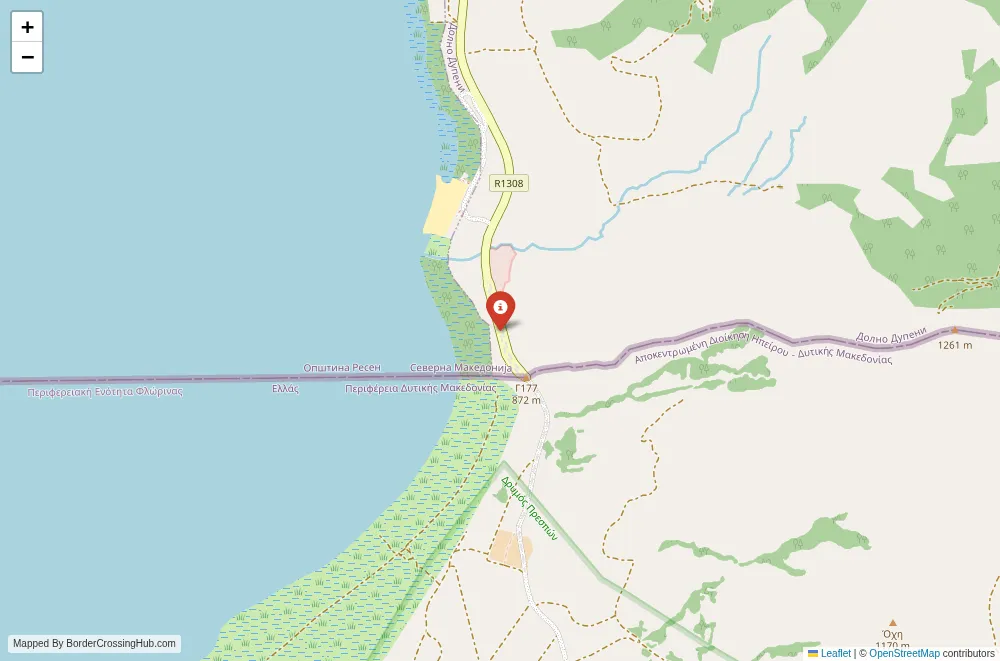
Approximate Border Location
Border Countries
Border Cities
- 🇬🇷Lemos
- 🇲🇰Markova Noga
Wait Times
Cars 10-45m; peaks 60-180m summer
Just crossed? Tap to report:
Operating Hours
Open 24 hrs (12:00 AM-11:59 PM)
Crossing Types
Ped,cars,buses; border controls
Border Type
Land crossing via road (lakeside)
Peak Times
07:00-10:00 AM; 04:00-08:00 PM
Daily Crossings
3,000-12,000/day
Currency Exchange
EUR; MKD in Florina/Bitola; ATMs
Safety Information
Queues in season; keep documents ready
Languages Spoken
Greek/Macedonian
Accessibility Features
Paved lanes; step-free varies
About Pythio & Uzunköprü (Turkey)
Monthly Update (March 2026):
As of 03/2026, the Pythio & Uzunköprü Border Crossing sees modest but steady cross-border movement. Cars and small trucks pass through the checkpoint regularly, though inspections on the Turkish side can slow things a bit during busy hours. Mornings often move faster. Market days and regional travel sometimes stretch the wait slightly.
No Cell Service at the Border? No Problem.
Don’t get caught scrambling for paperwork when you lose signal. Download the complete Europe Transit Guide directly to your device and access every critical detail, fast-track strategy, and border rule – 100% offline.
The Pythio–Uzunköprü railway crossing connects Greece to Turkey in the Evros (Meriç) River valley of Thrace, where the border runs across a historic railway bridge over the Maritsa/Evros River dividing the Greek border station of Pythio (Πυθίο) from the Turkish border station of Uzunköprü in a rural floodplain setting with open fields, river channels, and distant hills.
Location and Basic Connections
You reach this crossing where Pythio in Greece’s Eastern Macedonia and Thrace Region (Evros Regional Unit) meets Uzunköprü in Turkey’s East Thrace (Edirne Province). It lies along the main railway line (Greek OSE / Turkish TCDD) over the Evros/Meriç River bridge, with no road crossing at this exact point (the nearest road border is Kipi–İpsala, about 20 km south). Foreign visitors use it primarily by train when traveling from Alexandroupoli or Thessaloniki in Greece toward Istanbul via Uzunköprü and Halkalı, or the reverse for Greek Thrace exploration and the Evros Delta wetlands. Alternative names include the Pythio–Uzunköprü border, Evros railway bridge crossing, or Meriç River rail point. As an external EU border for Greece (Schengen member) and Turkey (non-Schengen), it features full customs, immigration, and police facilities on both sides. Passenger services remain suspended as of February 11 2026, with only freight trains operating across the bridge.
Historical Background and Geopolitical Role
The border follows the 1923 Treaty of Lausanne, which set the Evros/Meriç River as the Greece-Turkey line, with the railway (built 1870s as part of the Istanbul–Thessaloniki line) crossing it near Pythio. The bridge allowed the historic Orient Express route, but post-1923 adjustments created a complex alignment where the line briefly re-entered Turkey near Edirne before continuing. The Friendship Express (Istanbul–Thessaloniki overnight train) used this route until suspended in 2011 due to low demand and infrastructure issues. The crossing saw limited use during the Cold War and post-1990s, with passenger traffic ending around 2011. Freight continues for regional trade. Recent EU-funded plans for a new Evros rail bridge (announced 2025–2026) aim to modernize connectivity, but as of February 2026, the existing Pythio–Uzunköprü bridge remains the only rail link, used solely for freight.
Current Status and Safety Considerations
Greece (EU/Schengen external border) and Turkey maintain full customs, immigration, and security checks at Pythio and Uzunköprü stations. Passenger train services are suspended (no Friendship Express or regional trains cross), so the crossing is freight-only. No routine passenger crossings occur here—use road borders like Kipi–İpsala for vehicles or buses. Controls for any rare passenger or special train would be thorough, with passport/visa checks, luggage inspection, and customs formalities on both sides. The area has low crime typical of rural river valley border zones, with no reported scams or aggressive touts. Carry your passport or national ID at all times if near the stations or river area.
Operating Hours and Wait Times
The railway operates 24 hours for freight, with no routine passenger hours due to suspension. No passenger wait times apply (no trains cross). Freight trains pass without public delays. Weather in the Evros valley can affect rail operations: flooding or heavy rain may cause temporary suspensions.
Visa Requirements for Foreign Visitors
Greece (Schengen): EU/EEA/Swiss citizens travel freely with ID; non-EU nationals need a Schengen visa or qualify for exemption (up to 90 days/180). Turkey: Many nationalities (EU, US, UK, etc.) enjoy visa-free entry up to 90 days; check current rules. If passenger rail resumed, full checks would apply at both stations. Present passport, plus proof of accommodation, funds, or onward travel if requested.
Crossing Procedures Step by Step
No passenger procedures exist due to suspension. For freight or hypothetical special trains: approach Pythio (Greece exit) or Uzunköprü (Turkey exit) stations. Present passport/ID at customs/immigration, undergo luggage/vehicle checks if applicable. The process would resolve quickly for small groups. The bridge transition feels understated from the train, with river views and language signs shifting.
Transportation Options and Road Details
No passenger rail crosses here. Regional trains reach Alexandroupoli (Greece) or Istanbul via Halkalı (Turkey), but no through service. Driving uses parallel roads (E85 Greece / D100 Turkey) to nearby Kipi–İpsala road border. The rail line passes through Evros floodplain scenery with river channels, fields, and distant hills. Freight traffic remains light.
Nearby Attractions and Practical Tips
Pythio station is near the Evros Delta wetlands for birdwatching. Uzunköprü features the historic Uzunköprü Bridge (UNESCO tentative list) and nearby Edirne. Carry ID near borders. Euros work in Greece, Turkish lira in Turkey; cards accepted in towns. Pack layers for changeable valley weather. Use road borders for travel.
Cultural and Economic Significance
The crossing supports freight trade in Thrace, linking Istanbul to Thessaloniki/Europe. Shared Ottoman-Thracian heritage appears in local traditions and river culture. It exemplifies potential for renewed passenger rail amid EU-Turkey relations.
Final Planning Notes
Check official Greek OSE, Turkish TCDD, or EU sources for rail status before travel. Passenger service remains suspended—use road borders like Kipi–İpsala. Keep ID ready. This historic rail route holds potential for future passenger links between Greece and Turkey when conditions allow.
No reviews yet.