
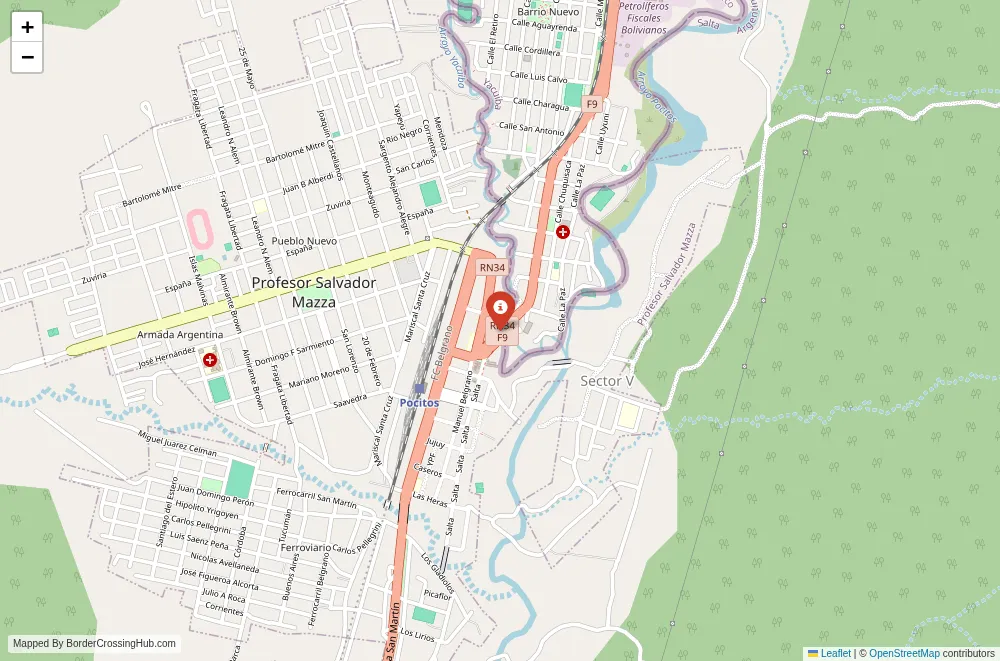
Approximate Border Location
Wait Times
Ped/cars 10-60m; peaks 90-180m
Just crossed? Tap to report:
Operating Hours
Open 24 hrs (12:00 AM-11:59 PM)
Crossing Types
Ped,cars,buses,trucks; full customs
Border Type
Land crossing via road (international bridge)
Peak Times
07:00-10:00 AM; 04:00-08:00 PM; holidays
Daily Crossings
8,000-25,000/day
Currency Exchange
AR$; Bs in towns; casas & ATMs
Safety Information
Crowded at rush; watch pickpockets
Languages Spoken
Spanish
Accessibility Features
Some ramps; uneven curbs at lanes
About Profesor Salvador Mazza & Yacuiba
The Profesor Salvador Mazza-Yacuiba border crossing connects the northern Argentine town of Profesor Salvador Mazza (often called Pocitos) in Salta Province directly to Yacuiba in Bolivia’s Tarija Department, marking one of the three main overland passages along the Argentina-Bolivia frontier.
Location and Basic Connections
You arrive at this crossing in the Chaco region, about 400 km north of Salta city and 55 km from Tartagal along National Route 34. Profesor Salvador Mazza sits right on the line, facing Yacuiba across a small international bridge over the Quebrada Internacional. Buses from Salta or Tartagal take several hours through flat, hot lowlands. From the Bolivian side, routes link Yacuiba to Santa Cruz de la Sierra or Villamontes. The point handles substantial commercial traffic, including hundreds of trucks daily for imports and exports, alongside passenger movement and local cross-border activity.
Alternative Names
People refer to it as the Salvador Mazza border, Pocitos crossing (on the Argentine side), Yacuiba-Pocitos, or the Profesor Salvador Mazza International Pass.
Historical Background
The area’s border took shape through early 20th-century disputes and treaties. In the 1920s, boundary talks placed Yacuiba initially in Argentine territory before a 1925 agreement shifted it to Bolivia in exchange for other lands. The town of Profesor Salvador Mazza emerged around 1951, named after a notable Argentine physician, but the zone had served as a frontier post earlier due to oil exploration interests from companies like Standard Oil. Railway lines and customs posts developed here amid resource debates. The international bridge and formal facilities grew with increasing trade, turning the spot into a key commercial link despite past tensions over exact lines.
Geopolitical Significance
This crossing supports heavy bilateral trade in goods like agricultural products, fuels, and consumer items. It forms part of Mercosur dynamics, easing movement for locals in border zones. The area has seen occasional protests, such as banana exporters blocking routes over payment disputes. Smuggling and drug transit have drawn attention historically, with reports noting high volumes of certain goods passing through informal channels. As of February 2026, the crossing remains open 24 hours for vehicles and pedestrians, per official Argentine sources, though always verify for any sudden changes from security or diplomatic issues.
Practical Crossing Procedures
You can cross by vehicle or on foot. Approach Argentine immigration for exit stamps if leaving, or entry if arriving. The process involves passport checks, possible bag scans, and customs declarations. On the Bolivian side, similar steps apply. Many nationalities enter Bolivia visa-free for tourism (up to 90 days), but confirm your status; some require a visa obtained at the border or embassy. Bring your passport valid for at least six months, proof of onward travel if asked, and cash for any fees. Vehicles need temporary import papers. The bridge connects the posts directly, so you drive or walk across after clearing one side.
Typical Wait Times and Operating Hours
The crossing operates 24 hours daily when fully active, a big plus over limited-hour points. Waits stay reasonable for pedestrians, often under 30 minutes outside rush periods. Trucks and commercial traffic create longer lines during peak trade hours, sometimes stretching to an hour or more. Early mornings or late nights see lighter flow. Heat in this lowland area makes extended waits draining, so plan accordingly.
Transportation Options
Buses from Salta head to Profesor Salvador Mazza or Tartagal, then local taxis cover the short final distance. On the Bolivian side, flotas (long-distance buses) run from Yacuiba to Santa Cruz or other towns. Shared taxis or remises bridge the towns. Hitchhiking works in the region, though traffic thins farther out. Private cars offer flexibility on paved Route 34. For onward travel, arrange connections ahead since services focus on trade rather than tourists.
Road Conditions and Scenery
The approach from Argentina follows paved National Route 34 through scrubby Chaco plains, cattle ranches, and occasional small settlements. On the Bolivian side, roads extend into similar flat terrain toward the Andean foothills. Conditions hold up well in dry weather, but rain can create puddles or slow heavy vehicles. The landscape remains open, with distant sierras visible on clear days.
Scams and Warnings
This crossing attracts informal helpers or touts offering to speed up paperwork for fees. Decline them and head straight to official counters. Some travelers encounter pressure for small “tips” or overpriced currency exchange. Historical reports mention smuggling routes nearby, though these rarely impact regular crossings. Keep documents secure, avoid carrying large cash amounts visibly, and watch belongings in crowded areas. Protests or blockades occur sporadically over trade issues, potentially stranding travelers for hours or days. Check news or embassy updates before heading out.
Nearby Attractions
Profesor Salvador Mazza offers basic amenities and a frontier feel, with little sightseeing beyond the border activity itself. Yacuiba provides markets, local food, and access to Aguaragüe National Park for hiking and wildlife spotting in Bolivia. Farther afield, Tartagal in Argentina has Chaco culture and nature reserves. Santa Cruz de la Sierra lies several hours north in Bolivia, with urban options. The region suits those interested in rural border life rather than major landmarks.
Seasonal Variations and Delays
Dry season (May to October) brings stable roads and steady traffic. Wet season (November to April) risks flooding or mud, delaying buses and trucks. Trade disputes or local strikes sometimes close the bridge temporarily. Commercial peaks add congestion. Monitor weather and local events, as this lowland zone heats up intensely year-round.
Cultural and Economic Role
Daily trade keeps both towns alive, from truckloads of produce to everyday goods carried by residents. Cross-border families shop, work, and visit freely in limited zones. The crossing links Argentine northern economies to Bolivian resources, fostering a mix of cultures in markets and streets. Informal commerce thrives alongside formal channels.
Final Planning Notes
Cross during daylight if possible for comfort. Carry passport copies, small denomination cash (USD or local currencies), and snacks/water for waits. Research visa rules specific to your nationality well ahead. This point works well for overland routes between Salta and southern Bolivia. Stay flexible with schedules due to potential disruptions.
Crossing This Chaco Frontier
The Profesor Salvador Mazza-Yacuiba passage offers a straightforward, round-the-clock option on a busy trade route. Prepare for the practical side of border life, stay informed on conditions, and you handle this remote but functional link without major issues.
No reviews yet.