
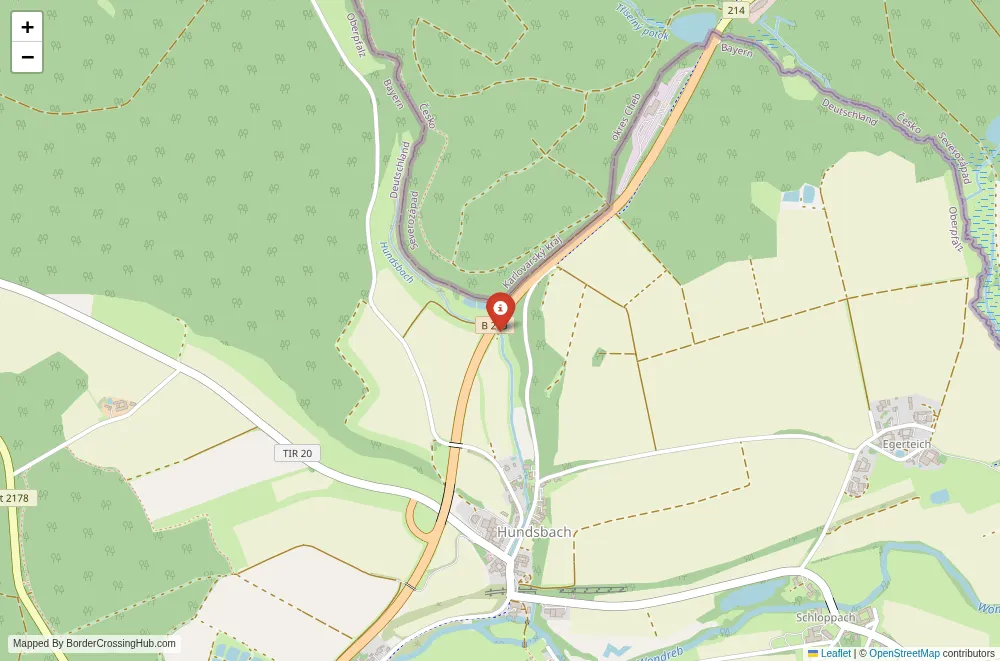
Approximate Border Location
Border Countries
Border Cities
- 🇨🇿Pomezí nad Ohří
- 🇩🇪Schirnding
Wait Times
Cars 0-15m; peaks 20-90m rush
Just crossed? Tap to report:
Operating Hours
Open 24 hrs (12:00 AM-11:59 PM)
Crossing Types
Ped,cars,bikes,buses; local roads
Border Type
Land crossing via road (E48 corridor)
Peak Times
07:00-09:00 AM; 04:00-06:30 PM
Daily Crossings
6,000-25,000/day
Currency Exchange
EUR; CZK in Cheb/Hof; ATMs
Safety Information
Busy junctions; occasional police checks
Languages Spoken
German/Czech
Accessibility Features
Good sidewalks; curb cuts frequent
About Potůčky & Johanngeorgenstadt
Monthly Update (March 2026):
As of 03/2026, the Potůčky & Johanngeorgenstadt Border Crossing stays calm with a steady trickle of local traffic. Vehicles move through town streets without stopping, and pedestrians cross easily throughout the day. Afternoon commuter traffic can slow things slightly on the German side. Snow or wet weather in the Ore Mountains sometimes affects the pace.
No Cell Service at the Border? No Problem.
Don’t get caught scrambling for paperwork when you lose signal. Download the complete Europe Transit Guide directly to your device and access every critical detail, fast-track strategy, and border rule – 100% offline.
The Potůčky-Johanngeorgenstadt crossing winds through the high Ore Mountains, linking a small Czech border village with a historic German mining town that still carries the scent of pine and winter traditions.
Location and Connections
You reach this spot high in the Krušné hory (Erzgebirge) where Potůčky in Czechia’s Karlovy Vary Region meets Johanngeorgenstadt in Saxony, Germany. The road crossing follows a local route from the German side (often via B101 or connecting roads from Schwarzenberg or Zwickau) into Potůčky, while the rail line 178 runs directly between Johanngeorgenstadt and Karlovy Vary via Potůčky. From Karlovy Vary, it’s about 45 minutes by train or car to the border. On the German side, Johanngeorgenstadt lies roughly 30 minutes from Schwarzenberg or an hour from Zwickau. Cars, regional trains, buses, cyclists, and pedestrians use it; the area draws locals for shopping and tourists for mountain hikes or ski trips.
Alternative Names
It appears as Potůčky-Johanngeorgenstadt border crossing, Johanngeorgenstadt-Potůčky, or sometimes the Pachthaus crossing from older maps.
Historical Background
The rail line opened in 1889 under Austrian administration, connecting Bohemian spa towns to Saxon networks. It served trade and passengers until post-WWII divisions closed it in 1945. The Iron Curtain sealed the area tightly; the border stayed shut for decades with military oversight. Passenger rail restarted in 2003 after reopening efforts in the 1990s, and the road crossing gained fuller access post-1989. Johanngeorgenstadt itself dates to 1654, founded by Bohemian exiles and silver miners right on the old frontier. Today the crossing reflects recovery from isolation, with preserved mining heritage on both sides.
Geopolitical Context
Schengen rules since 2007 normally allow unrestricted passage. Germany continues temporary controls on all land borders with Czechia due to migration and security concerns. As of February 10, 2026, these extend at least through March 15, 2026, with random checks possible. This small crossing sees occasional police presence for ID verification rather than fixed booths. No permanent infrastructure blocks the way, but spot stops occur. Always review German Federal Police or Czech Interior Ministry updates, as extensions depend on ongoing assessments.
Practical Crossing Procedures
You drive or walk across with minimal setup under normal conditions. A simple marker denotes the line. Current temporary measures mean German police might stop you shortly after entry for passport or ID checks, travel questions, or basic vehicle docs. EU citizens show national ID or passport. Non-EU visitors need valid travel documents, visas if required, and proof like return tickets. Trains face rare onboard checks. Cyclists and pedestrians cross freely, though the road sees light traffic. Carry vehicle insurance and any needed vignette for Czech highways if continuing.
Typical Wait Times
Most crossings take seconds with no holdup. Temporary checks add variability: quick glances for many, but random detailed stops run 10 to 30 minutes or longer if queues form. Weekends or holidays bring more locals and shoppers, slightly raising chances of intervention. Quiet weekdays or early hours usually mean smoother passage.
Operating Hours
The road and rail operate 24/7 year-round. No scheduled closures apply since Schengen. Heavy snow or rare maintenance might limit access temporarily in winter, but the point remains open.
Transportation Options and Road Conditions
Regional trains from Karlovy Vary to Johanngeorgenstadt run several times daily, offering a scenic ride through twists and tunnels dubbed the “Czech Semmering.” Cars work well on winding mountain roads with good pavement but sharp bends and elevation gains. Buses connect from nearby towns. The approach features steep forested slopes, occasional switchbacks, and views over valleys. Watch for ice, deer, or slow farm vehicles in rural sections.
Scams and Warnings
This quiet mountain spot has few reported scams. No widespread touts or fake services plague travelers here. Border shops in Potůčky sell cheaper fuel, groceries, tobacco, alcohol, and Asian goods to Germans; some mention pushy vendors or subpar rates at informal spots. Keep items secure in vehicles during stops. The area feels remote and safe for alert visitors, but mountain roads demand careful driving in poor weather.
Nearby Attractions
Potůčky offers border retail, a casino, and basic services. Johanngeorgenstadt features a small border museum, Schwibbogen (candle arches) traditions, and winter sports like cross-country skiing. The Ore Mountains provide extensive trails for hiking or biking, with cross-border paths linking nature reserves. Nearby Pernink or Boží Dar add more mountain scenery and historic sites. The region suits outdoor enthusiasts over big-city crowds.
Seasonal Variations and Weather Impacts
Winter dominates with heavy snow from December to March; winter tires or chains become essential, and roads ice in shaded areas. Summer attracts hikers and day-trippers with milder conditions. Autumn brings colorful foliage and fewer people. Rain or fog reduces visibility on curves, but weather-related closures stay uncommon.
Travel Tips and Preparation
Carry passport or ID at all times due to possible checks. Buy Czech vignette online if using motorways beyond local roads. Fuel and shop in Potůčky for savings. Use offline maps for patchy signal in the mountains. Pack warm layers and water for elevation changes. Check police sites or apps for border status before setting out. Stick to marked paths in nature areas to avoid issues.
Cultural and Economic Significance
Cross-border shopping fuels local trade: Germans stock up on affordable Czech items, supporting Potůčky’s small economy. Rail and road links tie communities from Karlovy Vary to Saxony. Shared mining history and Erzgebirge traditions persist through festivals, museums, and joint conservation in the mountains.
Before Heading Out
Confirm temporary check details from official sources close to your travel date. With readiness for occasional stops and mountain conditions, you manage this elevated crossing and enjoy the forested routes ahead. Safe journey.
No reviews yet.