Monthly Update (October 2026):
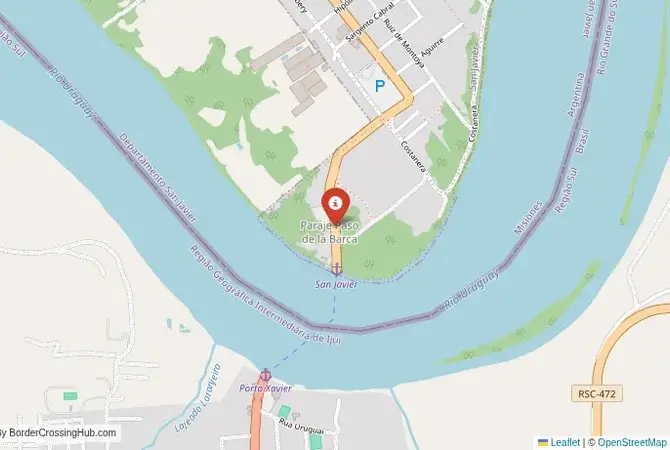
Porto Xavier & San Javier is facing a temporary practical disruption from the rising Uruguay River, with the international ferry service suspended in early October along with several other river crossings in the region. At the same time, the planned permanent bridge remains a major longer-term development, with construction expected to replace the ferry connection in the coming years. Travelers should therefore check the river situation before setting out rather than assuming the ferry is operating normally.
Driving there, or sending a driver? Send them this guide.
For reports and websites
Cite this page
Border Crossing Hub (2026). Porto Xavier & San Javier Border Crossing. Updated October 2026. https://bordercrossinghub.com/porto-xavier-san-javier-border-crossing/<a href="https://bordercrossinghub.com/porto-xavier-san-javier-border-crossing/">Porto Xavier & San Javier Border Crossing (Border Crossing Hub)</a>Put this crossing's card on your website
Free. It updates on its own when our information changes.
<iframe data-bch-card src="https://bordercrossinghub.com/porto-xavier-san-javier-border-crossing/?bch_view=card" width="100%" height="980" scrolling="no" style="border:0;max-width:480px;display:block" loading="lazy" title="Porto Xavier & San Javier border crossing information"></iframe>
<p style="font-size:12px;margin:4px 0 0">Crossing information: <a href="https://bordercrossinghub.com/porto-xavier-san-javier-border-crossing/">Border Crossing Hub</a></p>
<script src="https://bordercrossinghub.com/?bch_embed_js=1" async></script>Paste it where you want the card. The last line (a script) only adjusts the height and can be left out.
About this crossing
Historical and Geopolitical Context
The border was established by the 1750 Treaty of Madrid, which set the Uruguay River as a divide between Portuguese and Spanish territories, shaping this frontier’s identity. The 18th-century Jesuit missions left a lasting cultural imprint, with their ruins now UNESCO sites. The Paraguayan War (1864-1870) brought conflict to the region, with remnants like local forts still visible. The 1991 Mercosur agreement boosted trade, supporting approximately 5,000 daily crossings (latest available data) for agriculture and tourism. Unlike Schengen, Mercosur requires immigration checks, with passports or IDs processed at the ferry terminal. Stricter agricultural export rules, particularly for citrus and beef, continue customs patrols; a new binational bridge project (construction starting 2026, completion ~2030) will replace the ferry for improved connectivity. Verify border status to avoid disruptions.
Crossing Procedures and Wait Times
Brazilian and Argentine citizens can use national IDs, while other nationalities need passports and possibly visas (check your country’s requirements). Immigration processing at the ferry terminal takes 15-25 minutes, with queues during holidays. Customs inspections target electronics (one personal device), alcohol (1L spirits), or tobacco (400 cigarettes), with Argentine officers vigilant for tax evasion. Pedestrians and vehicles cross via ferry (20 minutes, R$20/ARS$2000), with waits of 30-45 minutes during peak hours (8-10 AM, 4-6 PM). The border operates 6 AM-10 PM, with delays up to 60 minutes during summer holidays (December-February) or local festivals. Early crossings minimize congestion.
Nearby Border Crossings


Routes and Transportation
From Porto Xavier, ferries (R$20) or local buses (30 minutes, R$10) reach San Javier. By car, the ferry crosses the 5km distance in 20 minutes. No trains serve this route, but long-distance buses like Crucero del Norte connect to Posadas (2 hours, ARS$2500) or Porto Alegre (9 hours, R$120). Cyclists can use rural roads along the river, a 10km route with views of wetlands and mission-era relics. From San Javier, buses reach Oberá (1 hour, ARS$1500). Roads are paved but narrow, and summer rains may cause delays or muddy paths. Avoid unofficial taxis at Porto Xavier’s ferry terminal, as travelers report overcharges up to R$70 for short trips.
Scams & Warnings
Always carry your passport or ID for immigration checks, as officers enforce strict protocols. San Javier’s shops offer “deals” on mate, crafts, or local wines, but prices may be inflated for tourists; compare at Porto Xavier’s markets or supermarkets. Use ATMs in Porto Xavier or San Javier for BRL or ARS to avoid poor exchange rates at border kiosks. Pickpocketing is rare but reported at ferry terminals during festivals like San Javier’s Patron Saint celebrations. Fake “ferry agents” may charge R$50 for tickets; purchase only at official counters. Declare goods when entering Brazil to avoid fines up to R$500 for undeclared electronics or alcohol.
Cultural and Economic Significance
With approximately 5,000 daily crossings (latest available), the region thrives on agriculture, tourism, and small-scale trade. Portuguese, Spanish, and Guarani languages mix, creating a vibrant cultural tapestry heard in markets and cafes. Porto Xavier’s churrasco restaurants serve hearty grilled meats, while San Javier’s eateries offer chipa and empanadas. The Jesuit Missions Route, a UNESCO-recognized trail, draws visitors to historic ruins, fostering cross-border tourism. Economic differences drive shopping, with Brazilians seeking Argentine wines and Argentines purchasing Brazilian electronics or clothing, boosting local economies.
Nearby Attractions
Porto Xavier’s Jesuit ruins and Uruguay River walks offer historical and scenic charm. San Javier’s Plaza 25 de Mayo and nearby mission sites provide cultural depth. Posadas (2 hours) boasts a vibrant riverfront and colonial architecture. For a local experience, visit San Javier’s markets for homemade dulce de leche or Porto Xavier’s churrascarias for authentic Brazilian barbecue.
Seasonal and Weather Considerations
Summer (December-February) brings 25-35°C weather, ideal for sightseeing but crowded during Argentine holidays. Winter (June-August) sees 10-20°C with fewer tourists, though occasional rain may muddy roads. Spring and fall offer mild 15-25°C weather, but Uruguay River fog can reduce visibility, especially for cyclists or drivers. Check forecasts for flooding risks, which may delay ferry operations.
Planning Recommendations
Cross early to avoid peak delays and carry BRL or ARS for convenience. Book bus tickets via Crucero del Norte or local operators for savings, and check ferry schedules for updates. Verify visa requirements and border status for customs patrols, especially during summer or festivals. Visit Porto Xavier’s tourist office for Jesuit mission tour details or cycling maps. Pack sunscreen and hats for summer or rain gear for winter to stay comfortable. With preparation, this crossing connects you to the Jesuit region’s rich cultural and historical heritage seamlessly.
View all border crossings between Brazil and ArgentinaHeading to Porto Xavier & San Javier? Take this with you.
One page with the hours, waits, emergency numbers and coordinates. Works without signal.
Practical information
Fuel
Brazil: <1 km - Argentina: <1 km
Currency
Local BRL/ARS
Safety information
Low crime; scam attempts
Connectivity
Wi-Fi; 4G
Have you crossed here?
Help other travelers by sharing your experience, wait times, and any updates.