
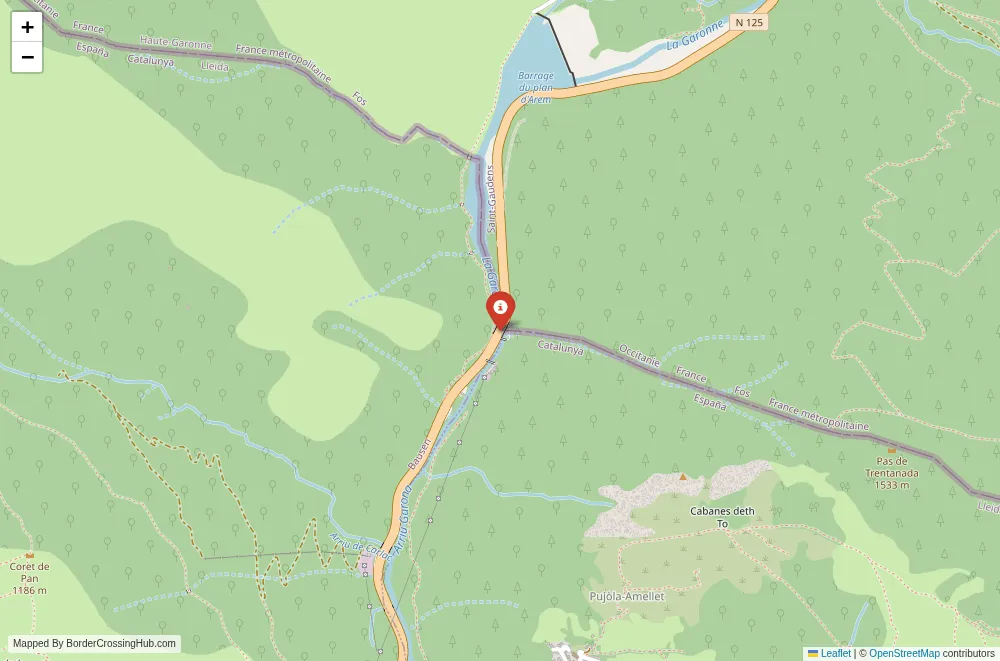
Approximate Border Location
Wait Times
Cars 0-10m; peaks 20-45m summer
Just crossed? Tap to report:
Operating Hours
Open 24 hrs (12:00 AM-11:59 PM)
Crossing Types
Cars,bikes,ped; local road
Border Type
Land crossing via rural road
Peak Times
Weekends 10:00 AM-06:00 PM; Jul-Aug
Daily Crossings
300-1,500/day
Currency Exchange
EUR only; ATMs in Vielha/Saint-Béat
Safety Information
Narrow bridge; occasional local controls
Languages Spoken
French/Spanish
Accessibility Features
Basic step-free; narrow sidewalks
About Pont de Rei & Bausen
The Pont de Rei border crossing bridges the Garonne River at a low elevation in the central Pyrenees, linking the Spanish municipality of Bausen in the Val d’Aran (Lleida province, Catalonia) directly to Fos in France’s Haute-Garonne department, forming a historic and functional link between the two nations.
Location and Basic Connections
You reach this crossing along the N-230 road (Spain) from Vielha or Bossòst in the Val d’Aran, or the N125 (France) from Bagnères-de-Luchon. The bridge itself spans the Garonne near the confluence with the Pique river, with the border line running through it. Bausen sits just south in Spain, while Fos lies immediately north in France. The route provides a quieter alternative to busier Pyrenean passes like Somport or Bielsa tunnel. Regional buses from Vielha or Luchon get you close, but private vehicles or taxis handle the final rural stretches. The area draws hikers, cyclists, and drivers exploring the valleys rather than heavy commercial traffic.
Alternative Names
This point is called Pont de Rei, Pont du Roi, Eth Pònt de Rei (in Aranese), or the Bausen Fos border crossing.
Historical Background
The site traces to the 1515 Plan d’Arem agreement between Spanish and French nobles, guaranteeing free passage and goods exchange across the valleys. The bridge earned its “King’s Bridge” name from royal involvement in early treaties. It formalized the frontier after the 1659 Treaty of the Pyrenees reshaped much of the Pyrenees line. The crossing has served shepherds, traders, and locals for centuries, with modern road upgrades preserving its role despite the remote valley setting.
Geopolitical Significance
As a Schengen internal border, the Pont de Rei has no routine passport controls for most travelers. France’s temporary internal checks (extended to April 30, 2026, due to jihadist threats, antisemitic incidents, migration smuggling, and public order concerns) apply across Schengen frontiers including Spain, but quiet secondary crossings like this see minimal impact beyond rare spot patrols. No major disruptions or closures reported in early 2026. The bridge supports local tourism, cross-valley commuting, and occasional freight in the Val d’Aran and upper Garonne area.
Practical Crossing Procedures
You drive or walk across the bridge without stopping under normal Schengen conditions. The border is marked subtly on the structure or nearby signs. Random patrols by French or Spanish police may request ID, check vehicles, or inspect goods, but these are infrequent here. Most nationalities cross freely (90 days visa-free short stay in Schengen). Carry your passport or national ID for any verification. Vehicles need registration and insurance. Customs limits apply for alcohol, tobacco, or other items; declare excesses. Pedestrians and cyclists cross easily, though the road is narrow.
Typical Wait Times and Operating Hours
The crossing operates 24/7 with no formal hours or queues on the road. Random checks, if they happen, take minutes. Weather rarely closes it fully due to the low altitude, though snow or ice on approaches can slow traffic in winter.
Transportation Options
Private cars or motorcycles work best on the winding valley roads. Regional buses reach Vielha (Spain) or Luchon (France), then taxis or rideshares cover the rest. No direct public services cross routinely. Cycling is common for the scenic but challenging route. The setup suits independent travelers linking French spa towns to Catalan valleys.
Road Conditions and Scenery
The Spanish N-230 and French N125 stay paved but narrow with curves along the Garonne valley. Winter snow or ice may require chains; summer offers clear driving. Scenery features deep river gorges, forested slopes, and alpine meadows, with the bridge providing views of the rushing waters and surrounding peaks.
Scams and Warnings
This remote pass sees almost no scams or touts. Narrow roads demand caution with oncoming traffic or cyclists. Poor weather can slow or briefly halt access; check forecasts. Random ID checks may occur; cooperate fully. The area has low crime against visitors but high altitude and curves pose driving risks. Carry supplies for potential waits.
Nearby Attractions
Bausen offers quiet Val d’Aran charm with Romanesque churches and river walks. Fos provides French mountain village calm and access to Luchon spas or trails. Nearby Mont Perdu massif and Ordesa National Park offer hiking. The crossing suits those exploring Pyrenean valleys or seeking offbeat routes.
Seasonal Variations and Delays
Winter brings snow and chain needs on approaches, with occasional short slowdowns. Summer delivers reliable access and peak tourism. No major closures beyond weather events.
Cultural and Economic Role
The bridge sustains ties between Val d’Aran and upper Garonne communities, boosting tourism and local trade. It blends Catalan, Aranese, and Occitan influences in food, festivals, and mountain traditions.
Final Planning Notes
Carry ID for any spot checks, check weather/road status via local sources, and prepare for mountain driving. This fits drivers or cyclists comfortable with scenic, winding routes.
Crossing This Historic River Bridge
Pont de Rei delivers a simple, scenic border passage over the Garonne in the Pyrenees valleys, where history and nature meet with minimal formalities. With basic prep and weather checks, you handle this quiet frontier link between France and Spain effortlessly.
No reviews yet.