Monthly Update (September 2026):
Pomezí nad Ohří & Schirnding remains one of the more useful western Czech–German road crossings, with no major September closure reported. Germany's border controls with Czechia continue throughout September, including a renewed control period from September 16 onward. Travelers should therefore expect the possibility of selective checks, particularly on the German side, but there is no indication of a permanent border queue.
About this crossing
Location and Connections
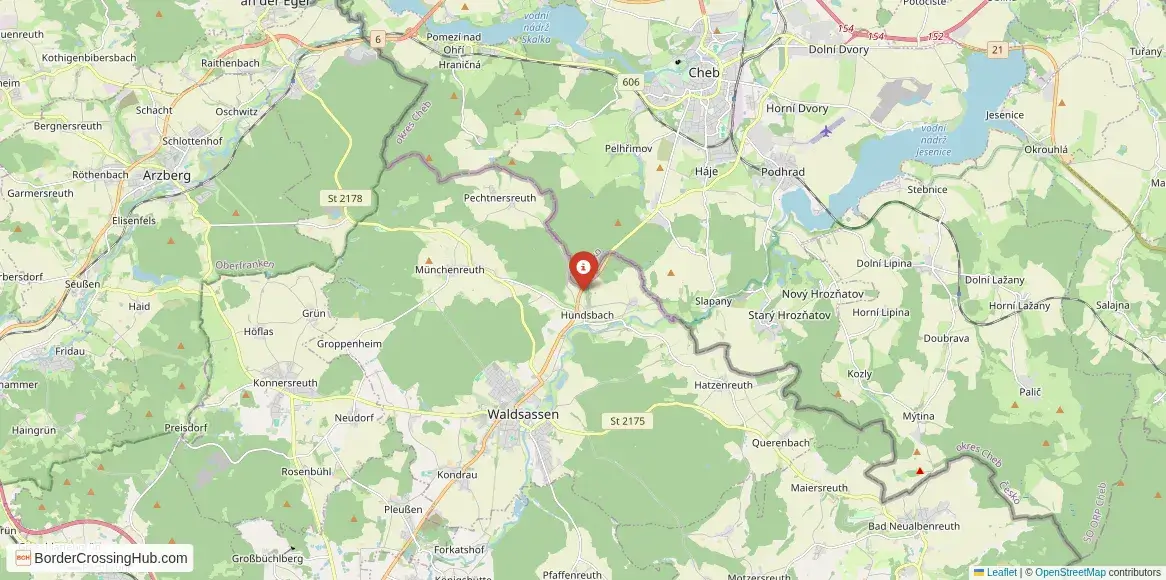
You find this point where the Czech town of Pomezí nad Ohří meets the German municipality of Schirnding in Bavaria. It lies along Silnice I/6 (European route E48) on the Czech side, continuing as Bundesstraße 303 in Germany. From Cheb in Czechia, the crossing sits about 10 to 15 minutes drive west. On the German side, Schirnding is roughly 10 minutes from Marktredwitz or 45 minutes to an hour from Nuremberg. Rail line 179 runs parallel, linking Cheb to Schirnding and onward to Nuremberg. Cars, trucks up to certain weights, buses, trains, cyclists, and pedestrians use it. Many cross for shopping, work commutes, or travel between Karlovy Vary/Cheb and Bavarian cities.
Alternative Names
It goes by Pomezí nad Ohří-Schirnding border crossing, Schirnding-Pomezí nad Ohří, or sometimes the E48/B303 crossing. Older references mention Mühlbach for the Czech side.
Nearby Border Crossings


Historical Background
This route traces back to older trade paths between Bohemia and Franconia. After World War II, the border closed fully by July 1952 following an initial blockage in 1949 with earth walls and ditches as part of the Iron Curtain. It reopened in September 1956 with basic facilities. The Cold War kept it tightly controlled until 1989 changes. Post-reunification and Czech Schengen entry in 2007 eliminated permanent infrastructure. A small Bavarian border museum in Schirnding now covers its history with exhibits on administration and the old barriers.
Geopolitical Context
Schengen membership since December 2007 normally allows free passage with no routine checks. Germany has kept temporary controls on all land borders, including Czech ones, due to migration and security issues. As of February 10, 2026, these run through at least March 15, 2026, with possible extensions. Random police stops happen at or near the line for ID verification, travel details, or vehicle checks. No full closures affect this crossing, but spot inspections occur. Check German Federal Police or Czech Interior Ministry sites for updates, as political factors can shift things.
Practical Crossing Procedures
You usually drive or ride straight across. A sign marks the border, and you proceed. With current temporary measures, German police may stop vehicles shortly after entry for passport/ID checks, questions about purpose or stay length, and sometimes luggage or funds proof. EU citizens present passports or national ID. Non-EU travelers need valid passports, visas/residence permits if applicable, and supporting documents like hotel bookings. Rail passengers face occasional onboard or station checks. Vehicles require insurance proof and Czech vignette for further highway use. Pedestrians and bikes cross easily, though no wide sidewalks exist at the exact line.
Typical Wait Times
Normal days bring no delay; you pass in seconds. Temporary checks add time: most vehicles clear quickly, but random pulls can mean 10 to 45 minutes depending on queue or officer questions. Peak hours, weekends, or holidays from shoppers and commuters increase chances of stops and minor backups. Off-peak or early mornings often see fewer interventions.
Operating Hours
The road and rail stay open 24 hours daily, year-round. Schengen removed fixed times long ago. Weather events like heavy snow might slow things briefly in winter, but the crossing point remains passable.
Transportation Options and Road Conditions
Own car gives most freedom; regional trains connect Cheb to Schirnding and Nuremberg frequently. Buses serve local routes from Cheb or Marktredwitz. The E48/B303 provides a smooth, two-lane road with moderate hills and curves through farmland and small woods. Pavement quality holds steady, though watch for trucks or local traffic near border shops. Rail tracks offer a scenic, non-electrified ride with views of fields and villages.
Scams & Warnings
Scams remain uncommon here compared to bigger crossings. No frequent reports of touts, fake help, or inflated services exist. Nearby border shops sell cheaper fuel, tobacco, alcohol, and groceries to Germans; some note aggressive sales or poor rates at informal changers. Keep valuables secure in cars during stops. Drive attentively on the winding approach roads to avoid issues from overtaking.
Nearby Attractions
Pomezí nad Ohří features border retail with fuel stations and a casino drawing visitors. Cheb (Eger) lies close with its historic old town, spa heritage, and market square. On the German side, Schirnding includes the small border museum. Marktredwitz and farther Nuremberg offer museums, castles, and urban sites. The area suits those interested in regional history, shopping, or short hops between spa towns and Franconian countryside.
Seasonal Variations and Weather Impacts
Winter snow December to March requires winter tires; icy patches form in shaded spots. Summer sees more day-trippers and shoppers, with slight traffic upticks. Autumn and spring deliver milder weather and fewer crowds. Rain slicks roads occasionally, but closures for weather stay rare.
Travel Tips and Preparation
Carry passport or ID always; temporary checks make it mandatory. Buy Czech vignette online if continuing on highways. Shop on the Czech side for lower prices on fuel and goods. Use offline maps for any signal gaps in rural areas. Pack essentials for potential short stops. Check official police sites or apps for real-time border info before departure.
Cultural and Economic Significance
Daily crossings support cross-border commerce: Germans buy cheaper Czech products, while locals work or shop in Bavaria. The rail link ties economies from Cheb to Nuremberg. Local ties persist through shared history, with museums preserving Iron Curtain memories and joint events in border communities.
Before You Cross
Verify temporary control status from reliable sources just prior to travel. With awareness of possible ID stops and basic prep, you manage this low-drama crossing and move on to nearby towns or trails. Enjoy the trip.
View all border crossings between Czech Republic and GermanyPractical information
Fuel
Czech Republic: <1 km - Germany: <1 km
Currency
EUR; CZK in Cheb/Hof; ATMs
Safety information
Busy junctions; occasional police checks
Connectivity
Wi-Fi points; 4G
Have you crossed here?
Help other travelers by sharing your experience, wait times, and any updates.