
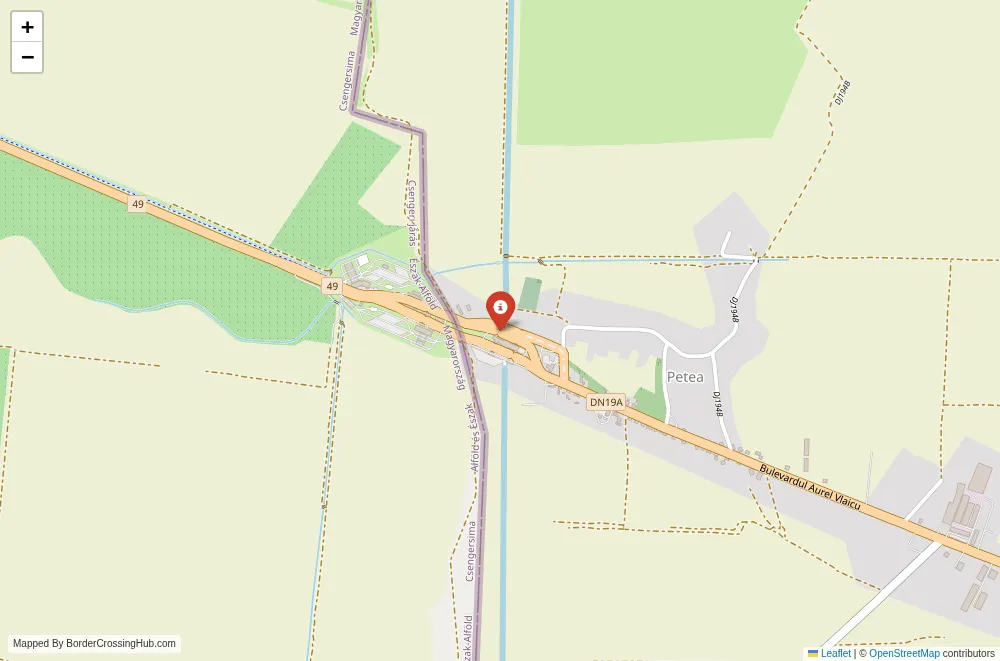
Approximate Border Location
Wait Times
Cars 0-20m; peaks 30-150m holiday traffic
Just crossed? Tap to report:
Operating Hours
Open 24 hrs (12:00 AM-11:59 PM)
Crossing Types
Cars,buses,trucks; main EU corridor
Border Type
Land crossing via road (E81)
Peak Times
Mon-Fri 02:00-07:00 PM; holidays
Daily Crossings
12,000-45,000/day
Currency Exchange
HUF; RON at border/near Satu Mare; ATMs
Safety Information
Congestion at times; follow lane control
Languages Spoken
Hungarian/Romanian
Accessibility Features
Accessible facilities vary by post
About Pocsaj & Roșiori
Monthly Update (March 2026):
As of 03/2026, the Pocsaj & Roșiori Border Crossing remains calm with light local traffic. Vehicles pass along the small rural road without much buildup. Afternoons bring a few extra drivers returning from nearby markets. Seasonal farm work can occasionally add a few more vehicles.
No Cell Service at the Border? No Problem.
Don’t get caught scrambling for paperwork when you lose signal. Download the complete Europe Transit Guide directly to your device and access every critical detail, fast-track strategy, and border rule – 100% offline.
The Pocsaj-Roșiori crossing provides a straightforward rural road connection between eastern Hungary and northwestern Romania, linking the town of Pocsaj in Hajdú-Bihar county to the village of Roșiori (also known as Biharfélegyháza or Roșiori in Bihor county).
Alternative Names
You will find it listed as Pocsaj-Roșiori, Pocsaj-Biharfélegyháza (Roșiori), Pocsaj–Rosiori /Biharfélegyháza, or simply the Pocsaj border point. Roșiori refers to the Romanian side, with Biharfélegyháza as an alternative Hungarian name for the locality.
Location and Connections
This point sits along local roads in the flat plains near the Berettyó River area. From Hungarian centers like Debrecen or Berettyóújfalu, route 47 leads toward Pocsaj in about 45-90 minutes through agricultural countryside. On the Romanian side, Roșiori connects to nearby villages and onward to Oradea (roughly 45-60 minutes) or further to Cluj-Napoca via DN19 or E60. It’s a secondary option compared to major crossings like Nagykereki-Borș or Csanádpalota-Nădlac, but useful for regional travel in Bihar/Bihor areas.
Historical Background
The border traces to post-World War I treaties dividing historic regions like Partium and Bihar. This crossing remained limited or temporary for years, with road improvements funded by EU cross-border programs (e.g., Hungary-Romania 2007-2013 initiatives) that upgraded infrastructure from Pocsaj to Roșiori. It operated occasionally or on weekends pre-2017, then gained more regular status. A symbolic opening ceremony in early 2025 marked Romania’s full Schengen accession, celebrating easier ties after decades of separation for local communities.
Geopolitical and Economic Role
It facilitates local passenger movement in farming communities with strong Hungarian-Romanian ties. Passenger cars dominate, with no buses or freight typically allowed at this minor point. It supports family visits, shopping trips to markets in Oradea or Debrecen, and everyday errands. Romania’s Schengen entry from January 1, 2025, removed routine checks, though Hungary introduced temporary entry controls to safeguard Schengen security. Broader agreements expanded total crossings from 12 to 22, cutting average distances and enhancing regional exchange.
Operating Hours and Current Status
The crossing operates 24 hours a day, seven days a week, as part of designated points post-2025 Schengen changes. This aligns with official listings for allowed entries, including spot verifications. No seasonal reductions apply, but confirm via police.hu (Hungarian police), politiadefrontiera.ro (Romanian Border Police), or apps like BorderWatcher for any short-term adjustments due to events or maintenance.
Visa Requirements for Foreign Visitors
Both countries are EU and Schengen members (Romania fully since January 2025). EU/EEA/Swiss citizens cross freely with ID. Third-country nationalities (US, Canada, Australia, etc.) enjoy visa-free short stays up to 90 days in 180 under Schengen rules. Carry your passport; random spot checks or EES biometric registration may occur. No visa-on-arrival applies for eligible travelers here.
Crossing Procedures Step by Step
From Hungary (Pocsaj side), approach for potential Hungarian entry checks (often spot-based now): present passport and vehicle documents; officers may ask about your trip. Proceed through the short zone to Romania (Roșiori) for minimal or no routine processing due to Schengen openness. You stay in your vehicle; the whole thing typically takes 5-20 minutes with low traffic, longer if spot inspections happen.
Wait Times and Peak Periods
This low-volume crossing sees minimal waits most days, often none or under 15 minutes. Slight increases can occur during weekends, holidays, or local events like harvests, but it avoids major backups at highway points. Driver reports via apps show consistently quick passages.
Transportation Options After Crossing
Private cars provide the main way; no public buses cross regularly here. From Roșiori, rural roads lead to Oradea for bus/train connections onward. In Hungary, Pocsaj links back to Debrecen or Berettyóújfalu. Taxis in nearby towns work but add cost in rural areas.
Road Conditions and Scenery
Local roads (improved via EU projects) offer decent pavement through open agricultural landscapes: vast fields of crops, sunflowers in season, small farms, and flat plains. Driving remains easy and direct, with occasional slow tractors or farm vehicles.
Weather and Seasonal Impacts
Summers bring heat and dry conditions; winters carry fog, frost, or light snow in the plains. Fog can reduce visibility, but roads clear fast with no regular seasonal closures.
Nearby Attractions
Pocsaj has a small-town atmosphere with local markets. Roșiori offers quiet rural Romanian life. Nearby Oradea draws people with thermal baths, historic architecture, and museums; Debrecen features Great Forest Park and cultural sites. The region suits relaxed exploration of border heritage.
Practical Travel Tips
Cross anytime with 24/7 access, but daytime helps avoid potential fog. Carry euros, forints, or lei for minor needs. Keep documents handy for possible spot checks. Use border apps for updates; fuel up where prices suit you.
Common Scams and Warnings
This quiet point has few reported issues. Avoid rare unofficial money changers near the border for unfavorable rates. Ignore unsolicited assistance offers. Travelers describe straightforward, low-hassle passages when eligible.
Cultural and Economic Notes
The area reflects blended Hungarian-Romanian rural traditions in agriculture and community life, with bilingual elements and shared markets supporting local economies. The crossing enhances family and cultural connections post-Schengen.
Final Planning Advice
Choose Pocsaj-Roșiori for an easy, uncrowded rural route in the eastern borderlands, benefiting from Schengen fluidity. Verify any spot control details officially, prepare your ID, and enjoy the peaceful plains linking these neighboring communities. Safe travels.
No reviews yet.