
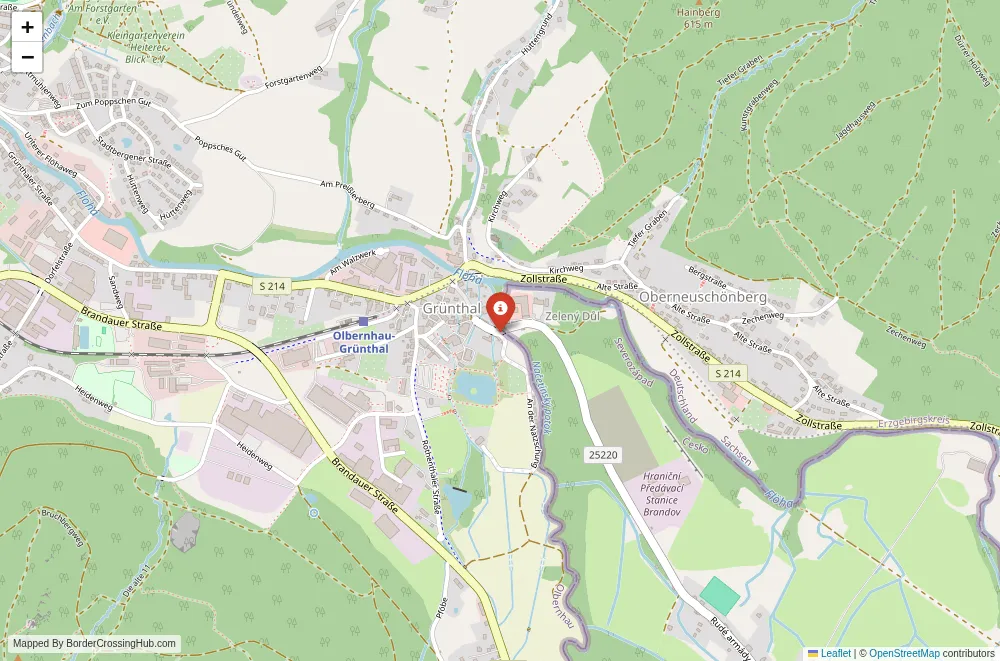
Approximate Border Location
Border Countries
Border Cities
- 🇩🇪Olbernhau
- 🇨🇿Brandov
Wait Times
Cars 0-10m; peaks 15-60m weekends
Just crossed? Tap to report:
Operating Hours
Open 24 hrs (12:00 AM-11:59 PM)
Crossing Types
Ped,cars,bikes; river crossing
Border Type
Land crossing via local road
Peak Times
10:00 AM-05:00 PM; summer
Daily Crossings
1,000-5,000/day
Currency Exchange
EUR; CZK in Most/Olbernhau; ATMs
Safety Information
Narrow streets; occasional checks
Languages Spoken
German/Czech
Accessibility Features
Step-free sidewalks common; some ramps
About Philippsreut & Strážný
Monthly Update (March 2026):
As of 03/2026, the Philippsreut & Strážný Border Crossing moves steadily and feels mostly stable. The road carries a mix of local drivers and occasional trucks heading toward the main highway, which can slow things slightly on the Czech side during busy hours. Early mornings tend to move quickly. Freight traffic and weekend travel sometimes stretch the line a little.
No Cell Service at the Border? No Problem.
Don’t get caught scrambling for paperwork when you lose signal. Download the complete Europe Transit Guide directly to your device and access every critical detail, fast-track strategy, and border rule – 100% offline.
The Philippsreut-Strážný crossing sits tucked into the wooded hills where Bavaria meets South Bohemia, offering a low-key road link that draws nature seekers more than mass transit crowds.
Location and Connections
You arrive at this point along the Bundesstraße 12 in Germany, which turns into Silnice I/4 in the Czech Republic. Philippsreut sits in the Bavarian Forest district, roughly 30 to 40 minutes drive southeast from Passau. Strážný lies a few kilometers into Czech territory, about 20 to 30 minutes from Vimperk or around 2.5 to 3 hours from Prague via decent highways. Cars, motorcycles, and occasional buses use it most often; it’s a favorite for those exploring the paired national parks on either side rather than major city routes.
Alternative Names
Travelers know it as the Philippsreut–Strážný border crossing, Strážný–Philippsreut, or the B12/I/4 crossing.
Historical Background
Trade paths crossed this forested area for centuries, linking Passau merchants to Prague markets. After 1945, the border sealed shut from 1946 until partial reopening in September 1971 amid Cold War restrictions. The Iron Curtain era isolated villages, with some Czech settlements near here forcibly emptied. Post-1989 shifts and full Schengen integration in 2007 removed permanent barriers. Today the spot shows little trace of old checkpoints beyond a simple sign and occasional police presence.
Geopolitical Context
Schengen rules since late 2007 mean no regular controls for most travelers. Germany has maintained temporary checks on all land borders, including with Czechia, due to migration concerns. As of February 2026, these extend through at least 15 March 2026 across nine crossings. Random stops occur for document checks, especially on roads like B12/I/4. No full closures apply here, but spot inspections happen. Verify via official German or Czech police sites before travel, since extensions or adjustments arise from bilateral talks.
Practical Crossing Procedures
You drive through without stopping under normal Schengen conditions. A border marker signals the line, and you keep going. With current temporary measures, German Bundespolizei may pull you over shortly after entry for ID verification, travel purpose, or funds proof. EU citizens show passports or national ID cards. Non-EU nationals need valid passports, visas if required, and proof of onward travel or accommodation. Carry vehicle documents, insurance, and Czech vignette if heading further on motorways. Cyclists and pedestrians cross too, though traffic stays light and no dedicated paths exist right at the line.
Typical Wait Times
Normally you cross in moments with no delay. Temporary checks add variable time: most pass quickly, but random stops can take 10 to 45 minutes depending on questions or queue. Busy weekends or holidays see slightly more activity from park visitors, though nothing extreme. Early mornings or off-peak hours reduce chances of stops.
Operating Hours
The road remains open around the clock, 24/7 year-round. No fixed hours exist since Schengen removed them. Snow, fog, or rare roadwork might slow access in winter, but the crossing point stays accessible.
Transportation Options and Road Conditions
Drive your own car for flexibility; regional buses connect Philippsreut from Passau or Freyung, while Czech buses link Strážný to Vimperk or nearby towns. The B12/I/4 offers a solid two-lane road with gentle hills, sharp curves in places, and steady climbs through thick forest. Pavement holds up well, but watch for wildlife crossings, cyclists, or tractors. Views feature dense pines, clearings, and small streams along the way.
Scams and Warnings
Reports of scams stay minimal at this quiet spot compared to larger crossings. No common touts, fake officials, or overpriced “help” services appear in traveler accounts. Petty issues like poor exchange rates at nearby shops occur rarely. Keep an eye on belongings in parked cars during hikes. Aggressive overtaking happens on winding sections, so drive carefully. The area feels safe overall for cautious visitors.
Nearby Attractions
Strážný hosts a modest ski area with short slopes and groomed cross-country tracks in winter. Šumava National Park unfolds nearby with trails around glacial lakes, peat bogs, and viewpoints. On the German side, Bavarian Forest National Park offers lynx spotting, bear exhibits at centers like Lusen, and extensive hiking networks. Cross-border paths connect Finsterau to Czech trails. The region appeals to walkers, bikers, and those seeking quiet forests over urban sites.
Seasonal Variations and Weather Impacts
Winter snow from December through March demands winter tires or chains; roads ice easily in shaded valleys. Summer brings hikers and families, with occasional traffic from weekend outings. Autumn colors the woods vividly with lighter crowds. Rain can slick surfaces or drop branches, but full closures for weather remain unusual.
Travel Tips and Preparation
Always carry passport or ID; temporary checks make it essential. Purchase Czech e-vignette online beforehand if using highways beyond I/4. Fuel, groceries, tobacco, and alcohol cost less on the Czech side; shops cluster near Strážný. Download offline maps for spotty signal in deep forest. Pack layers for mountain weather changes. Stick to marked trails in parks to avoid fines. Check police apps or sites for real-time border updates.
Cultural and Economic Significance
Cross-border shopping drives local trade: Germans fill up tanks and stock up on Czech goods, while Czech visitors head to Bavarian markets or parks. Tourism in the twin national parks fosters joint conservation efforts and shared events. Communities maintain ties through environmental projects and cultural exchanges rooted in pre-war connections.
Final Notes for Your Trip
Confirm the latest on temporary checks from official sources right before departure. With prep for possible ID stops and weather, you handle this peaceful crossing and dive straight into forest trails. Enjoy the quiet ride. Safe travels.
No reviews yet.