
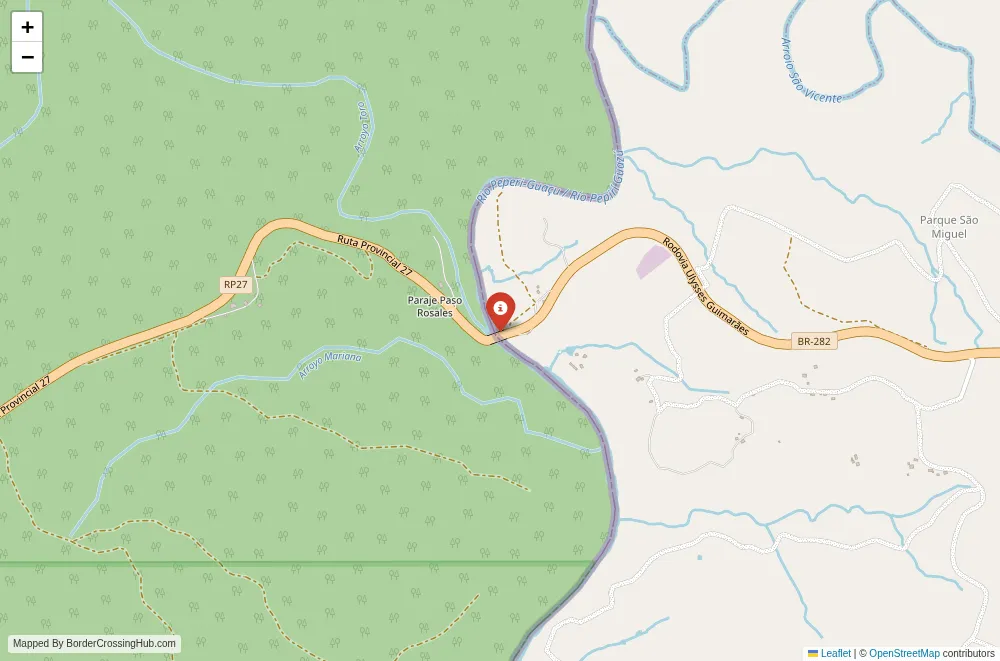
Approximate Border Location
Wait Times
Low most days 5-25m; peaks 30-90m
Just crossed? Tap to report:
Operating Hours
Seasonal post; usually 08:00 AM-06:00 PM
Crossing Types
Ped,cars,motos; no heavy trucks typical
Border Type
Land crossing via road bridge
Peak Times
07:00-10:00 AM; 04:00-06:00 PM; Jan-Feb
Daily Crossings
100-500/day
Currency Exchange
AR$; R$ in towns; few exchange points
Safety Information
Remote area; limited services; fuel up
Languages Spoken
Portuguese, Spanish, English
Accessibility Features
Basic access; limited ramps/marked bays
About Pepirí Guazú & São Miguel
The Pepirí Guazú-São Miguel border crossing spans the Pepirí Guazú River in northern Misiones province, Argentina, linking the area near San Pedro to the Brazilian side near São Miguel do Oeste and Paraíso in Santa Catarina state.
Location and Connections
You approach this crossing from San Pedro, Argentina, via Ruta Provincial 27, which connects to Ruta Nacional 14 for broader access from places like Posadas. On the Brazilian side, the bridge ties into BR-282, leading toward São Miguel do Oeste and eventually other parts of western Santa Catarina. The international bridge, known as Puente Internacional Comandante Rosales or Puente Internacional Pepirí Guazú, measures about 102 meters and carries both vehicles and pedestrians across the river. This route offers a direct land path for those heading south in Brazil, especially useful for reaching coastal areas without detouring through larger frontiers.
Historical Background
The Pepirí Guazú River has long marked the Argentina-Brazil boundary, shaped by 19th-century treaties that settled colonial disputes. The crossing itself developed in a rural zone focused on agriculture, timber, and small-scale trade. A bridge replaced earlier ferry options, improving connectivity in this less-populated stretch of the frontier. It gained seasonal relevance for tourism in recent decades, particularly as an alternative route to Brazilian beaches during summer months. Customs and immigration setups have evolved, with periodic adjustments to handle varying traffic levels.
Current Status and Operating Hours
The crossing remains open year-round on the Argentine side, but Brazilian immigration operates seasonally for tourism. As of early 2026, Brazilian controls run daily from 7:00 AM to 7:00 PM during the summer period, typically January through mid-March, to accommodate beach-bound travelers. Outside this window, it functions mainly for local vecinal traffic with limited or no full tourist processing on the Brazilian end. Argentine customs and migration maintain presence throughout the year. River conditions rarely disrupt this bridge crossing, unlike ferry-dependent spots. Always confirm the exact schedule via official Argentine migration or Brazilian federal police sources shortly before your trip, as seasonal extensions or changes occur.
Visa Requirements for Foreign Visitors
Citizens of many countries enter both Argentina and Brazil visa-free for tourism, usually up to 90 days per side. Your passport needs validity for at least six months beyond entry. No visa on arrival exists here; if your nationality requires a visa for Brazil, secure it beforehand at a consulate, since this remote post lacks such services. Both countries stamp passports at their respective controls. Have proof of onward travel and funds available, though inspections tend to stay basic for tourists.
Crossing Procedures and Wait Times
Procedures stay simple given the low volume. On the Argentine side, complete exit formalities at the San Pedro-area post before crossing the bridge. Brazilian entry follows on the far shore, with immigration, customs, and sometimes fitosanitary checks. The reverse direction works similarly. Queues rarely build beyond 15 to 45 minutes, even during peak summer, since traffic consists mostly of locals and occasional tourists. Vehicles cross directly on the bridge; pedestrians use the same path. Fill out any required arrival cards in advance if prompted.
Transportation Options and Road Conditions
Buses from San Pedro or Posadas reach near the crossing, though you might need a short taxi or remise for the final stretch. Private cars handle the route easily on paved sections. After the bridge, BR-282 provides paved access to nearby Brazilian towns. Roads wind through subtropical forest, rolling hills, and agricultural fields with yerba mate and soy plantations. Some connecting routes in Misiones include gravel portions, so check for rain impacts if driving. Public transport remains sparse compared to Iguazu-area crossings.
Scams and Warnings
This quiet rural crossing sees minimal tourist scams, but opportunistic overcharging can happen with informal transport near the posts. Avoid unofficial helpers promising faster processing. Keep documents secure in crowds during summer peaks. The main concern involves seasonal limitations: attempting to cross outside Brazilian tourist hours might restrict you to local zones or require backtracking. Petty theft remains low-risk, but isolation means fewer immediate services if issues arise.
Nearby Attractions and Practical Tips
San Pedro offers a base for exploring Misiones countryside, including nearby nature reserves and yerba mate farms. On the Brazilian side, Paraíso provides a quiet entry point toward Santa Catarina’s interior or coastal drives. Carry Argentine pesos, Brazilian reais, and some USD for fees or small purchases. Insect repellent proves essential in the humid, forested area. Summer brings heat and occasional heavy rains that can slow rural roads, while drier months offer more comfortable conditions. Pack water and snacks, as facilities stay basic.
Cultural and Economic Role
The crossing supports local exchanges in agriculture, trade, and family visits across the river. It links Misiones producers to Santa Catarina markets and serves as a shortcut for Argentine tourists heading to southern Brazilian beaches, easing pressure on busier routes. Regional ties strengthen through daily commutes and seasonal tourism flows.
Final Crossing Advice
Verify seasonal Brazilian hours and overall status through government sites like argentina.gob.ar or Brazilian federal police pages before setting out. Arrive within operating times with passport and cash ready, and build in extra time for any checks. This understated bridge provides a peaceful, direct link between Argentina and Brazil’s southern reaches, ideal for those avoiding crowds and seeking rural border experiences.
No reviews yet.