
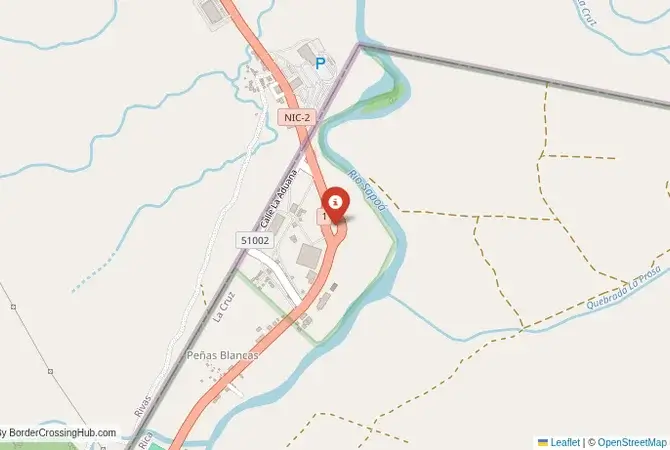
Approximate Border Location
Border Countries
- 🇳🇮Nicaragua
- 🇨🇷Costa Rica
Border Cities
- 🇳🇮Peñas Blancas
- 🇨🇷Peñas Blancas
Wait Times
30–180 min peds/vehicles
Just crossed? Tap to report:
Operating Hours
Open 24 hours
Crossing Types
Pedestrians, vehicles, commercial
Border Type
Land crossing via road
Peak Times
6:00–9:00 AM, weekends
Daily Crossings
~12,000–18,000 travelers
Currency Exchange
Available near Peñas Blancas (NIO, CRC)
Safety Information
Busy; watch congestion
Languages Spoken
Spanish
Accessibility Features
Ramps, elevators
About Peñas Blancas & Peñas Blancas
Monthly Update (February 2026):
Peñas Blancas & Peñas Blancas Border Crossing ticks along, with occasional northbound lines stacking for inspections. February 2026 is mostly stable, though tourist arrivals and weekend market traffic can nudge waits. Pedestrian lanes generally clear faster.
A Lively Junction on the Pan-American Highway
Caution: The Peñas Blancas border crossing, also known as Peñas Blancas Gate, is known for scams and aggressive touts. Stay vigilant, steer clear of unofficial helpers, and check official sources to ensure a safe crossing. Linking Nicaragua’s Peñas Blancas with Costa Rica’s Peñas Blancas, this crossing anchors the Pan-American Highway, connecting you to Nicaragua’s volcanic landscapes or Costa Rica’s lush rainforests in a vibrant, busy setting.
Historical and Geopolitical Context
Since the Pan-American Highway’s expansion in the 1960s, Peñas Blancas has been a vital trade route, growing busier with Costa Rica’s eco-tourism surge and Nicaragua’s post-1980s recovery. It handles thousands of travelers and tons of cargo daily, making it Central America’s busiest land crossing. Disputes over the nearby San Juan River have occasionally led to tensions. Nicaragua’s CA-4 visa agreement (with Honduras, Guatemala, and El Salvador) contrasts with Costa Rica’s stricter entry rules, complicating regional travel. A planned alternative bridge crossing aims to reduce congestion.
Crossing Procedures and Wait Times
Crossing from Costa Rica to Nicaragua requires paying an $8-10 exit tax at a designated kiosk, followed by an exit stamp at immigration. Walk 100 meters across the border to Nicaragua’s immigration office, where you’ll pay a $12-13 entry fee (tourist card and processing/municipal taxes). From Nicaragua to Costa Rica, pay a small exit fee, and have proof of onward travel (e.g., a bus ticket) ready, as Costa Rican officials often check. The border is open from 6:00 AM to 10:00 PM (8:00 PM Sundays). Wait times range from 20 minutes early morning to 2-3 hours during peak midday or holiday periods, with truck traffic often causing delays.
Routes and Road Conditions
From Liberia, Costa Rica, buses to Peñas Blancas take 1.5-2 hours ($3), passing rolling hills and cattle ranches. From Rivas, Nicaragua, a 30-minute bus ride ($1) offers views of volcanic peaks. The Pan-American Highway is well-paved but often clogged with trucks, so drive cautiously if renting a car. Nicaragua’s side feels gritty, with vendors and stray dogs, while Costa Rica’s modern immigration hall is cleaner. The scenery, with glimpses of Lake Nicaragua and tropical forests, adds charm to the journey.
Practical Tips for Safe Crossing
Scams are common; touts may demand $10 for “assistance” or inflate bus fares (e.g., $10 instead of $1 to Rivas). Pay fees only at official booths and use US dollars to avoid unfavorable exchange rates. ATMs are unreliable at the border, so bring cash (dollars or colones). Theft is a risk on crowded buses to Rivas, so keep bags secure. Costa Rica requires proof of onward travel, like a $30 Managua bus ticket. Free restrooms on the Costa Rican side are convenient, but Nicaragua’s facilities may charge $0.50. Drones are illegal in Nicaragua and may be seized, so leave them behind.
Cultural and Economic Dynamics
Peñas Blancas thrives with commerce, from Nicaraguan vendors selling sandals to Costa Rican money changers offering quick exchanges. Nicaragua’s economic challenges contrast with Costa Rica’s prosperity, visible in the border’s infrastructure. Nicaragua’s basic facilities versus Costa Rica’s modern halls. The CA-4 visa grants 90 days across four countries, while Costa Rica offers 90-180 days separately. The crossing fuels tourism, with Nicaragua’s budget-friendly beaches and Costa Rica’s eco-lodges drawing diverse travelers. Local markets sell mangoes, crafts, and coffee, reflecting the region’s vibrancy.
Nearby Attractions to Visit
In Nicaragua, Rivas, 30 minutes away, connects to San Juan del Sur’s beaches or Ometepe’s volcanoes via a 1-hour ferry. In Costa Rica, Liberia (1.5 hours) offers colonial architecture, while Guanacaste’s beaches, like Tamarindo (2 hours), are perfect for surfing. The San Juan River, an alternative boat crossing, provides a scenic route but is less common. These spots offer adventure or relaxation, complementing the border’s utilitarian feel.
Seasonal and Weather Impacts
The dry season (December to April) brings 28°C temperatures and quicker crossings, ideal for travel. The rainy season (May to November) causes muddy roads and delays, especially with truck backups. Holidays like Christmas or Semana Santa increase congestion, so aim for early weekday crossings. Check for disruptions due to holiday crowds or construction, which can extend lines.
Planning Your Border Experience
Arrive by 6:00 AM to beat crowds and minimize waits. Carry US dollars, a valid passport, and proof of onward travel for Costa Rica. Avoid evening crossings near closing time to prevent being stranded. From Nicaragua, buses to Managua or Ometepe are frequent; negotiate fares to avoid overcharges. In Costa Rica, book transport to Liberia or San José in advance for convenience. Stay alert, soak in the cultural contrast, and consider a side trip to Ometepe’s volcanoes or Guanacaste’s beaches for a memorable Central American journey.
No reviews yet.