
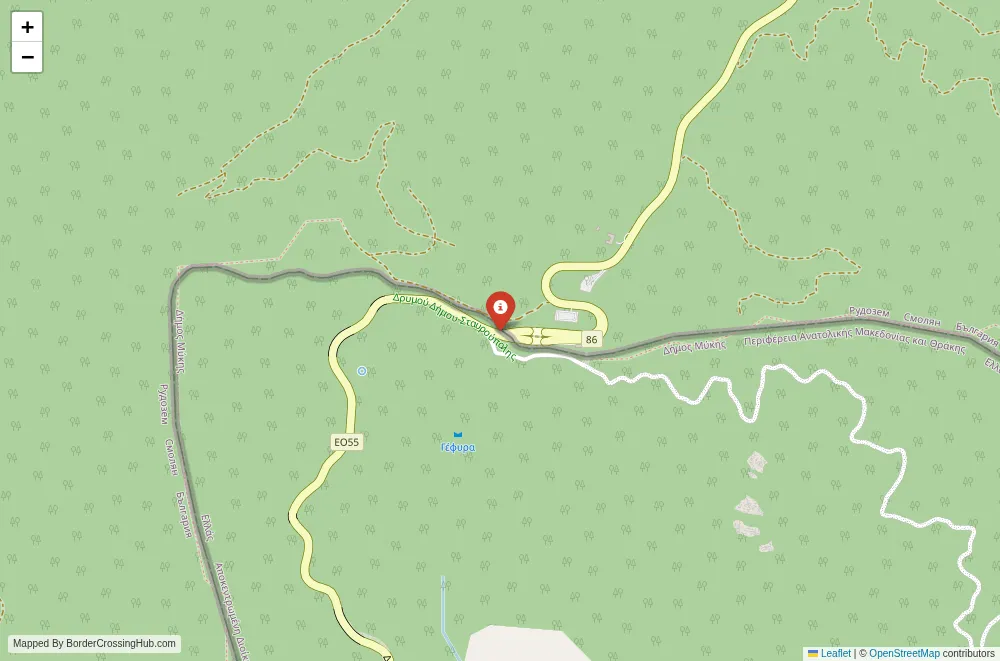
Approximate Border Location
Wait Times
Cars 0-15m; peaks 20-90m summer
Just crossed? Tap to report:
Operating Hours
Open 24 hrs (12:00 AM-11:59 PM)
Crossing Types
Ped,cars,buses; border controls
Border Type
Land crossing via mountain road
Peak Times
10:00 AM-04:00 PM; weekends
Daily Crossings
1,000-6,000/day
Currency Exchange
BGN; EUR in Smolyan; EUR in GR; ATMs
Safety Information
Mountain roads; weather can slow traffic
Languages Spoken
Bulgarian/Greek
Accessibility Features
Paved lanes; step-free varies
About Pehlivanköy & Svilengrad
Monthly Update (March 2026):
As of 03/2026, the Pehlivanköy & Svilengrad Border Crossing sees steady rail-related activity nearby and moderate road traffic. Cars and trucks pass through the checkpoint regularly, with the Bulgarian side sometimes slowing during inspections. Early mornings tend to move faster. Freight movement and regional trade shape the pace.
No Cell Service at the Border? No Problem.
Don’t get caught scrambling for paperwork when you lose signal. Download the complete Asia Transit Guide directly to your device and access every critical detail, fast-track strategy, and border rule – 100% offline.
The Kapitan Andreevo-Kapıkule border crossing stands as the primary land link between Bulgaria and Turkey, handling massive volumes of trade, trucks, and travelers along the E80 corridor near Svilengrad and Edirne.
Current Status and Safety Note
This crossing operates normally as of early 2026, with no major closures reported recently. It remains open 24 hours for vehicles and pedestrians when conditions allow. The area sees heavy truck traffic and occasional queues, but no widespread safety concerns for standard travel exist beyond typical border crowds. Always verify the latest from official sources like the Bulgarian Ministry of Interior, Turkish Ministry of Interior, or embassy advisories, especially during summer peaks or any regional events. Minor delays from customs checks or weather happen, but the crossing stays active.
Alternative Names
Travelers call it Kapıkule (Turkish side), Kapitan Andreevo (Bulgarian side), or simply the Edirne-Svilengrad border. The rail component ties into the Pehlivanköy–Svilengrad line, sometimes referenced in connection with nearby Pehlivanköy station.
Location and Connections
The checkpoint sits southeast of Svilengrad in Bulgaria’s Haskovo Province and northwest of Edirne in Turkey’s Edirne Province. It follows the Maritsa River valley, with the main road on the D.100/E80 in Turkey and A4/E80 in Bulgaria. This route connects Istanbul (about 250 km west) to Sofia (around 300 km northwest), making it the fastest overland path between Turkey’s economic hub and Bulgaria’s capital, plus onward to Central Europe. The rail line from Pehlivanköy in Turkey crosses here to Svilengrad, supporting freight and occasional passenger services.
Historical Background
The border dates to post-Ottoman treaties after the Balkan Wars and World War I, with the current line fixed by agreements in the 1920s and refined over decades. The Kapıkule crossing opened formally on September 4, 1953. In 1971, Turkey built the Pehlivanköy–Svilengrad railway (Edirne cut-off) to bypass Greek territory after border shifts, rerouting trains through this point for direct Istanbul-Sofia links. The area has long served as a trade conduit between Europe and Asia, with truck volumes surging after EU-Turkey customs union developments. Geopolitically, it marks the EU’s external frontier, handling flows from the Middle East and beyond, and has seen upgrades to manage growing cargo.
Practical Crossing Procedures
You walk or drive across. From the Turkish side (Kapıkule), clear Turkish passport control first for exit stamps, then proceed to Bulgarian entry at Kapitan Andreevo. Most nationalities get visa-free entry to Turkey for 90 days (EU/Schengen citizens often longer; check your passport rules). Bulgaria requires no visa for many (EU citizens enter freely; others may need e-visa or check Schengen rules). Bring passport photos, cash for fees if any, and fill forms on-site or online. Vehicle owners need green card insurance, registration, and sometimes a vignette for Bulgarian roads (buyable nearby). Customs checks vehicles for goods declarations; declare anything over limits to avoid fines. The process includes separate lanes for cars, buses, and trucks.
Wait Times and Operating Hours
The crossing runs 24/7 year-round. Passenger cars often clear in 30-60 minutes outside peaks, but trucks face longer delays due to inspections. Summer (June-September) brings heavy congestion from holiday traffic and trade, with waits stretching to hours or even a full day for trucks. Early mornings or late nights move quicker for personal vehicles. Recent reports note efforts to add lanes and streamline, plus a planned “North” extension to ease pressure.
Transportation Options
Buses from Istanbul to Sofia or Plovdiv stop here (tickets around 20-40 EUR). Minibuses or shared taxis run from Edirne to the border. On the Bulgarian side, buses continue to Svilengrad, Harmanli, or Haskovo. Trains use the Istanbul-Sofia line via this rail crossing, though passenger services vary (check schedules; freight dominates). Driving the E80 offers good highways on both sides, with rest areas and fuel stops. Road conditions stay solid, though rain can slow things in the Maritsa valley.
Scams and Warnings
Touts at both ends push “help” with forms, insurance, or currency exchange at inflated rates. Fake officials demand extra payments for stamps or inspections. Money changers near the gates give poor deals; use ATMs in Edirne or Svilengrad instead. Some drivers report overcharges for taxis post-crossing. Ignore unofficial helpers, stick to marked booths, and keep documents in hand. Women traveling solo mention occasional persistent approaches; stay firm and head straight to official areas. Report issues to border police if needed.
Nearby Attractions
Edirne on the Turkish side features Ottoman architecture like the Selimiye Mosque and historic bridges. Svilengrad in Bulgaria offers a quiet town with a tripoint view (Bulgaria-Greece-Turkey meet nearby) and the Maritsa River. Further into Bulgaria, Plovdiv draws with its Roman theater and old town. In Turkey, Istanbul provides endless sights, while the border region includes Thracian tombs and fortresses like Mezek near Svilengrad.
Seasonal Variations and Weather Impacts
Summer heat and holiday rushes create the longest lines; aim for off-peak if possible. Winter snow rarely closes it but slows trucks. Rain in spring/autumn turns roads slippery near the river. Truck bans during extreme heat (over 35°C) in Bulgaria sometimes apply, shifting delays.
Cultural and Economic Significance
This point handles Europe’s highest truck volumes between the EU and Turkey, moving goods worth billions annually. It supports migration, family visits, and commerce in the Thrace region. Markets near the gates sell local produce, while the rail line eases container traffic to Asia.
Planning Recommendations
Check real-time queues via Turkish customs sites or apps. Carry euros or local currency, insurance docs, and printed e-visas if required. Cross early or late to skip crowds. Buy Bulgarian vignette online or at the border. Have snacks and water for waits. If driving a rental, confirm cross-border permission.
Final Thoughts on This Crossing
Kapitan Andreevo-Kapıkule delivers a high-volume, no-nonsense experience typical of major EU-external borders. With solid prep and timing, you handle the paperwork and crowds without major hassle. Keep tabs on updates and cross prepared for the real thing. Safe journeys across.
No reviews yet.