
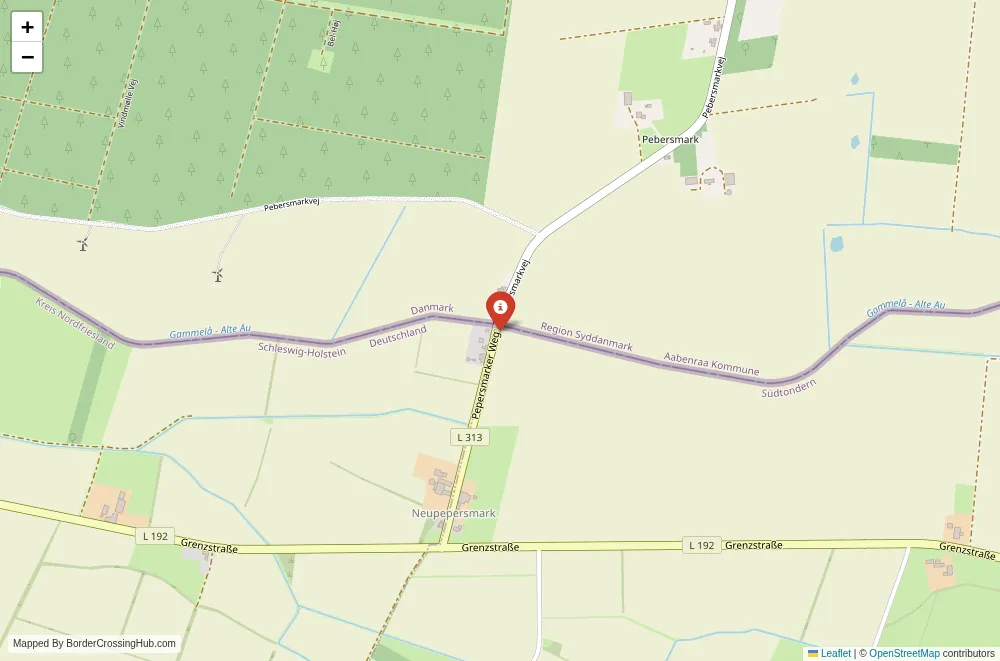
Approximate Border Location
Wait Times
Cars 0-10m; peaks 15-60m checks
Just crossed? Tap to report:
Operating Hours
Open 24 hrs (12:00 AM-11:59 PM)
Crossing Types
Ped,cars,bikes; rural crossing
Border Type
Land crossing via rural road
Peak Times
10:00 AM-04:00 PM; weekends
Daily Crossings
500-2,500/day
Currency Exchange
EUR; DKK in Aabenraa/Flensburg; ATMs
Safety Information
Rural roads; watch farm traffic
Languages Spoken
German/Danish
Accessibility Features
Uneven shoulders; limited marked bays
About Pebersmark & Neu‑Pepersmark
The Pebersmark-Neu-Pepersmark crossing sits on a quiet rural road in the flat farmland of southern Jutland, where Denmark’s Pebersmark near Padborg links to Germany’s Neu-Pepersmark near Bramstedtlund, serving as one of the smaller approved local vehicle crossings along the 68-kilometer Denmark-Germany land frontier.
Location and Connections
You reach this point along a minor secondary road (Danish Pebersmarkvej or German Pepersmarker Weg) where the Danish hamlet of Pebersmark adjoins the German settlement of Neu-Pepersmark. The crossing lies east of the E45 motorway’s Padborg/Frøslev hub, about 5-10 kilometers away. From Padborg or Kruså in Denmark, Pebersmark is a short drive or bike ride north. On the German side, Neu-Pepersmark connects quickly to Harrislee or Flensburg (about 10-15 minutes). The route sees mostly local traffic, farmers, cyclists, and pedestrians; no heavy trucks or regular buses use it. The area features open fields, small woods, scattered farms, and typical borderland scenery of flat farmland with occasional ditches and hedges marking the line. The road is narrow but paved, with gentle curves and very light traffic, making it popular for cyclists on longer border trails or locals avoiding the motorway.
Alternative Names
It appears as the Pebersmark border crossing, Pebersmark-Neu-Pepersmark grænseovergang, Neupepersmark crossing, or Pebersmarkvej border point. In some local or older references, it ties to the nearby Rens/Renz area on the Danish side or Bramstedtlund in Germany.
Historical Background
The border resulted from the 1920 Schleswig plebiscites after World War I, when northern Schleswig voted to join Denmark while southern parts remained German. Pebersmark sat right on the new line, with the road serving as a local crossing before the E45 motorway took most traffic. Customs formalities operated until Schengen in 2001. The crossing reflects the region’s mixed Danish-German heritage, with bilingual signs and cross-border ties persisting. In 2020 during COVID restrictions, it was temporarily closed then reopened as the fifth crossing for tourists, highlighting its role as a low-volume but important local point. The area’s farming communities have long shared traditions across the line, with the border jogs creating small curiosities like nearby pockets.
Geopolitical Context
Schengen since 2001 normally allows free movement without routine checks for EU citizens and visa-exempt travelers. Denmark and Germany maintain temporary border controls due to migration, smuggling, security threats (including sabotage risks and organized crime). As of February 10, 2026, Denmark’s controls on its German border extend through May 11, 2026, while Germany’s land border checks (including with Denmark) run at least through March 15, 2026. Random spot inspections occur at approved crossings like Pebersmark, though this rural point sees lighter attention than the E45 motorway nearby. No permanent booths exist; controls are mobile or roadside, often involving a police vehicle at the marker.
Practical Crossing Procedures
You drive, walk, or cycle across the local road with a border marker or sign. No booths or systematic queues exist under normal Schengen flow. Temporary controls may lead to random police stops for passport/ID verification, travel questions, or vehicle checks. EU citizens show passport or national ID. Non-EU nationals need valid passports, visas/Schengen entry if required, and proofs like accommodation or funds. Carry vehicle insurance. Pedestrians and cyclists cross easily on the road or paths. No vignette or toll applies to this local road.
Typical Wait Times
Normal passage takes seconds to minutes. Random checks add variability: most clear quickly, but selected stops can cause 10 to 30 minute delays. Low traffic keeps waits minimal compared to the nearby E45 motorway, where queues can stretch much longer during holiday periods or heightened controls.
Operating Hours
The road operates 24/7 year-round. Schengen removed fixed hours. Winter snow or rare maintenance might slow access briefly, but the crossing stays open.
Transportation Options and Road Conditions
Drive the local rural road for flexibility; no regular public transport crosses here (nearest buses serve Padborg or Flensburg). The road offers decent pavement through farmland with gentle curves. Views feature open fields, small woods, and distant hills. Watch for local vehicles, cyclists, or farm equipment on quiet stretches. The surface is generally good but can have loose gravel or mud after rain in places.
Scams and Warnings
Scams remain uncommon at this small, rural crossing. No widespread touts or fake services reported. Border-area farms or shops occasionally sell goods informally; issues stay minor. Keep belongings secure during any police stops. The peaceful countryside setting feels low-risk for cautious visitors, though rural roads can be dark at night with limited lighting.
Nearby Attractions
Pebersmark highlights the rural border landscape with nearby Padborg/Frøslev offering the Frøslev Camp museum (WWII internment history). Harrislee/Flensburg adds quiet German border town life, with Flensburg’s harbor and old town. The area suits rural drives, border curiosities, or history exploration toward Jutland beaches or Danish islands. The nearby E45 motorway provides quick access to larger sites like the Sønderborg castle or the Flensborg Fjord.
Seasonal Variations and Weather Impacts
Winter snow December to March requires winter tires; roads ice in open areas. Summer brings clearer conditions and more local crossers. Autumn delivers foliage with lighter traffic. Rain slicks surfaces occasionally, but closures remain rare on this local route.
Travel Tips and Preparation
Carry passport or ID for possible spot checks. Shop or refuel in Denmark for savings. Offline maps help in rural signal gaps. Pack layers for weather changes. Check police sites or border apps for control status before departure. Follow marked paths on walks to avoid private land. If cycling, the road is quiet but watch for occasional farm vehicles.
Cultural and Economic Significance
Cross-border shopping and local movement sustain small businesses: Germans seek affordable Danish goods, supporting nearby areas. The route ties southern Jutland with northern Schleswig-Holstein through shared history and daily flows, with the region’s farming communities maintaining a mix of Danish and German influences in language, food, and traditions.
Before You Cross
Confirm temporary control details from official sources near your travel date. With readiness for occasional stops and basic rural prep, you manage this understated local crossing and continue into the border countryside. Safe travels.
No reviews yet.