
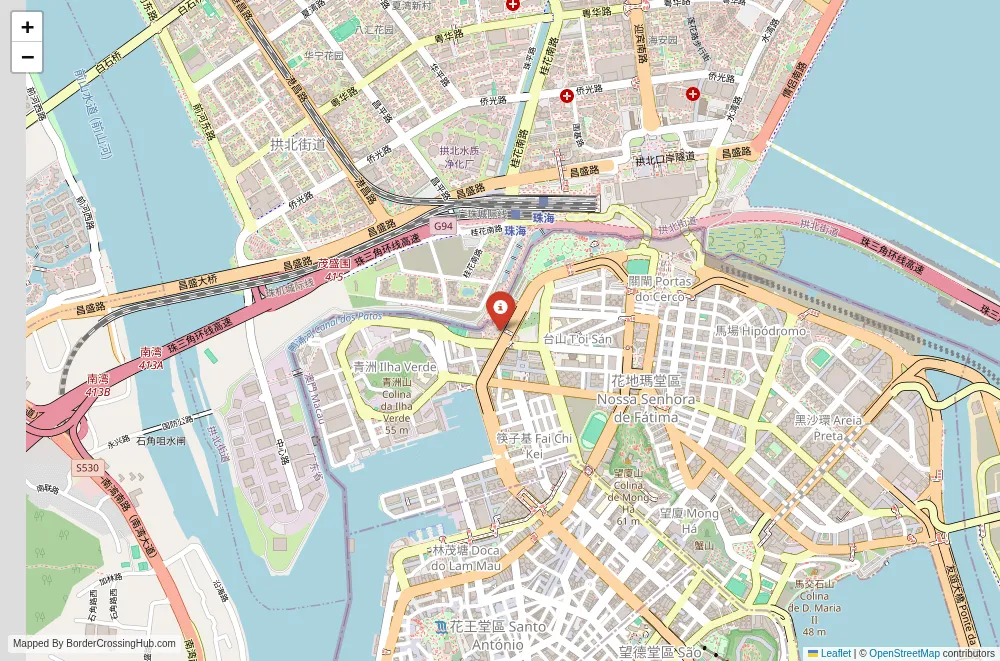
Approximate Border Location
Wait Times
Ped 10-30m; peaks 30-150m
Just crossed? Tap to report:
Operating Hours
06:00 AM-01:00 AM
Crossing Types
Ped; some buses; no private cars
Border Type
Land crossing via road+pedestrian
Peak Times
10:00 AM-02:00 PM; 06:00-10:00 PM
Daily Crossings
200,000-450,000/day
Currency Exchange
CNY; MOP/HKD at port; many ATMs
Safety Information
Very crowded; pickpocket risk in lines
Languages Spoken
Cantonese, Mandarin, Portuguese
Accessibility Features
Step-free halls; elevators
About Panemunė & Sovetsk
Monthly Update (March 2026):
As of 03/2026, the Panemunė & Sovetsk Border Crossing sees steady vehicle traffic across the bridge over the Neman River. Cars and trucks sometimes stack up on the Russian side during inspections. Midday tends to move a bit smoother. Trade runs and regional travel keep the crossing active.
No Cell Service at the Border? No Problem.
Don’t get caught scrambling for paperwork when you lose signal. Download the complete Europe Transit Guide directly to your device and access every critical detail, fast-track strategy, and border rule – 100% offline.
The Panemunė-Sovetsk border crossing serves as one of the few remaining operational land connections between Lithuania and the Russian exclave of Kaliningrad Oblast, linking the small Lithuanian town of Panemunė in Pagegiai Municipality directly to the Russian city of Sovetsk across the Neman River. You typically approach this point when traveling overland from Tauragė or Klaipėda in Lithuania toward Kaliningrad city or farther into the exclave, or when exploring the historic Memel region without relying on the busier Kybartai-Chernyshevskoye or Kudirkos Naumiestis-Sovetsk crossings farther south. Alternative names include the Panemunė Border Checkpoint (Lithuania side), Sovetsk Border Checkpoint (Russia side), or simply the Panemunė-Sovetsk crossing.
Location and Basic Connection
Panemunė lies on the left (northern) bank of the Neman River in western Lithuania, while Sovetsk occupies the right (southern) bank in Russia’s Kaliningrad Oblast. The crossing uses the Queen Louise Bridge (built 1907, reconstructed post-WWII), which carries a two-lane road and pedestrian sidewalk across the river. It connects Lithuania’s Route 141 (from Tauragė) to Russia’s A216 highway toward Kaliningrad city. The post handles passenger vehicles, minibuses, motorcycles, and limited goods traffic in a historic urban setting where the two towns essentially merge across the river.
Historical Background
The border traces the 1920 Treaty of Versailles and subsequent Lithuanian-German agreements that placed the Memel Territory (Klaipėda Region) under League of Nations mandate before Lithuania annexed it in 1923. Sovetsk (formerly Tilsit) was a major East Prussian city where Napoleon and Tsar Alexander I signed the Treaties of Tilsit in 1807 on a raft in the Neman River nearby. After World War II, the region was divided between Soviet Lithuania and the Kaliningrad Oblast of the RSFSR. The Queen Louise Bridge survived the war largely intact and became a key crossing after Lithuania’s independence in 1990 and the Soviet Union’s collapse. The post has remained open through various geopolitical tensions, including the 2022-2025 Kaliningrad transit crisis, though with tightened controls.
Current Operating Status
As of early 2026, the crossing operates daily from 07:00 to 21:00 local time (UTC+2 for Lithuania, UTC+3 for Russia; Lithuania observes daylight saving, Russia does not). It remains open despite periodic tensions, though vehicle traffic has declined since 2022 sanctions and transit restrictions. Lithuania offers visa-free entry for many nationalities (90 days for most); Russia requires visas for most foreigners (e-visa available for some nationalities, $52 USD fee, pre-arranged). The post sees modest local and regional traffic, with very low foreign tourist use. Confirm via embassies or official border service websites, as hours or access can change due to diplomatic or security developments.
Practical Crossing Procedures
You cross by vehicle or on foot. From Lithuania at Panemunė, complete exit formalities at the modernized Lithuanian border post for passport stamps and checks. Drive or walk across the Queen Louise Bridge to the Russian post in Sovetsk for entry. Russia requires visa presentation (pre-obtained or e-visa confirmation), document review, questions about purpose or accommodation, and possible luggage or vehicle inspections. Bring passport photos, cash for fees, proof of funds, hotel bookings, and onward travel details. The process typically takes 30 to 120 minutes, longer for vehicles due to customs. Facilities are basic on both sides, with limited services.
Wait Times and Peak Periods
Waits remain short outside peak times, often 20-60 minutes. Weekends, Russian holidays, or local market days add slight volume. The crossing sees far fewer crossings than pre-2022 levels due to sanctions, reduced tourism, and transit restrictions. Early morning or late afternoon periods move fastest. No extreme queues reported recently.
Transportation Options
Local roads from Tauragė or Klaipėda reach Panemunė in Lithuania. In Russia, the A216 connects Sovetsk to Kaliningrad city. Shared taxis, private vehicles, or motorcycles work; no regular buses cross directly. Use official hires. Roads on both sides are paved but narrow, with occasional potholes. Arrange transport ahead, especially in winter.
Scams and Safety Warnings
Scam reports stay low at this quiet post, but watch for informal offers of “help” with forms or currency exchange at poor rates; ignore and use official counters. Petty overcharges for transport happen occasionally. The area feels low-risk during open hours, with no major crime noted. Russia’s Kaliningrad exclave maintains heightened security; expect thorough checks. Standard border caution applies. Stick to marked zones and avoid unofficial deals.
Road Conditions and Scenery
Lithuania’s approach features paved roads through rural countryside, forests, and small villages. The bridge itself offers views of the wide Neman River and historic Sovetsk architecture. Russia’s side starts with paved urban streets in Sovetsk, surrounded by Soviet-era buildings and the river. Scenery includes river views, old Prussian architecture, and open plains. Dry season keeps roads clear; wet periods or winter snow add minor hazards.
Seasonal Variations and Weather Impacts
Dry season (May-September) offers best conditions. Wet autumn and spring can worsen minor potholes. Winter snow and ice affect roads, though the crossing rarely closes. Traffic remains low year-round.
Nearby Attractions
Sovetsk features the historic Queen Louise statue, old Prussian buildings, and the Neman River promenade. In Lithuania, Panemunė offers rural quiet and nearby Žemaičių Naumiestis with local history. The area suits those interested in Prussian heritage, river landscapes, or quiet border exploration over major tourism.
Cultural and Economic Role
Local trade in goods, fuel, and essentials sustains the crossing, supporting small communities on both sides. It enables family ties and limited commerce across the river. The post reinforces practical links in this historic frontier, though traffic has declined significantly since 2022.
Final Planning Tips
Arrive early with USD cash for visas, printed documents, and offline maps. Prepare for basic facilities and possible winter delays. Check status ahead via embassies or forums. With preparation, you manage formalities and experience this historic river crossing.
Wrapping Up the Crossing
Saatse-Krupp keeps things simple and rural between Estonia and Russia. Time your visit thoughtfully, handle the basics, and it offers a peaceful passage through Seto countryside. Safe travels.
No reviews yet.